

Vintage Vitrine Stand
A vintage vitrine stand offers a glazed stage for treasured porcelain and glassware, bringing refined display to any room.
Vintage Vitrine Stand
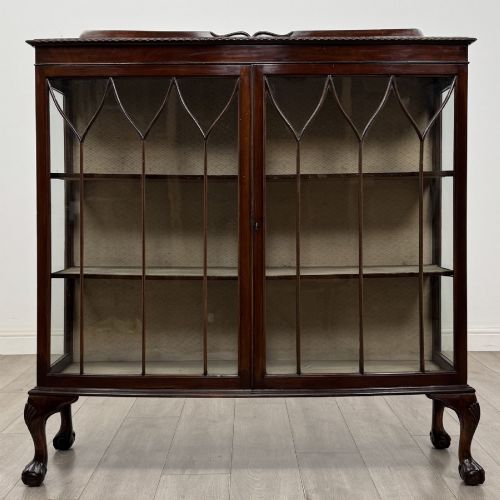
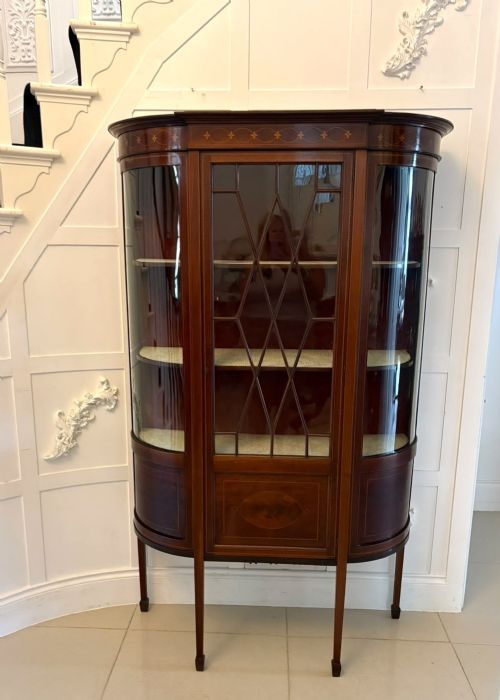
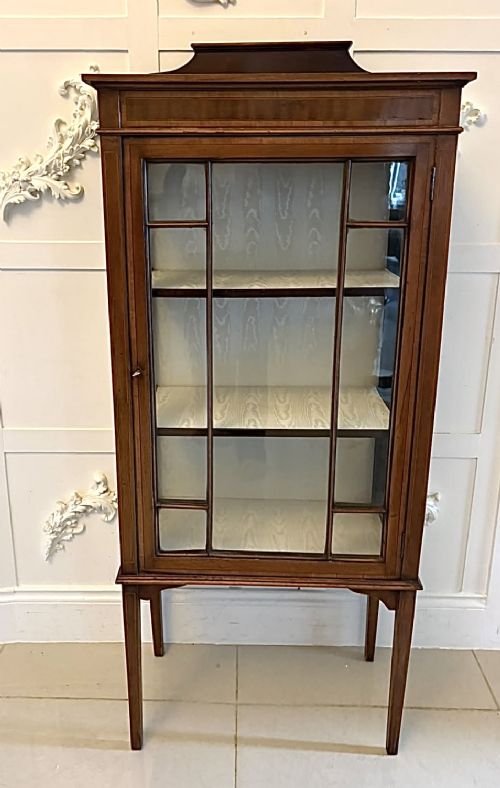
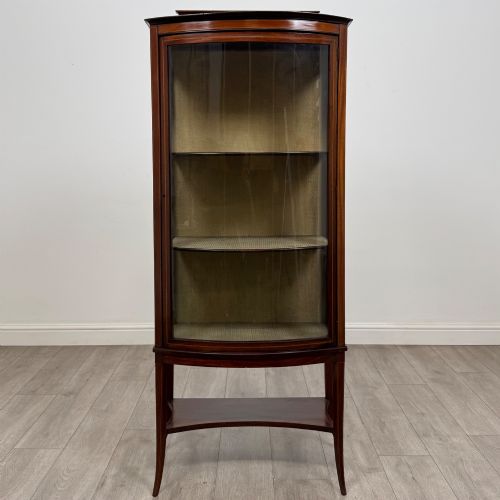
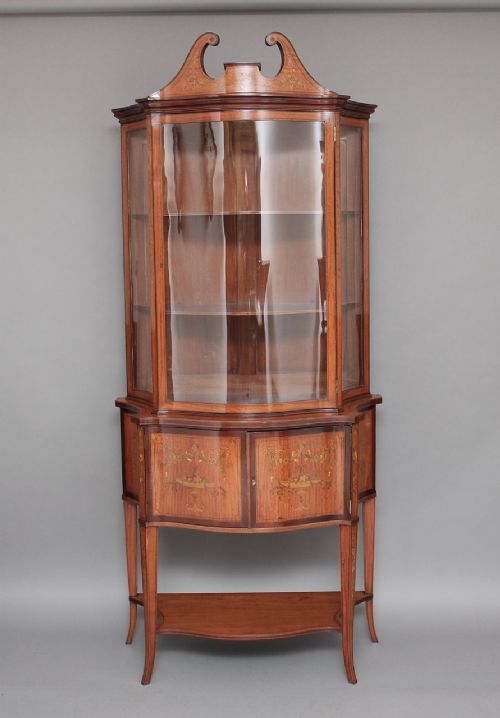
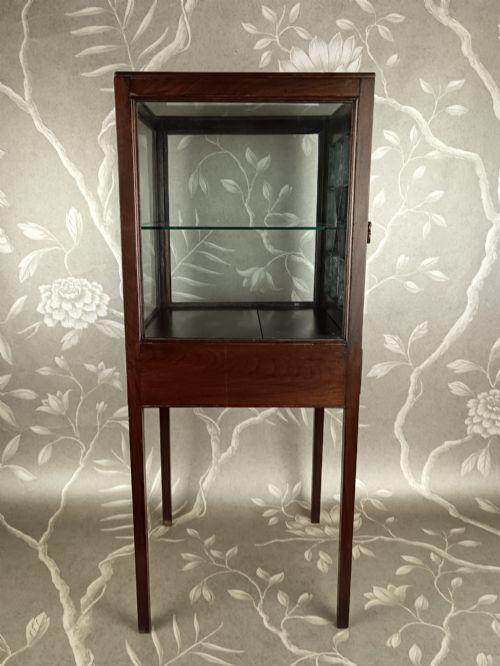
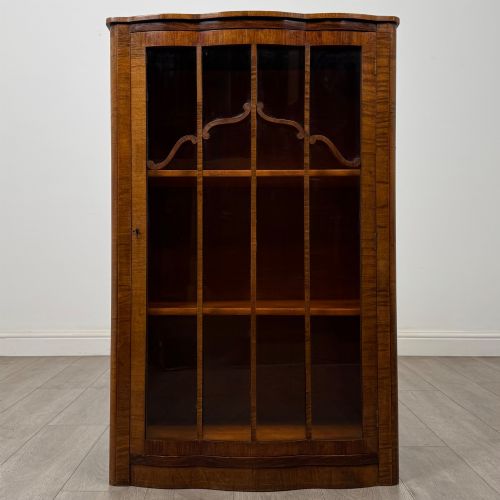
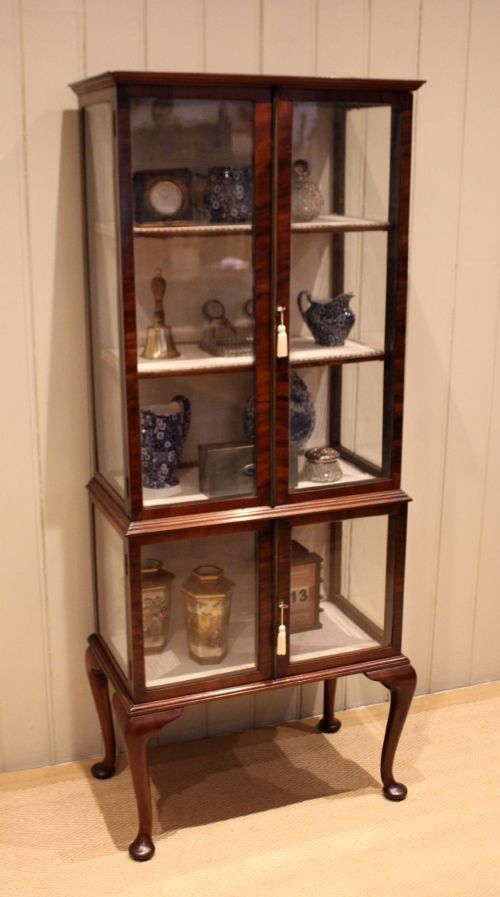
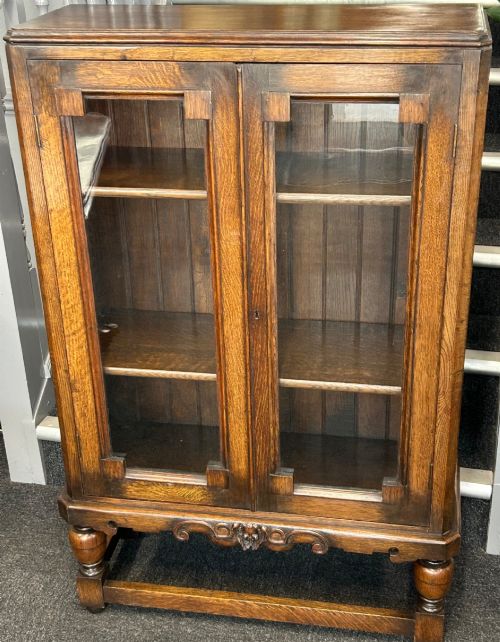
A vintage vitrine stand combines the utility of a display cabinet with the elevated form of a freestanding showcase or cabinet on stand. Buyers searching for a vintage vitrine stand will mostly encounter Edwardian pieces, alongside examples spanning the nineteenth century through the nineteen-thirties. These range from bow-ended mahogany cabinets to corner units and bookcase combinations.
The dominant aesthetic draws heavily on Sheraton, Queen Anne, and Chippendale revivals, uniting glass panels with polished timber frames. Workshops adapted these historic idioms to create slender furniture designed specifically to exhibit precious objects within domestic interiors.
Materials and construction
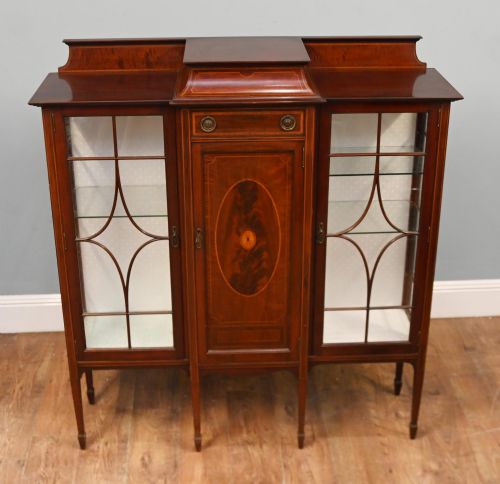
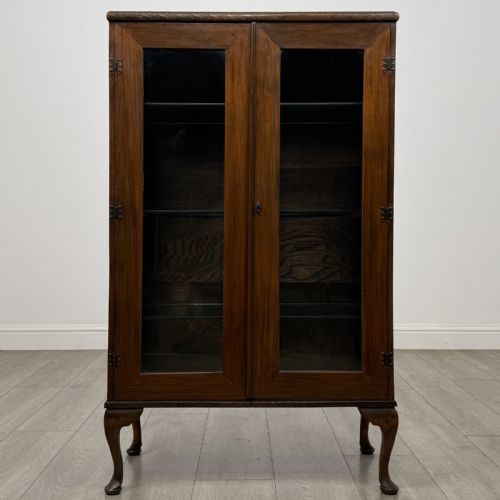
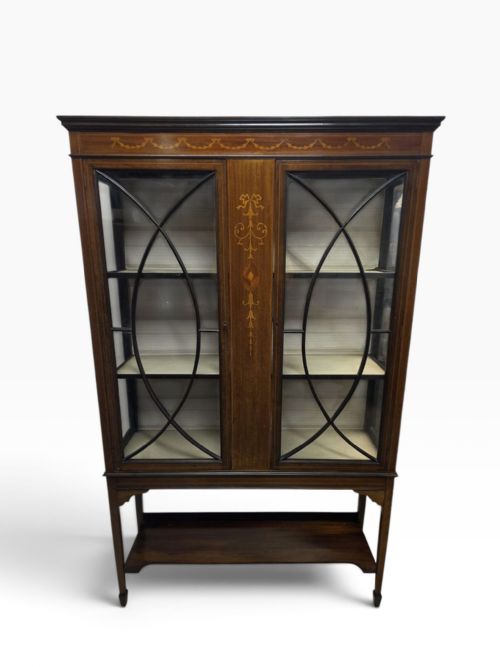
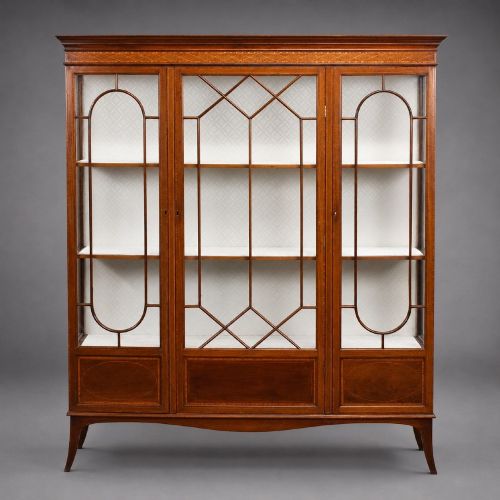
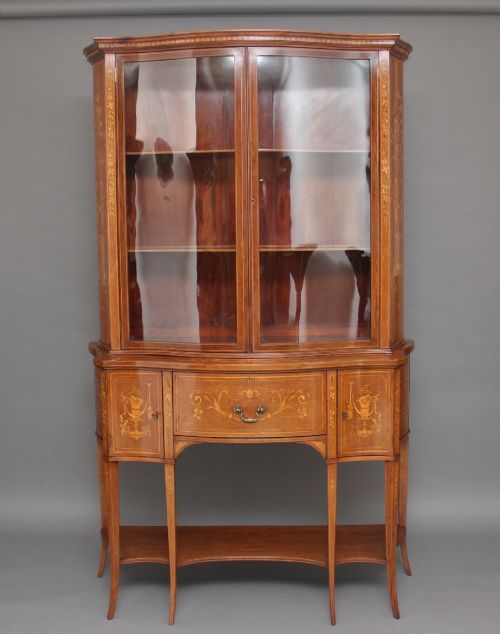
Cabinetmakers relied primarily on mahogany and oak as structural timbers, frequently applying satinwood or walnut veneers to visible surfaces. Delicate inlay work often defines the Edwardian and Sheraton revival pieces, incorporating contrasting woods in linear or botanical motifs.
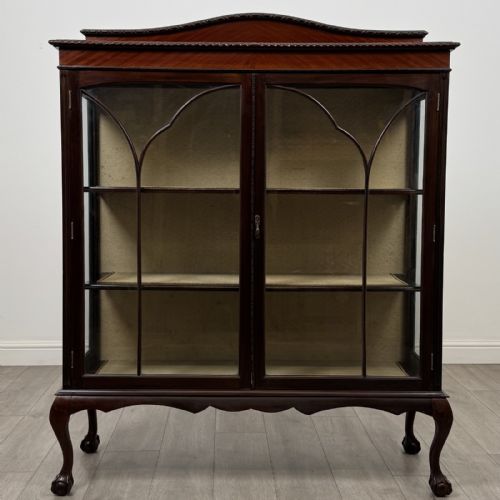
Glazing is central to the construction, with single or multiple glass doors fitted into timber frames, sometimes paired with concave side panels. Brass hardware secures the doors, whilst carved details such as claw and ball feet anchor the heavier mahogany and oak forms.
Vintage Vitrine Stand Retail Price Guide 2026
Typical asking prices for vintage vitrine stand among the pieces listed under this phrase on Sellingantiques today, from the lower quarter to the upper quarter. They describe what is for sale here now, not the wider market.
Judging the range
Quality separates standard production items from exceptional cabinet work through the crispness of timber carving and the subtlety of veneer selection. Figured veneers, such as burr walnut or carefully matched satinwood inlay, elevate the visual impact of the case.
Proportion and scale dictate the success of the piece, with finer examples demonstrating balanced sightlines and meticulous joinery in the door framing and glazing bars. The depth of the timber's finish and the preservation of original brass fittings further distinguish superior specimens.
Maple and Co
The Vintage Vitrine Stand Glossary
- Vitrine
- A glass-fronted cabinet or display stand designed specifically for showing porcelain, curiosities, or books. These pieces rely on extensive glazing to maximise light penetration.
- Inlay
- A decorative technique where contrasting pieces of wood or other materials are inserted into recessed portions of the base timber. This creates flat, patterned surfaces on cabinet doors and cornices.
- Bow Front
- A convexly curved cabinet front that projects outward in a smooth arc. This shape softens the corners of a room and adds visual movement to mahogany and walnut furniture.
- Claw and Ball
- A furniture foot carved to represent a bird's talon gripping a ball. It is frequently found on the legs of revival cabinets drawing on eighteenth-century idioms.
Vintage Vitrine Stand: Frequently Asked Questions
What is a vintage vitrine stand used for?
These cabinets were originally built to display porcelain, silver, and treasured ornaments behind protective glass doors. They keep delicate items dust-free while allowing them to be viewed from multiple angles.
Today, they serve a similar function in modern interiors, acting as focal points for curated collections of glassware, books, or ceramics.
How do I date a vintage vitrine stand?
Dating relies on identifying the prevailing revival style, the timber species, and construction techniques such as drawer dovetailing and hinge types. Edwardian pieces often show lighter satinwood inlay and neoclassical proportions.
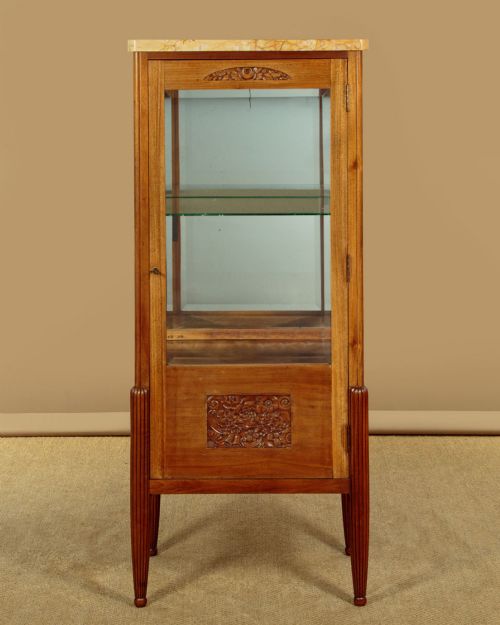
Earlier nineteenth-century examples tend to use heavier timbers and simpler glazing bars, whereas nineteen-thirties pieces incorporate Art Deco influences and figured veneers.
Where should I place a corner vitrine?
Corner vitrines and floor-standing corner cabinets are designed to utilise unused room junctions effectively. They fit snugly into ninety-degree angles, turning dead space into a functional display area.
Placing them near a light source helps illuminate the interior shelves and the objects displayed within the glass enclosure.
How do I care for mahogany display furniture?
Maintenance involves dusting timber surfaces regularly with a soft, dry cloth and avoiding direct sunlight to prevent veneer fading. Natural waxes can be applied sparingly to nourish the polish.
Glass panels benefit from standard glass cleaner applied to a cloth rather than sprayed directly onto the wood framework.