


Vintage Veramin Rug
These vintage veramin rug examples are traditional Persian woven floor coverings prized for their intricate patterns and durable wool construction.
Vintage Veramin Rug
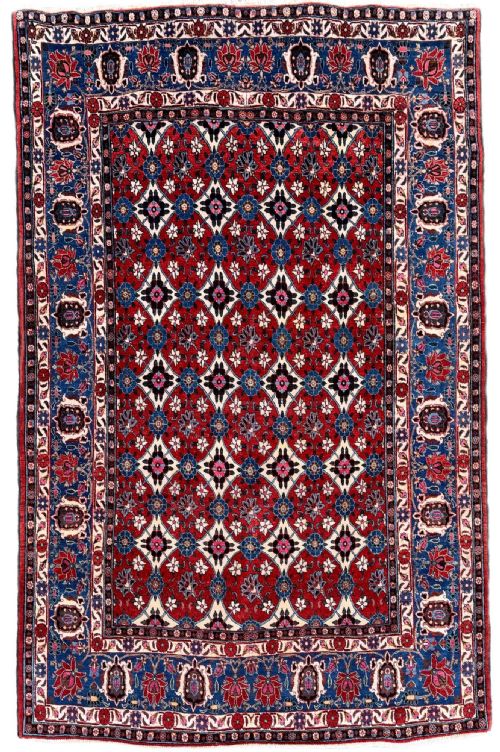
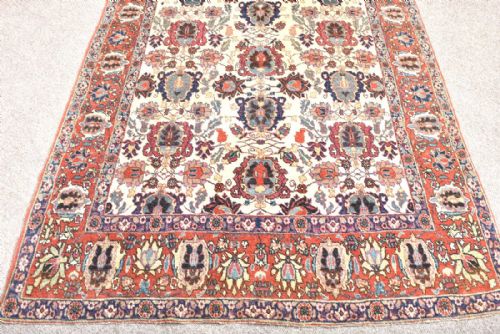
A vintage veramin rug represents a distinct tradition of Persian weaving known for structured layouts and traditional motifs. Pieces on this page span from nineteen hundred through to the nineteen thirties, encompassing both compact area rugs and larger carpets. Buyers encountering these pieces will find formats ranging from narrow hallway runners to room-sized carpets.
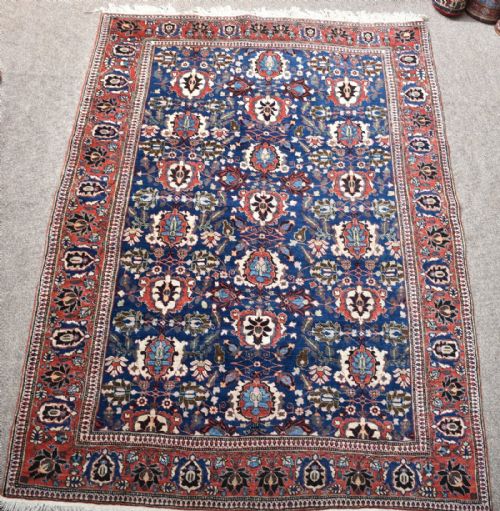
The aesthetic falls firmly within Persian tribal and traditional categories, often displaying characteristic field patterns such as the mina khana design. Format variations include specific dimensions like narrow runners alongside substantial rugs reaching over three metres in length. Mid blue ground colours also appear amongst the examples recorded on this page.
Construction and materials
Every vintage veramin rug relies on a foundation of natural cotton combined with a wool pile woven by hand. This pairing provides the necessary structural stability for floor use while maintaining a dense, tactile surface texture.
The construction employs traditional Persian knotting techniques executed across various room formats, from slender runners to large carpets. Natural materials dominate the evidence, ensuring the textiles retain their integrity over decades of use.
Listings on this page span the years nineteen hundred, nineteen twenty, and nineteen thirty, utilising wool and cotton materials throughout.
Assessing quality in weaving
Quality in a vintage veramin rug is demonstrated through the precision of the knotting and the complexity of the stylised mina khana pattern. Finer examples display greater intricacy in their traditional Persian designs and tighter structural density.
Condition and scale also differentiate the pieces, with larger carpets requiring substantial craftsmanship to maintain pattern symmetry across extensive surface areas. The clarity of ground colours, such as mid blue tones, further contributes to the visual merit of individual rugs.
The Vintage Veramin Rug Glossary
- Mina khana pattern
- A traditional repeating geometric floral motif frequently found across Persian carpets and rugs. It creates a structured field design of stylised blooms.
- Pile
- The upright or looped yarn on the surface of a rug that forms the usable soft layer. It is typically woven from wool onto a cotton foundation.
- Runner
- A long, narrow carpet format designed specifically for hallways and corridors. Dimensions restrict the width whilst extending the length significantly.
- Persian
- Pertaining to the rich carpet-weaving heritage of Iran. It encompasses distinct regional styles, knotting techniques and traditional colour palettes.
Vintage Veramin Rug: Frequently Asked Questions
Where should I place a runner?
Narrow formats under a metre in width suit hallways, corridors and galley spaces perfectly. Their elongated dimensions guide movement through architectural transitions.
Ensure adequate underlay is utilised to prevent slipping on hard flooring surfaces. Regular rotation also distributes foot traffic evenly across the length.
How do I care for wool pile?
Gentle vacuuming without a beater bar removes surface dust safely from the woven fibres. Professional cleaning remains essential for deep maintenance of antique textiles.
Keep woven floor coverings away from direct, prolonged sunlight to protect natural dyes. Promptly blot liquid spills rather than rubbing the affected wool pile.
What defines a traditional Persian rug?
These textiles originate from specific weaving centres and traditions across Iran, utilising established regional motifs. Wool and cotton materials are worked by hand into structured geometric or floral designs.
Regional variations display distinct border arrangements and central field patterns passed down through generations of makers.
How are different periods identified?
Dating relies upon structural analysis, material wear patterns and stylistic markers associated with early twentieth century production. Pieces from the nineteen hundreds through to the nineteen thirties exhibit characteristic dye palettes and knot densities.
Comparing border details and structural proportions against documented examples helps confirm the era of manufacture.