


Veramin Area Rug
A veramin area rug brings durable wool and cotton construction together with traditional Persian styling, offering enduring warmth for the floor.
Veramin Area Rug
A veramin area rug represents a distinct category of floor coverings rooted in Persian rug-making traditions. Buyers examining this page encounter pieces dating from the early twentieth century, specifically from the 1910s, 1920s, and 1930s.
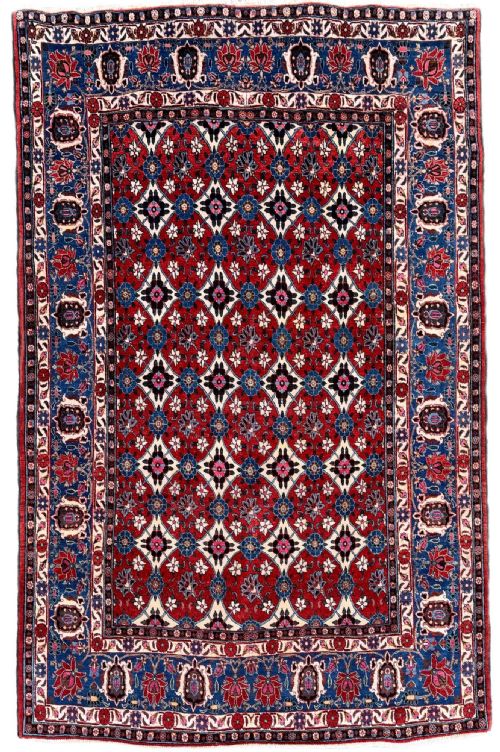
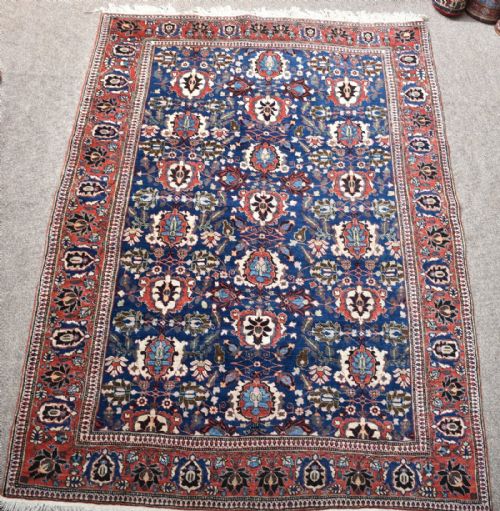
The selections available here span from smaller rugs to large room carpets, often noted for their mid-blue ground colour. These items serve as functional floor textiles that carry traditional Persian tribal and classic design elements.
Most examples originate from the 1920s and 1930s, presenting shoppers with established specimens from the early decades of the twentieth century. Each rug demonstrates the classic formats associated with this specific weaving centre.
Materials and Construction
Every veramin area rug is constructed using natural textile fibres, relying primarily on wool for the pile and cotton for the foundational structure. These materials provide the tactile density and structural stability characteristic of Persian weaving.
Weavers utilised traditional techniques passed down through generations to knot the wool pile onto cotton warps and wefts. This combination ensures the finished carpets withstand regular placement on domestic floors while retaining their traditional appearance.
Assessing Quality and Execution
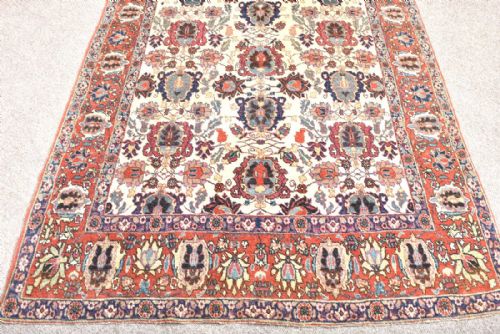
The distinction between standard examples and finer items rests upon the tightness of the knotting and the precision of the traditional Persian design execution. Superior pieces display a crisper rendering of traditional motifs across the wool surface.
Overall condition and the preservation of the original cotton foundation and wool pile influence the standing of each carpet. Depth of colour, particularly in specimens featuring a mid-blue ground, contributes significantly to the visual impact of the piece.
The Veramin Area Rug Glossary
- Pile
- The upright yarn loops or cut ends that form the soft surface of the rug. This wool layer absorbs foot traffic and displays the woven pattern.
- Warp
- The vertical threads stretched tightly on the loom that form the skeletal base of the carpet. Cotton is typically used for this foundational strength.
- Weft
- The horizontal threads passed through the warp yarns to lock the knots in place row by row. It works alongside the warp to secure the wool structure.
- Ground
- The main background colour visible behind the central patterns of the textile. Examples often highlight a distinctive mid-blue ground.
- Persian
- A broad style and origin designation denoting techniques and patterns traditionally practiced in Iran. These rugs carry distinct cultural design motifs.
Veramin Area Rug: Frequently Asked Questions
What is a veramin area rug?
A veramin area rug is a traditional floor textile originating from the Persian weaving tradition, typically constructed from wool and cotton.
These pieces date from the early twentieth century and showcase distinct regional patterns.
How old are these rugs?
The examples available date from the 1910s, 1920s, and 1930s.
This places them firmly in the antique and old carpet categories.
What materials are used?
These rugs are made using wool for the soft upper pile and cotton for the foundational structure.
This combination provides both comfort underfoot and long-term durability.
How do I style a veramin rug?
You can place these rugs as central floor coverings in living rooms, dining spaces, or studies.
Their traditional Persian designs complement both classic and eclectic interiors.