
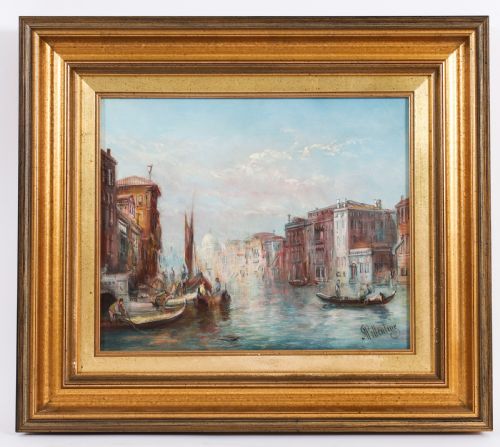
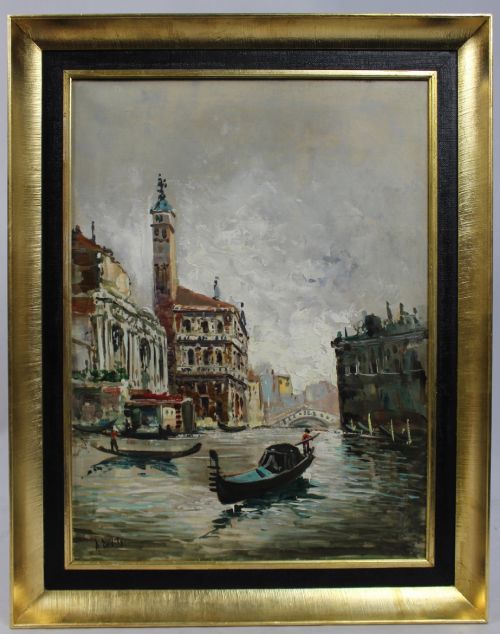
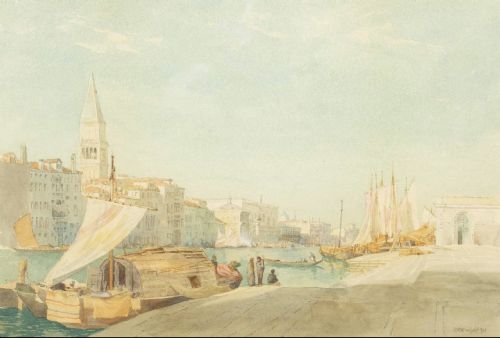
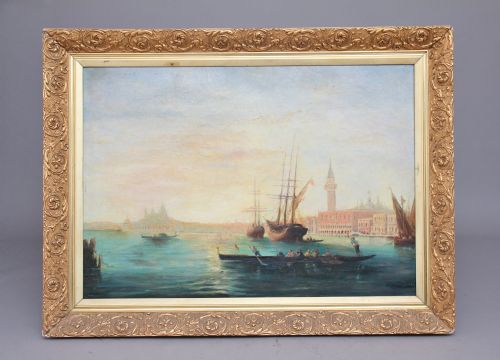


Vintage Venice Landscape Art
Vintage venice landscape art captures the eternal romance of the canals and palazzos through the eyes of period painters.
Vintage Venice Landscape Art
When you search for vintage venice landscape art, you encounter a focused selection of paintings and works on paper depicting the iconic waterways, lagoons, and historic architecture of the floating city. These pieces range from detailed 19th-century watercolours to mid-century impressionist canvases that celebrate the distinctive light and atmosphere of the Venetian lagoon.
The works appearing on this page span the Victorian era through the mid-20th century, encompassing styles from traditional topographical views to looser impressionist and expressionist interpretations. You will frequently find classic depictions of the Grand Canal, the Doge's Palace, and quiet back canals rendered by both British and continental artists.
Materials and methods
The pieces in these listings rely primarily on oil paint applied to canvas or wood panels, alongside watercolours on paper and occasional mixed media compositions. Painters utilised these fluid mediums to capture the shimmering reflections on the water and the atmospheric haze unique to the Venetian lagoon.
Many of these artworks retain their period frames, often constructed from gilded wood or giltwood that complements the warm tones and painterly execution of the scenes within.
Paper, canvas, and gilded wood are the predominant materials recorded across the paintings and works on paper.
Distinctions in quality
Quality in these Venetian scenes rests primarily on the sureness of the brushwork and the artist's ability to command light and perspective across complex architectural subjects like palazzos and bridges. Stronger examples demonstrate confident handling of water and sky, whereas lesser pieces can rely on stiff formulas and flat colour application.
The depth of the artist's engagement with the specific atmosphere of the lagoon distinguishes finer works from routine topographical keepsakes. Original framing and clear attribution to documented period painters also elevate the standing of an individual piece.
Alfred Pollentine·Antonio DeVity·Claude Jousset·Antoine Bouvard Senior·Frank Wasley
The Vintage Venice Landscape Art Glossary
- Grand Canal
- The main water-traffic artery in Venice, frequently depicted in 19th and 20th-century paintings for its grand palazzos and bustling activity. It remains the most recognisable subject in Venetian topographical art.
- Giltwood
- Wood carved and coated with gold leaf or a gold-coloured metallic finish, commonly used for period picture frames. It provides a traditional decorative border that enhances oil paintings.
- Impressionism
- An art style characterised by relatively small, thin, yet visible brush strokes and an emphasis on accurate depiction of light. In Venetian art, this approach captures the shifting reflections of the lagoon.
- Watercolour
- A painting method in which the paints are made of pigments suspended in a water-based solution, typically executed on paper. It is favoured for its translucent qualities, which suit the watery expanses of Venice.
Vintage Venice Landscape Art: Frequently Asked Questions
What periods do these paintings date from?
The works span from the 19th century through the mid-20th century, including Victorian, Edwardian, and mid-century periods. Painters during these eras continually returned to Venice to record its changing light and architecture.
Most pieces reflect the prevailing aesthetic tastes of their decade, moving from detailed topographical watercolours toward impressionistic interpretations on canvas.
Are these works original paintings?
The collection consists of original works executed by hand, including oil paintings on canvas and wood panels, alongside watercolours, pastels, and mixed media pieces on paper. Each piece represents an artist's direct engagement with the Venetian scene rather than a later reproduction.
Signatures and framing often provide additional context regarding the provenance and creation date of the artwork.
How should I frame and display these artworks?
Many pieces retain their original gilded wood frames, which complement the traditional subjects and period materials. When displaying them, avoid direct sunlight to protect watercolours on paper and oil pigments from fading.
Maintaining stable indoor humidity helps preserve both the canvas supports and the historic wooden frames.
How do I distinguish watercolours from oil paintings?
Watercolours are typically painted on paper and protected behind glass, showcasing translucent washes of colour that highlight the texture of the sheet beneath. Oil paintings feature heavier pigment applied to canvas or wood, often displaying visible brush texture and a more opaque finish.
Examining the surface under natural light readily reveals whether the medium is water-based on paper or oil-based on canvas.