



Vintage Veneer Bedside Tables
Vintage veneer bedside tables bring warmth and distinct grain patterns to the bedroom, offering compact storage with genuine period character.
Vintage Veneer Bedside Tables
Vintage veneer bedside tables encompass compact bedside storage and small lamp tables surfaced in decorative wood layers. These pieces span the nineteenth century through the interwar years, capturing diverse stylistic revivals alongside modernist lines.
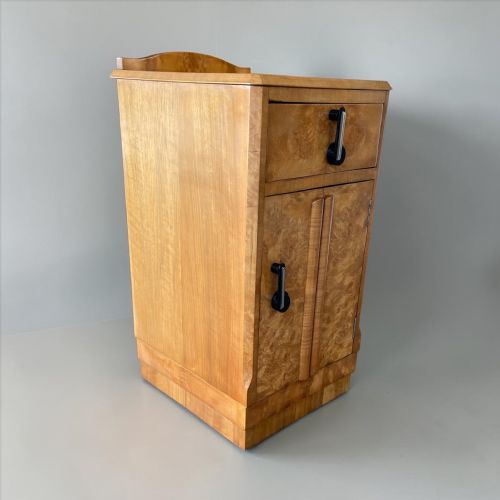
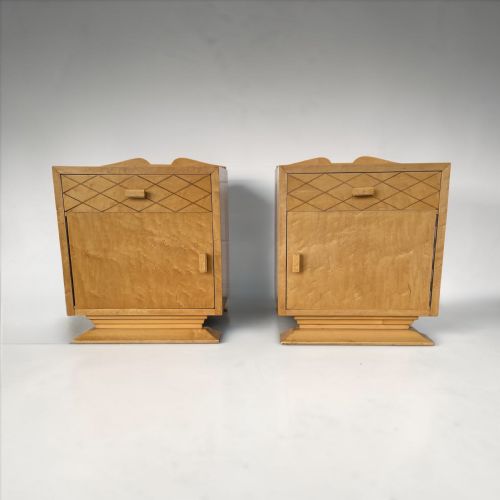
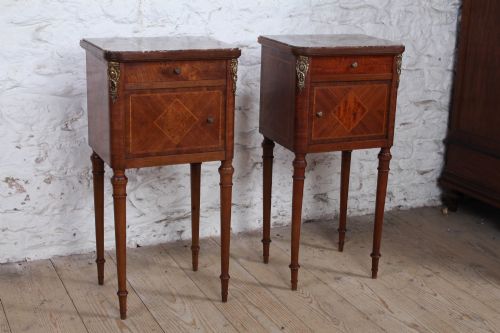
The most prevalent examples on this page date from the nineteen-thirties and display the characteristic geometric forms of the Art Deco period. Alongside these, buyers find Edwardian satinwood pieces and French styles featuring figured walnut and burr woods.
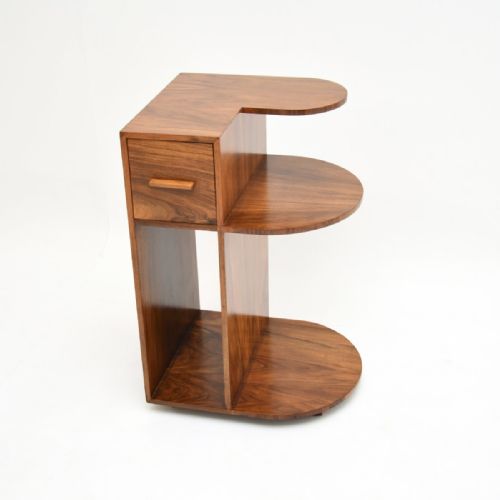
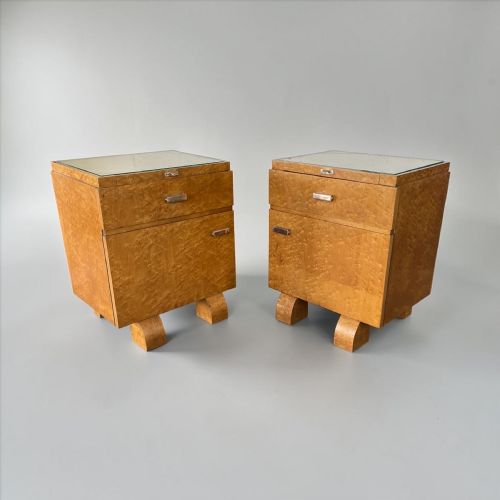
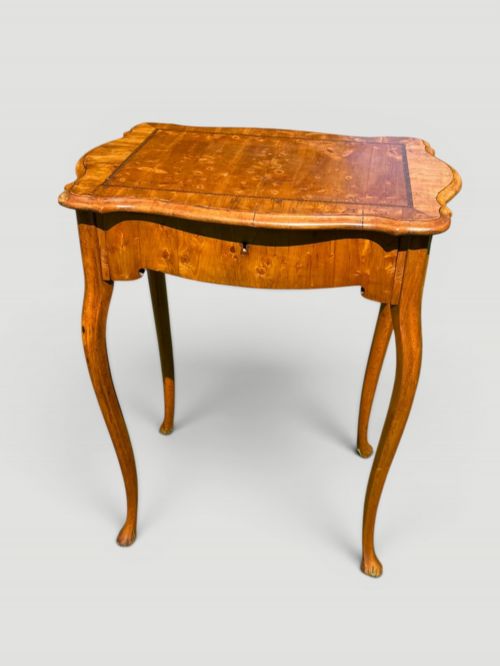
Forms range from simple two-tier occasional tables to pairs of bedside chests and cabinets with marble tops. Such tables serve beside the bed or as occasional surfaces in reception rooms.
How they were made
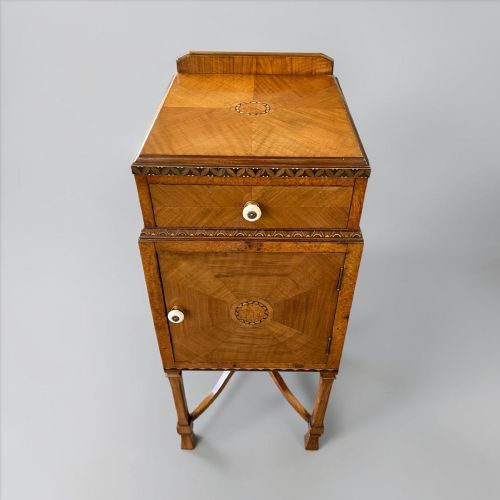
Cabinet makers applied thin slices of decorative timber over stable secondary woods to display striking natural grain patterns. Common surface timbers include walnut, satinwood, birds eye maple, and rosewood, often arranged in symmetrical quartered or parquetry designs.
Construction frequently incorporates brass hardware, chrome accents, and occasionally inset marble tops for durability. Traditional cabinet-making techniques ensure the underlying carcase remains stable beneath the decorative surface.
Listings feature walnut, satinwood, brass, chrome, and marble across periods spanning nineteen hundred to nineteen thirty.
What varies in quality
Quality rests primarily upon the choice of timber and the skill with which the veneer grain is matched across the surface. Highly figured burrs and symmetrical quarter-veneers indicate superior material selection by the cabinet maker.
The integrity of the underlying construction and the refinement of subsidiary details, such as parquetry patterns or integrated brass and marble elements, separate standard production from finer workshop pieces.
Maurice Adams
The Vintage Veneer Bedside Tables Glossary
- Veneer
- A thin slice of decorative wood applied to a stable underlying timber base. This technique allows cabinet makers to display striking grain patterns that solid wood construction cannot achieve.
- Art Deco
- A design style prominent around nineteen thirty characterised by sleek geometric shapes and streamlined forms. Pieces from this era often utilise contrasting exotic wood veneers.
- Parquetry
- A geometric mosaic of wood pieces used for decorative surfaces on tables and cabinets. It creates intricate patterns across the top of the furniture.
- Burr wood
- A growth on a tree that produces intricate, swirling grain patterns highly prized in cabinet making. Walnut and other timbers display distinctive movement when prepared this way.
- Satinwood
- A durable hardwood with a lustrous, golden-yellow sheen used extensively in Edwardian furniture. It provides a bright surface for inlay and veneer work.
Vintage Veneer Bedside Tables: Frequently Asked Questions
How do I style a vintage veneer bedside table?
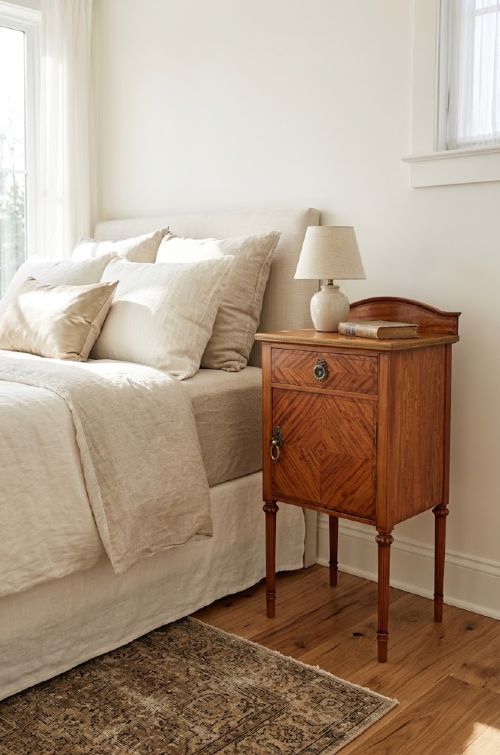
Pair these tables with neutral walls to let the natural wood grain and figure become the focal point of the room. Simple ceramic lamps or brass accessories complement the metallic and wooden tones found in the pieces.
Mixing eras works well, allowing a nineteen-thirties Art Deco piece to sit alongside contemporary furnishings without clashing. Ensure the height of the table aligns comfortably with the top of the mattress for practical use.
Are these tables sturdy enough for daily use?
Traditional construction methods utilise solid carcases beneath the decorative surface, providing the stability needed for holding lamps, books, and night-time essentials. Proper care ensures the structure remains robust over decades of domestic life.
Using coasters for drinks and protecting the surface from excessive moisture preserves both the timber and the polish. Regular dusting keeps the grain looking vibrant.
How do I identify an Art Deco bedside table?
Art Deco bedside tables typically feature clean lines, symmetrical wood grains, and occasionally contrasting borders of rosewood or maple. They frequently date to around nineteen thirty and avoid heavy Victorian ornamentation in favour of streamlined geometry.
Materials like chrome or banded walnut veneers frequently appear on pieces from this design movement. The silhouettes lean towards rectangular, kidney-shaped, or circular forms.
What is the difference between a bedside table and a cabinet?
Bedside tables often feature open shelves, single drawers, or multi-tiered surfaces designed for quick access to reading materials and lamps. They maintain an open profile that keeps smaller bedrooms feeling spacious.
Cabinets enclose the storage space behind doors, offering a more concealed compartment for personal items. Both forms serve the same functional purpose beside a bed but vary in how they manage storage.