


Vintage Velvet Upholstered Chairs
These vintage velvet upholstered chairs bring rich texture and period character into a room, offering both comfort and distinctive historic design.
Vintage Velvet Upholstered Chairs
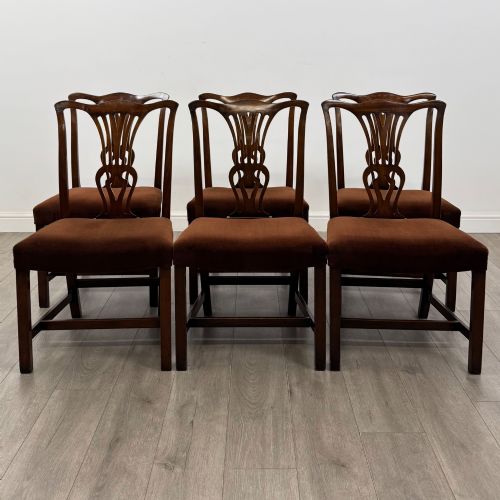
Vintage velvet upholstered chairs encompass a diverse selection of seating forms created across the nineteenth and twentieth centuries. When searching for vintage velvet upholstered chairs, buyers encounter everything from compact nursing chairs and piano stools to substantial library armchairs and matching dining sets.
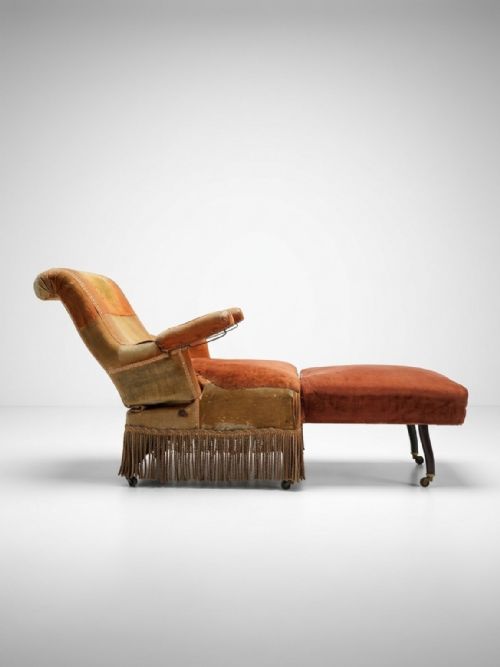
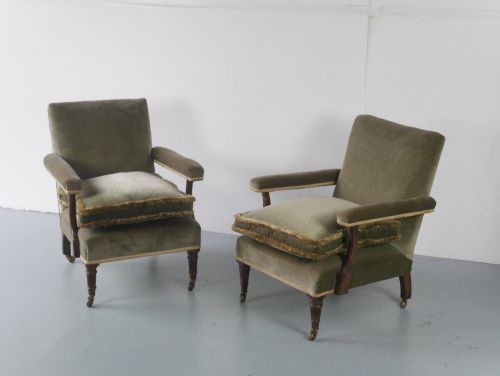
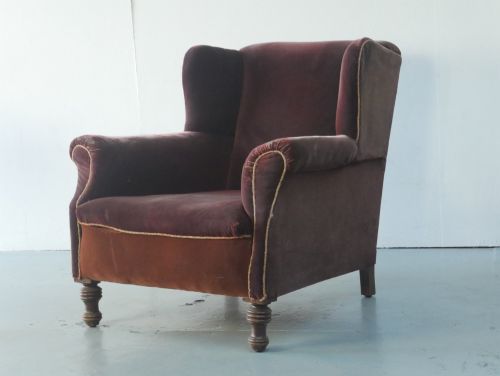
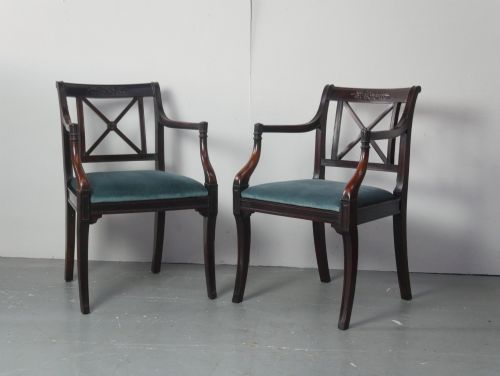
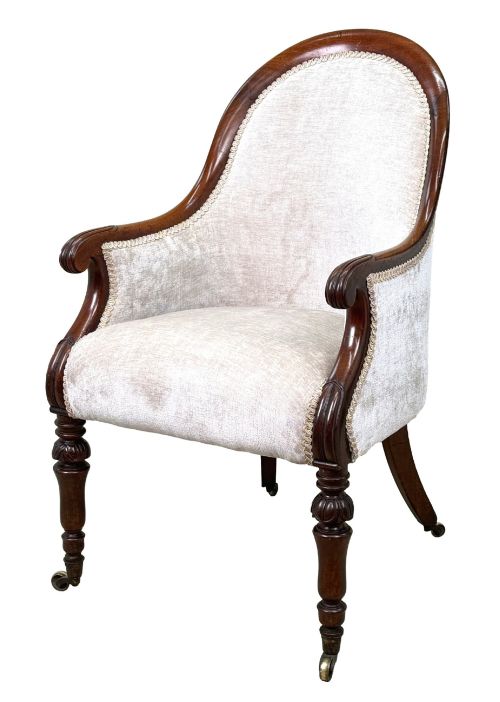
The pieces on this page span several distinct eras, notably the Victorian, Edwardian, and Art Deco periods, alongside various revival styles. Armchairs and bergères feature prominently alongside dining chairs and occasional seating, reflecting the broad utility of upholstered furniture in historic homes.
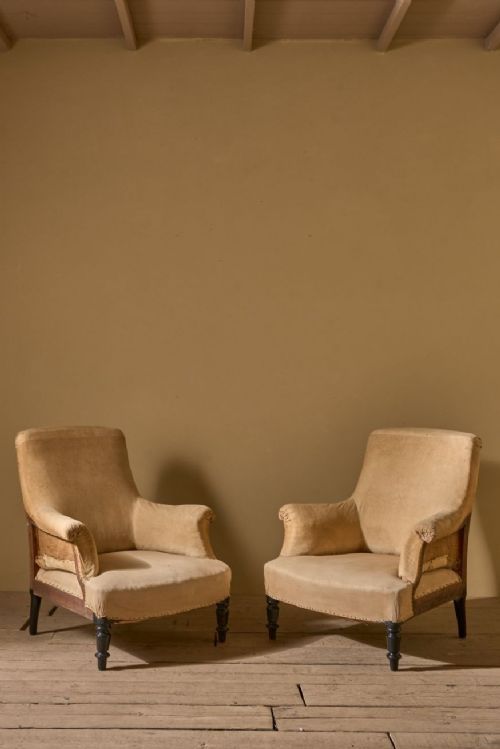
Origins vary widely across the selection, including English craftsmanship and French pieces from the Napoleon III and Louis XV style traditions. Buyers will find individual statement chairs as well as matched pairs and larger dining sets suited to different interior spaces.
Materials and construction
Makers utilised solid hardwoods such as mahogany, walnut, rosewood, oak, and goncalo alves to construct sturdy frames that would support daily use. These exposed wooden elements often display carved details, scrollwork, or inlaid decoration depending on the prevailing style of the period.
Textiles played a central role in the final appearance, combining traditional velvet upholstery with structural timber, brass accents, and occasionally chenille twill. Frame construction techniques ranged from barley twist supports and ionic column legs to classic balloon backs and barrel designs.
Victorian harpists enjoyed specialised brass-framed upholstered seats designed to accommodate musicians during long evening recitals.
Assessing quality in period seating
Gillows
The Vintage Velvet Upholstered Chairs Glossary
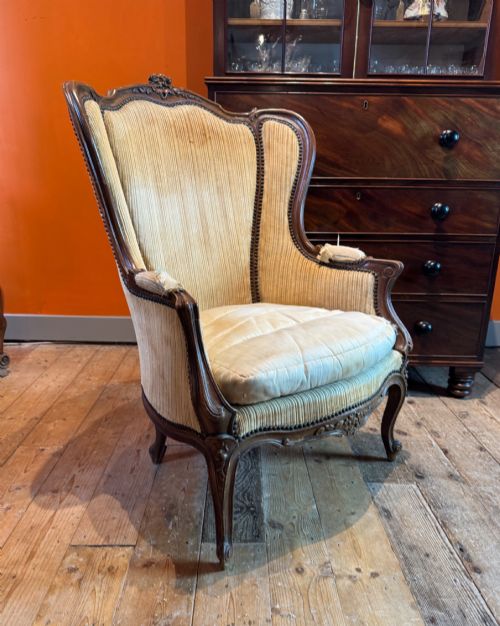
- Bergère
- An enclosed upholstered armchair with wooden framing, originating in France. These seats often feature exposed polished wood around the arms and back.
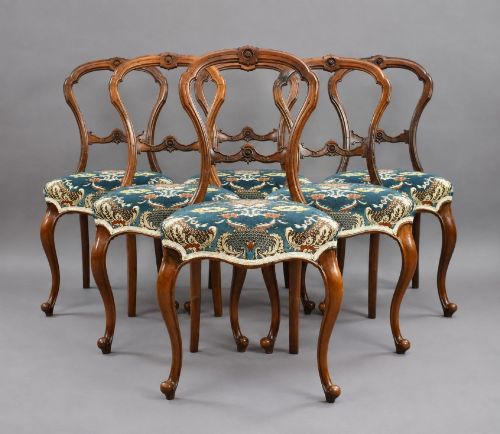
- Balloon Back
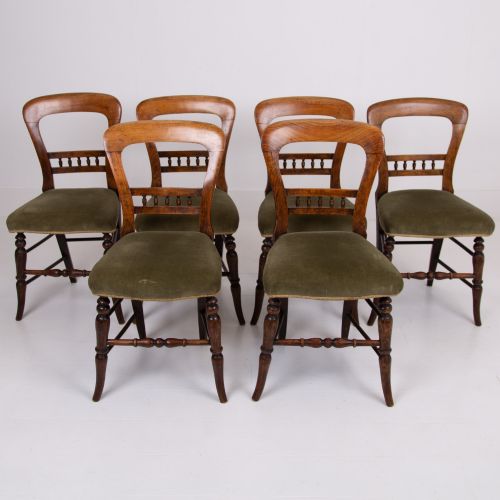
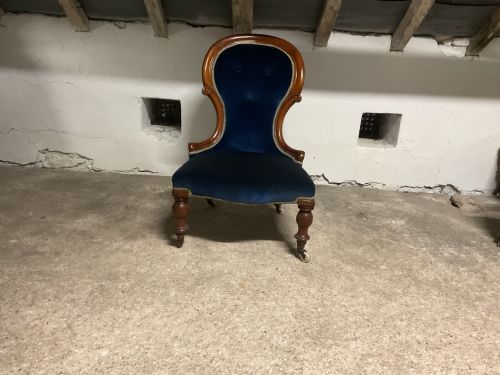
- A dining chair style characterised by an oval, curved wooden backrest resembling a balloon. This design gained widespread popularity during the Victorian era.
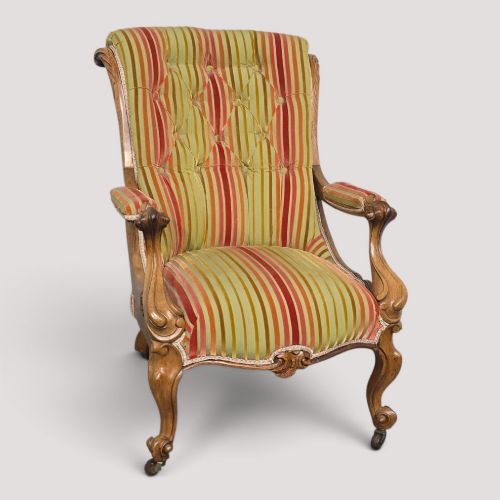
- Button Back
- An upholstery technique where buttons are pulled deep into the padding in a diamond pattern. This method secures the filling and creates a textured surface.
- Nursing Chair
- A low-seated armchair designed historically for comfort near a nursery hearth. The reduced height made them practical for tending to infants.
- Sheraton Revival
- A late nineteenth and early twentieth century design movement that reinterpreted the light, neoclassical forms of the eighteenth-century designer Thomas Sheraton.
Vintage Velvet Upholstered Chairs: Frequently Asked Questions
What periods do these chairs come from?
The selection includes pieces spanning the nineteenth and twentieth centuries, with significant representation from the Victorian and Edwardian eras. Buyers also encounter earlier eighteenth-century designs alongside later revivals.
Craftsmanship from these different decades brings varied aesthetic qualities, ranging from ornate Victorian carving to clean Edwardian lines and French regional styles.
How do I identify a bergere chair?
A bergère is typically an enclosed wooden-framed armchair where the wooden frame remains visible around the upholstered elements. These chairs often feature padded armrests and curved backs.
Originating in France, they offer a formal silhouette that distinguishes them from standard upholstered club chairs or library armchairs.
Are dining chairs available in sets?
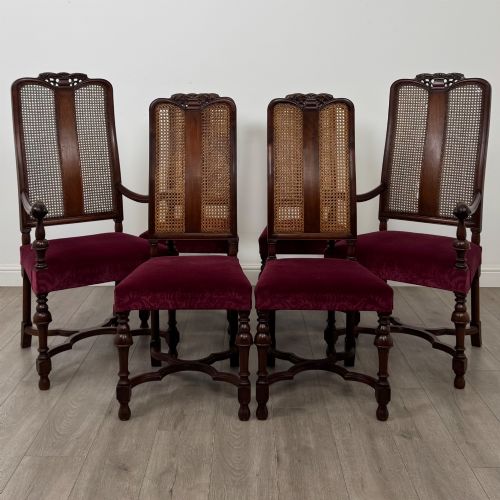
Yes, listings frequently include matched sets of dining chairs ranging from four to twelve pieces. These sets often share consistent wood types such as mahogany or oak.
Purchasing a set provides a unified look for a dining room while preserving the specific stylistic traits of periods like the Victorian era or Queen Anne revival.
What woods were used for the frames?
Cabinetmakers utilised durable hardwoods including mahogany, walnut, rosewood, oak, and goncalo alves. The choice of timber often corresponds to the date and stylistic movement of the chair.
Dark, dense woods predominate in nineteenth-century seating, providing the structural strength needed to support complex carved details and daily use.
Where were these chairs made?
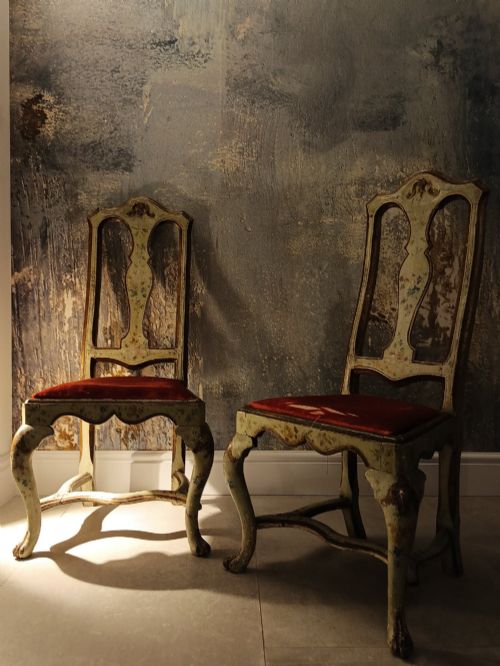
Origin points vary, encompassing English workshops as well as French ateliers and North Italian makers. English pieces often reflect regional cabinetmaking traditions.
French pieces from the period bring distinct continental styling, particularly in bergères and Napoleon III armchairs that emphasise decorative woodwork.