
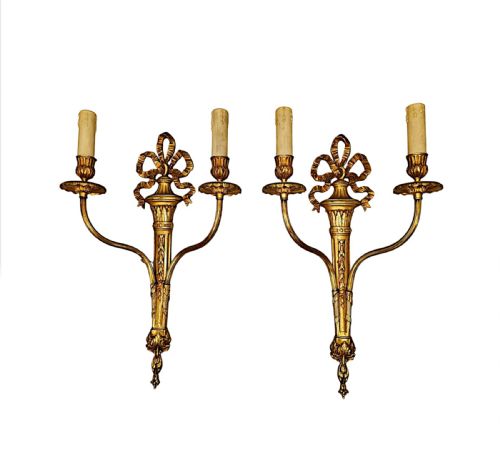
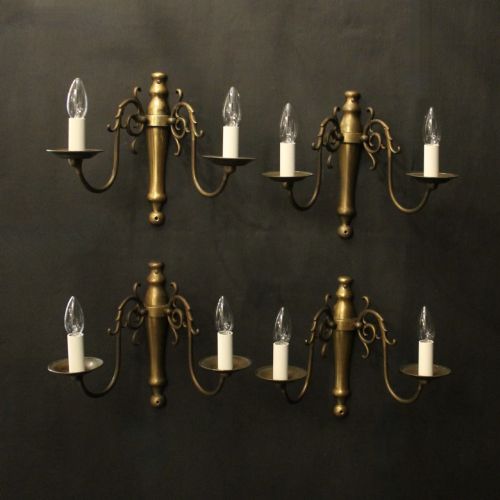
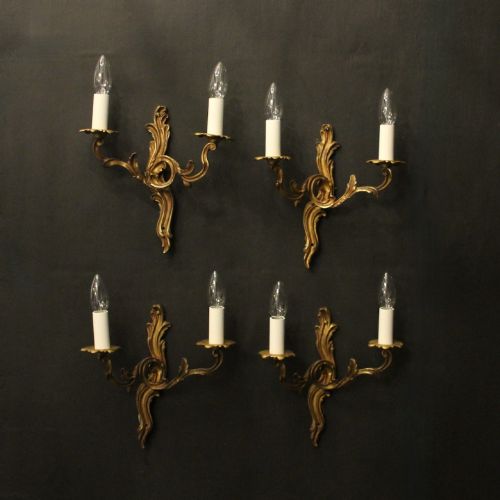
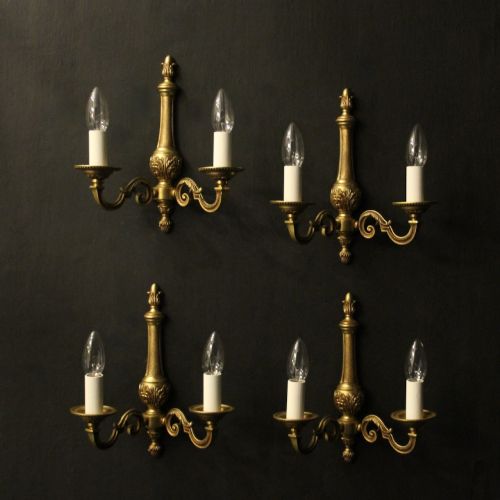
Vintage Twin Arm Sconce
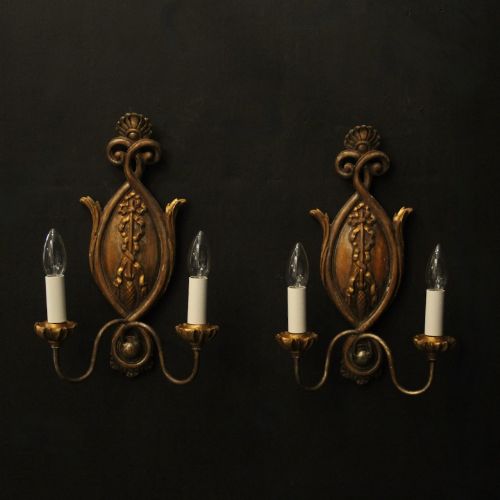
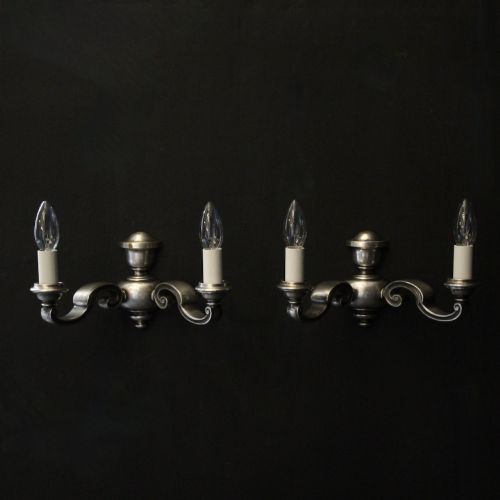
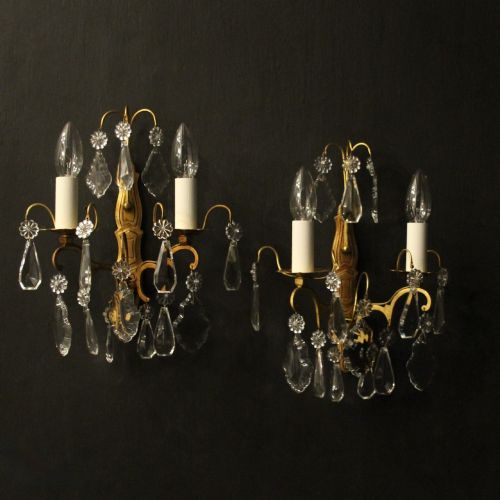
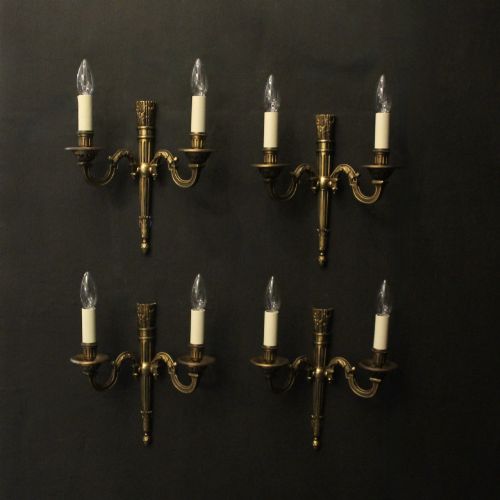
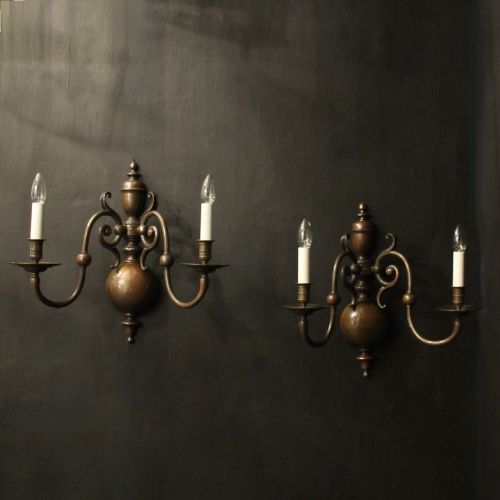
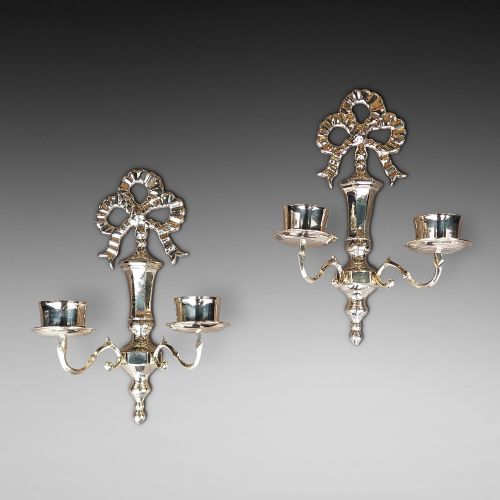
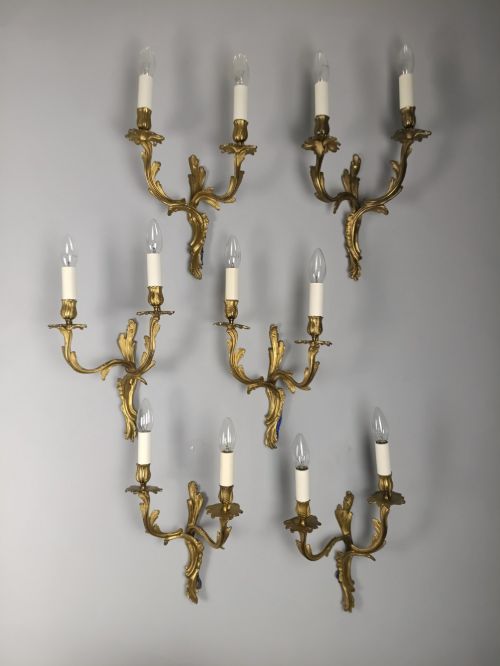
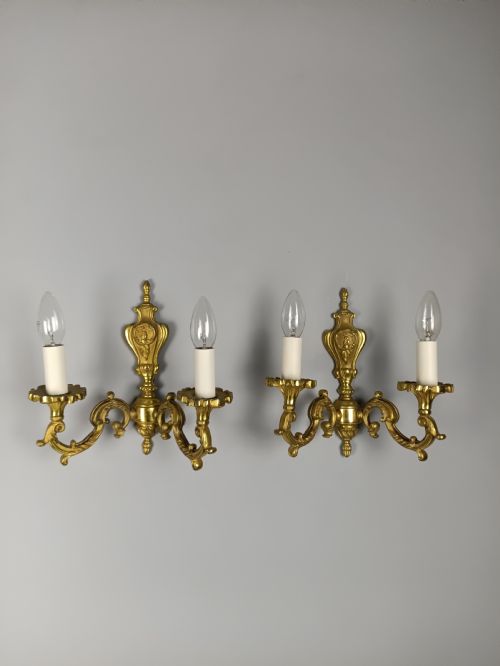
A vintage twin arm sconce brings functional illumination and classical symmetry to a wall, relying on dual candle branches.
Vintage Twin Arm Sconce
A vintage twin arm sconce comprises wall-mounted light fittings designed to carry two candles or electric bulbs across symmetrical branches. Buyers search for these items to introduce period character and decorative metalwork into residential interiors.
The selections span the Victorian, Edwardian, and twentieth-century eras, with particular strength in French and English designs. Pieces frequently emerge from the 1920s and 1930s, often presenting as pairs or larger sets.
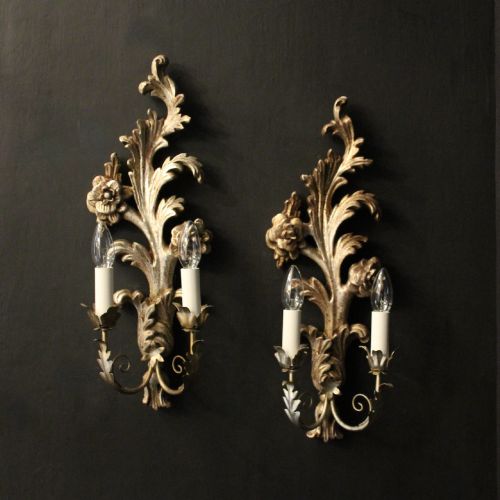
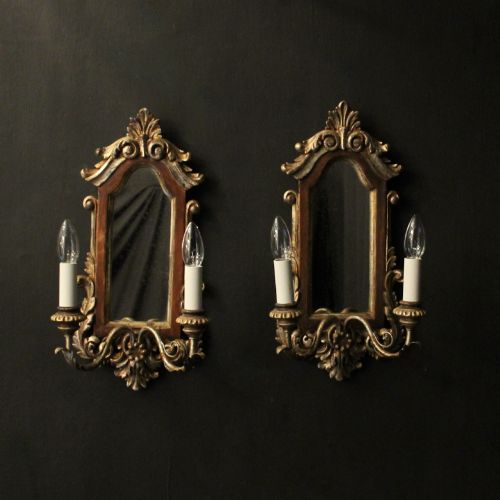
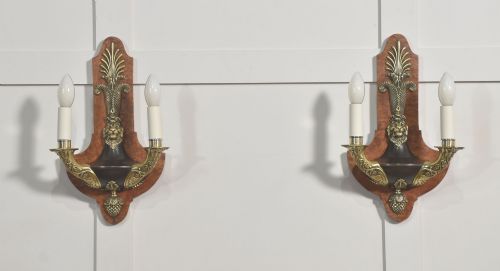
The primary forms take shape as wall lights, girandoles, and candelabra. Styles lean heavily towards French Rococo, Empire, and Florentine traditions, utilising classical ornamentation.
How they were made
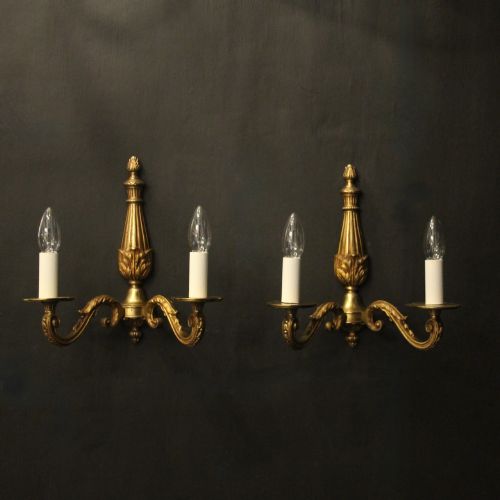
Makers utilised cast brass, bronze, and giltwood as foundational materials for these wall fixtures. Guilding and silver-plating techniques applied gold leaf or silver finishes directly onto the metal or wooden bases to achieve reflective brilliance.
Foundry work and hand-carving dominated the manufacturing process, allowing artisans to shape intricate ribbons, floral motifs, and scrollwork. Structural components were then assembled to support the dual branch arms securely.
Materials recorded across the inventory include brass, gilt bronze, silver-plated metal, giltwood, and crystal.
What varies in quality
The finesse of the surface gilding and the depth of the metal casting distinguish finer examples from standard production. Artisans who executed sharper chisel work on bronze or crisper carving on giltwood produced pieces with greater visual definition.
The integration of decorative elements such as crystal drops, burr walnut panels, or elaborate ribbon motifs alters the overall refinement of the object. Heavier gauge metals and robust arm joints indicate superior foundational construction.
Casier·F. & C. Osler
The Vintage Twin Arm Sconce Glossary
- Sconces
- Wall-mounted light fixtures that project outward to hold candles or electric lights. They typically attach directly to vertical surfaces.
- Ormolu
- A technique of applying finely ground, high-carat gold-mercury amalgam to an object of bronze. This process creates a rich, durable golden finish.
- Girandoles
- Decorative wall brackets featuring branches for candles, frequently incorporating mirrors to multiply the reflected light. These items merge lighting with ornamental framing.
- Rococo
- An ornate design style characterised by asymmetrical scrollwork, C-curves, and naturalistic plant motifs. It dominates eighteenth-century French aesthetics and later revivals.
- Candelabra
- Portable or wall-mounted branched lighting fixtures designed to hold multiple candles simultaneously. They provide grander illumination than single-arm variants.
Vintage Twin Arm Sconce: Frequently Asked Questions
How do I install vintage twin arm sconce lights?
These fixtures attach directly to wall surfaces using standard mounting plates or screw fixings. Rewired electrical components allow modern connection to household mains.
Professional installation by a qualified electrician ensures secure weight-bearing support and safe integration with existing wall wiring.
Were these sconces made for candles or electricity?
Original production focused heavily on candle use, reflecting the illumination technology of their respective periods. Many surviving pieces subsequently received modern electrical wiring.
Conversions often integrate internal channels to house flex safely through the twin arms without disrupting the exterior decorative metalwork.
How do I clean gilded brass wall lights?
Maintenance requires gentle dusting with a soft, dry cloth to prevent the accumulation of particles within intricate scrollwork. Avoid abrasive chemicals that strip delicate gold finishes.
Preserving gilt surfaces involves minimal intervention, relying solely on non-abrasive tools to protect the original metallic layer.
How do I date an antique wall light?
Dating relies on stylistic markers, manufacturing techniques, and material composition associated with specific periods like the Victorian era or the 1930s. Rivet types and casting quality offer further clues.
Comparing design motifs such as Empire laurel wreaths or Rococo ribbons against documented historical examples clarifies the likely decade of origin.