
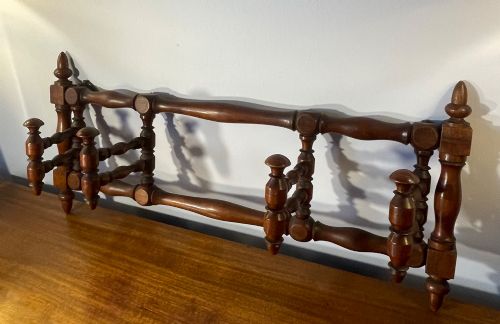
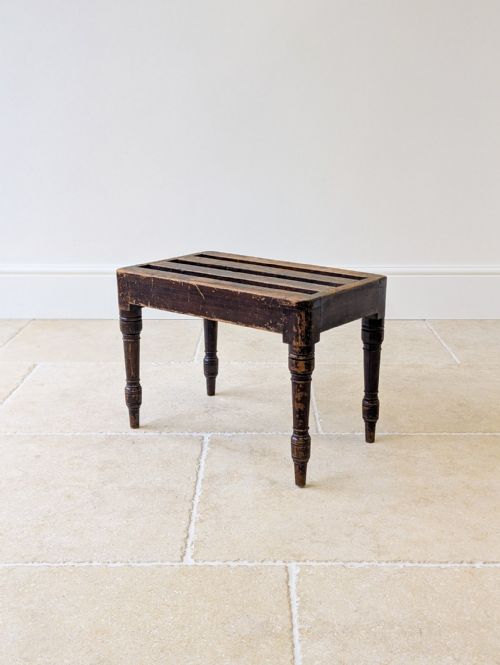
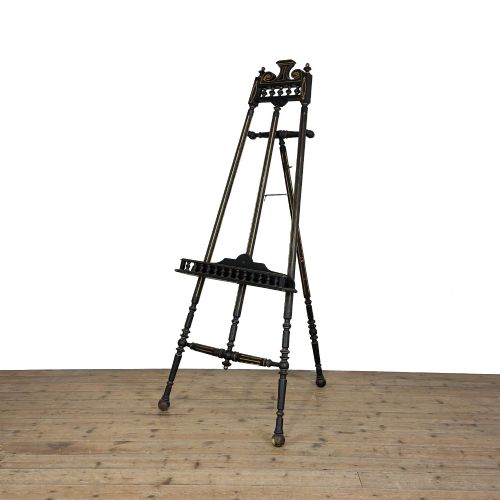
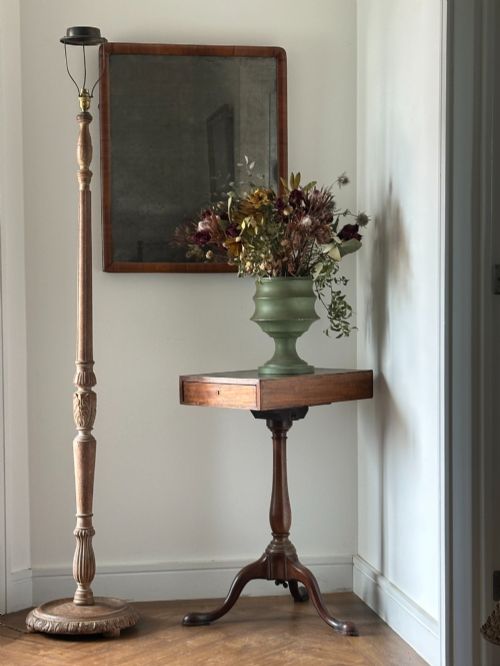
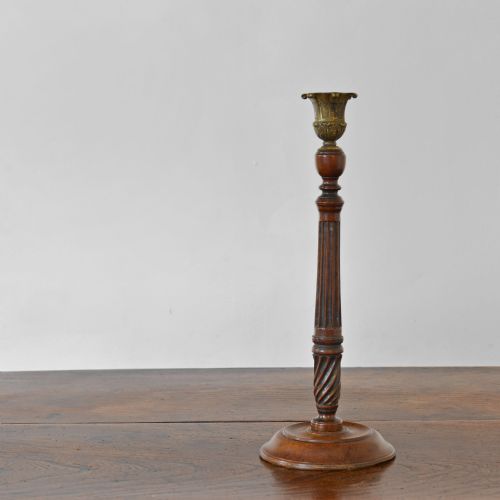
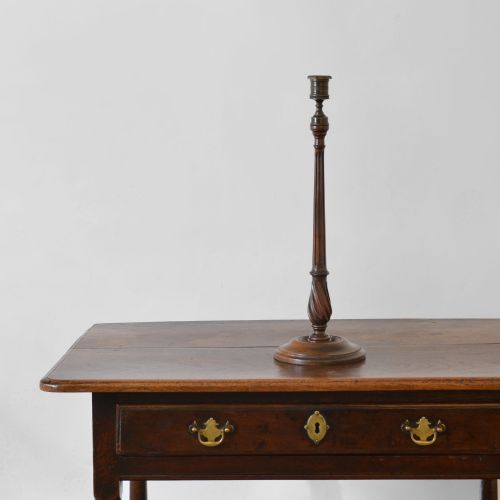
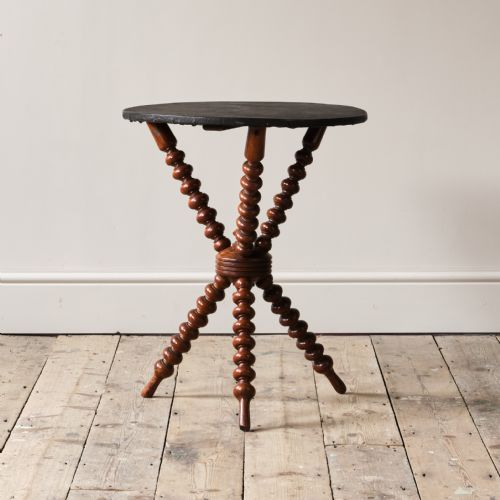
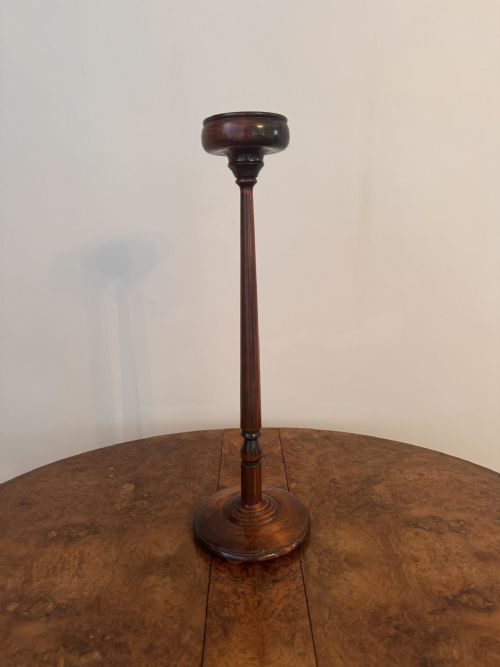


Vintage Turned Timber Stand
These vintage turned timber stand designs offer practical utility and classical form, bringing rich historic warmth to any interior scheme.
Vintage Turned Timber Stand
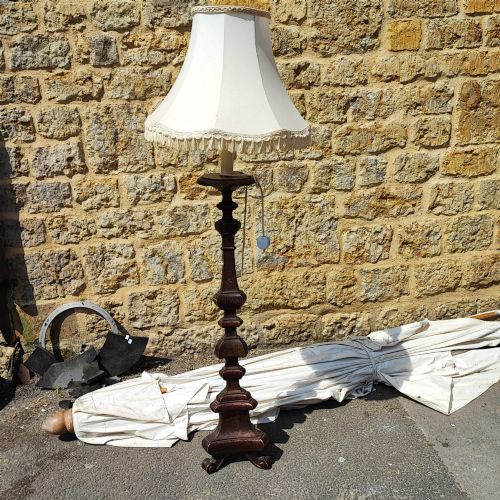
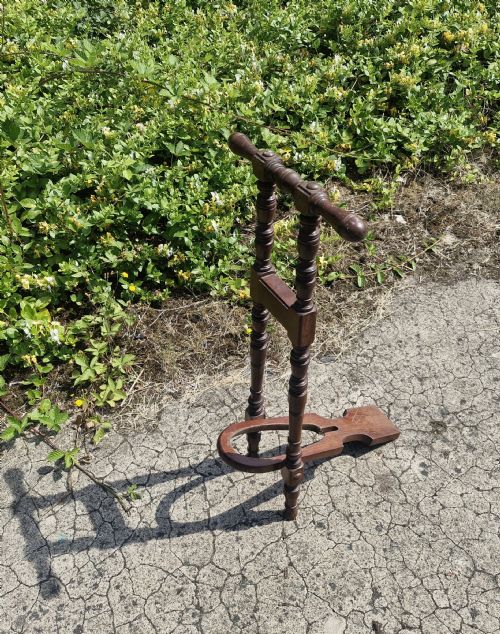
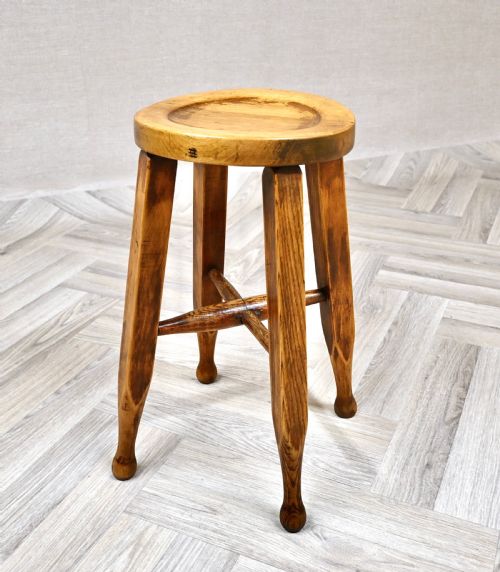
The selection on this page demonstrates considerable variety in form and origin, ranging from Georgian mahogany candlesticks to Victorian painted columns and nineteen-twenties floor lamps. Buyers encounter both utilitarian boot jacks and decorative items such as revolving egg cup stands.
Makers utilised native and imported hardwoods, shaping timber into balanced columns and supports designed for everyday utility. Such objects suited country houses and urban parlours alike, serving roles from illumination to boot removal.
What varies in quality
Quality rests in the precision of the lathe work and the selection of timber, where dense hardwoods like mahogany and walnut provide superior durability and crisp detail. Finer examples display well-balanced proportions and thoughtful integration of brass or metal components.
The integrity of the construction and the subtlety of the surface finish distinguish standard utilitarian items from finer decorative pieces. Original patination and uncompromised turned profiles elevate certain candlesticks, lamps, and stands above simpler workshop productions.
Current listings feature items from the eighteenth, nineteenth, and early twentieth centuries, constructed in mahogany, oak, walnut, and mixed hardwoods.
The Vintage Turned Timber Stand Glossary
- Treen
- Small handmade wooden domestic objects produced prior to the widespread use of plastics. These items include taper candlesticks and small egg cup stands.
- Ebonised
- Wood finished with a dark stain or paint to imitate ebony. This treatment appears frequently on nineteenth-century aesthetic style pieces.
- Standard Lamp
- A tall floor-standing lamp designed to provide ambient room illumination. These fixtures often feature heavy turned timber columns for stability.
- Boot Jack
- A small device used to assist in the removal of boots without sopping hands. Examples are found in robust timbers suitable for country house boot rooms.
- Baluster
- An architectural column with a swelled lower portion, commonly utilised in the turning of candlesticks and lamp standards. This shape adds visual weight to the base.
Vintage Turned Timber Stand: Frequently Asked Questions
What is a turned timber stand?
A turned timber stand is a functional or decorative household object shaped on a woodturning lathe. These pieces include floor lamps, candlesticks, and occasional stands.
They draw from various historical periods, utilising woods such as mahogany, oak, and walnut to create symmetrical, load-bearing columns and decorative supports.
How do I date a turned wooden candlestick?
Dating relies on examining the timber species, turning profiles, and surface finishes present on the piece. Eighteenth-century examples often employ solid mahogany with simple proportions.
Later Victorian and interwar pieces may introduce ebonising, painted decoration, or alternative hardwoods like walnut. Tool marks and metal fitting styles also offer chronological clues.
Where were standard lamps used?
Standard lamps served as movable lighting fixtures in Victorian and Edwardian sitting rooms and parlours. They provided focused illumination before overhead electric lighting became universal.
Their heavy turned timber bases ensured stability while supporting fabric shades and electrical wiring.
How do I care for antique treen and turned timber?
Antique timber requires stable indoor humidity away from direct heat sources and strong sunlight. Gentle dusting with a dry cloth maintains the surface.
Applying occasional appropriate wax preserves the patina without obscuring the historic grain and turning marks.