



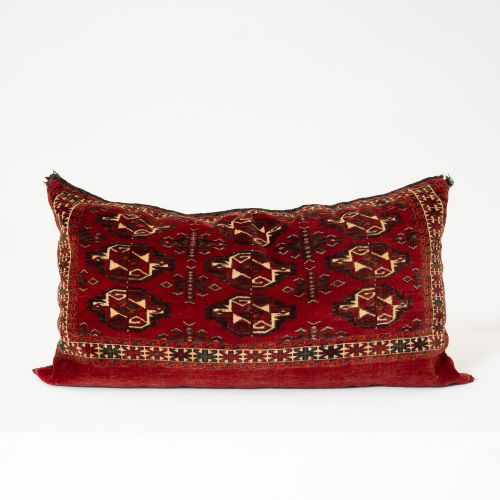


Vintage Turkmen Bag
When you search for a vintage turkmen bag, you enter the world of nomadic tribal weaving from Central Asia.
Vintage Turkmen Bag
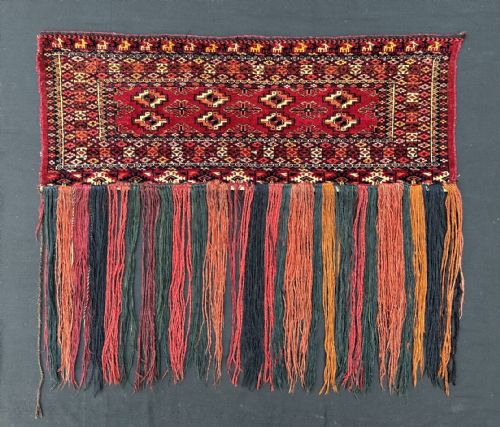
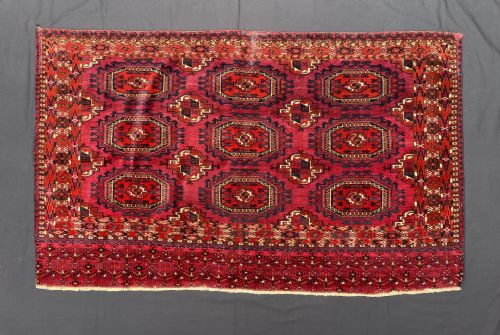
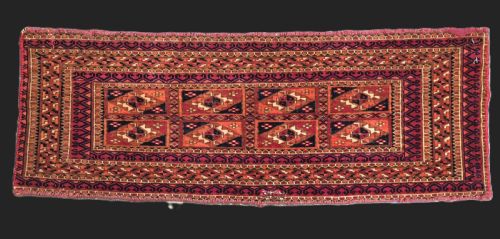
The pieces on this page span periods from the mid-nineteenth century into the early twentieth century, representing traditional nomadic life through structured formats. Many survive as bag faces rather than complete vessels, retaining the original front panels that displayed tribal identity within the yurt.
Tribal weaving traditions dictate the specific formats found here, connecting each artefact to regions like the Akhal oasis, Merv oasis, and the Trans-Caspian steppes. Buyers encounter distinct structural types designed for holding household possessions, bedding, or personal spinning tools.
Materials and construction methods
Makers utilised hand-spun wool combined with cotton elements to build dense foundations that withstood nomadic existence. Natural dyes provided the characteristic rich palette seen across these tribal textiles.
Weaving techniques involved precise knotting and flatweave structures, often incorporating plain weave backs or hanging loops for domestic utility. The resulting fabric balanced structural durability with intricate decorative patterning.
Vintage Turkmen Bag Retail Price Guide 2026
Typical asking prices for vintage turkmen bag among the pieces listed under this phrase on Sellingantiques today, from the lower quarter to the upper quarter. They describe what is for sale here now, not the wider market.
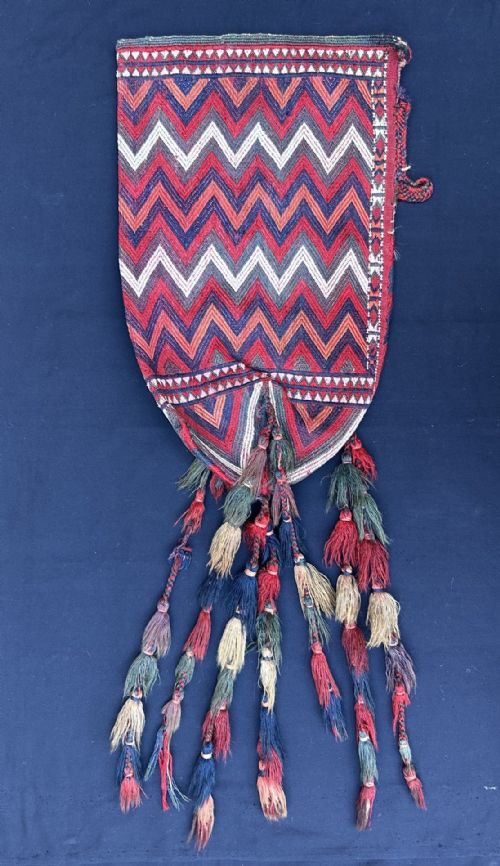
Several Yomut spindle bags survive specifically because someone needed a secure place to keep their wool-spinning gear rolling smoothly across the steppes.
Assessing quality in nomadic textiles
Execution of the weave determines much of the distinction, with tighter knots and finer structures separating standard utility items from exceptionally accomplished work. The precision of geometric execution reflects the skill of the weaver.
Design complexity also plays a role, from standard repeated motifs to unusual arrangements or high counts of major design elements like guls. Completeness further elevates an example, particularly when original backs, hanging loops, or paired components survive intact.
The Vintage Turkmen Bag Glossary
- Chuval
- A large tent bag used by nomadic families for storage within the yurt. These rectangular pieces frequently survive as decorative bag faces.
- Torba
- A smaller utility bag utilised for domestic storage and household items. They display varied tribal gull motifs across the face.
- Gul
- A primary medallion or repeating motif used in Turkmen carpet and bag design. Different tribes utilised distinct gul forms to signal identity.
- Mafrash
- A rectangular storage container or face associated with bedding and household goods. These pieces often feature banded flatweave or piled designs.
- Kap
- A specific term for a covered bag or utilitarian container from Central Asian nomadic traditions. They appear alongside chuvals and torbas in tribal inventories.
- Flatweave
- A non-pile textile construction method creating smooth surfaces without raised tufts. Artisans employed this technique for backs, sides, and banded utility pieces.
Vintage Turkmen Bag: Frequently Asked Questions
What were Turkmen bags used for?
Nomadic families utilised these bags for storing household possessions, blankets, and clothing inside the traditional yurt dwelling.
Larger chuvals held bulkier bedding, while smaller torbas and spindle bags contained personal belongings and tools during seasonal migrations.
How do I identify different tribal groups?
Tribes such as the Tekke, Yomut, and Ersari distinguished their weaving through specific structural layouts and characteristic medallion designs.
Examining the primary motifs, such as specific gul shapes and border patterns, reveals the distinct artistic conventions of each regional group.
Why do many pieces survive as bag faces?
Centuries of heavy domestic use often caused the plain weave backs and sides of storage bags to wear out long before the robust knotted fronts.
Families trimmed away damaged utilitarian backing sections to preserve the decorative face, which was prized for its intricate tribal artistry.
How should I display a vintage bag?
Many collectors mount these textile pieces directly onto walls as decorative fibre art, utilising their rich red tones and geometric patterns as focal points.
Smaller formats such as cushion covers or complete torbas can also be placed carefully on surfaces or seating areas with appropriate support.