



Vintage Triple Tables
Vintage triple tables bring versatile multi-part surfaces and mirrors into a room, offering functional elegance across dining rooms and bedrooms.
Vintage Triple Tables
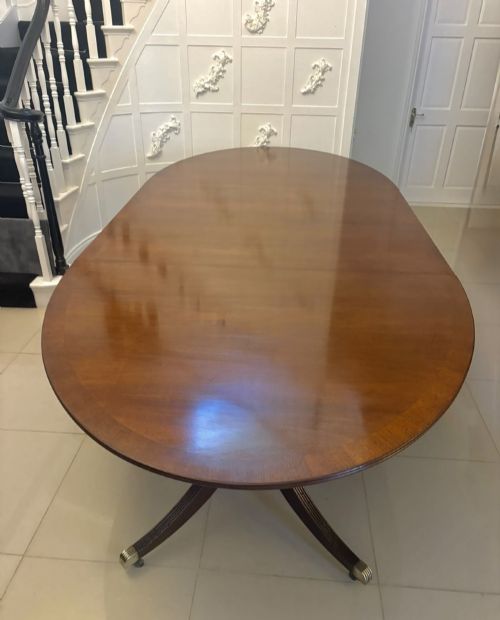
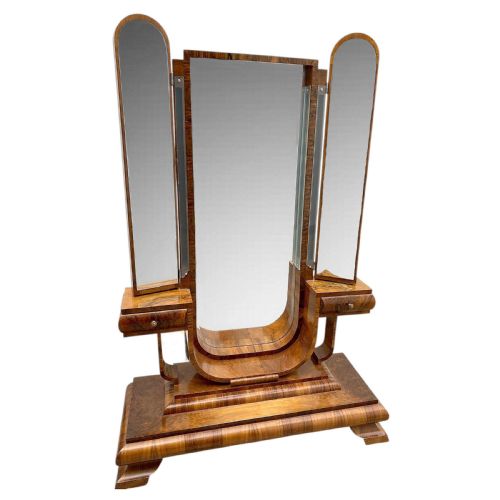
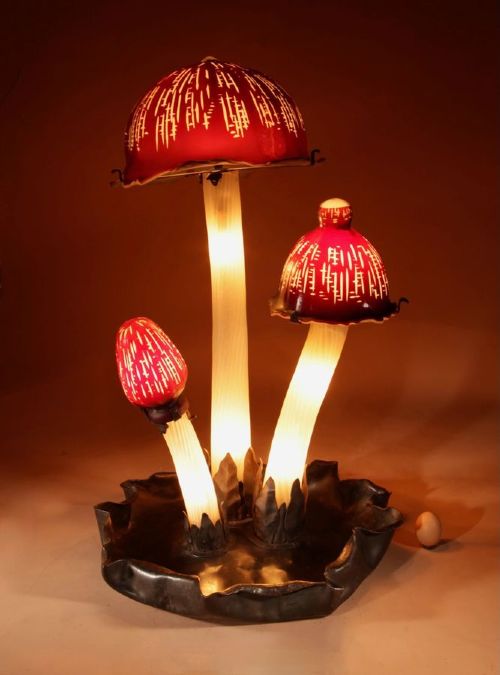
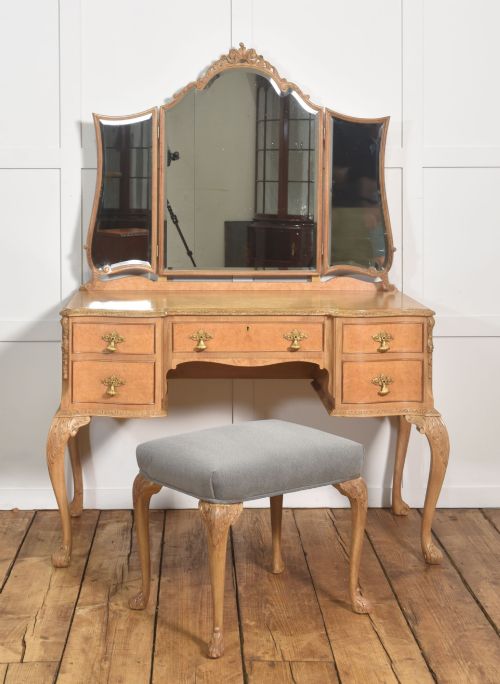
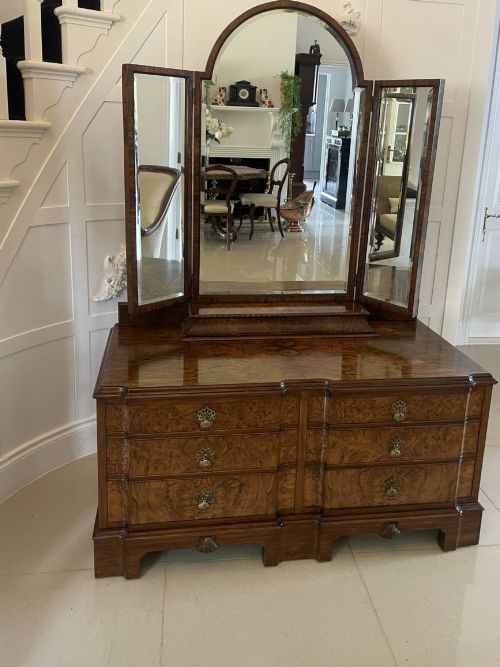
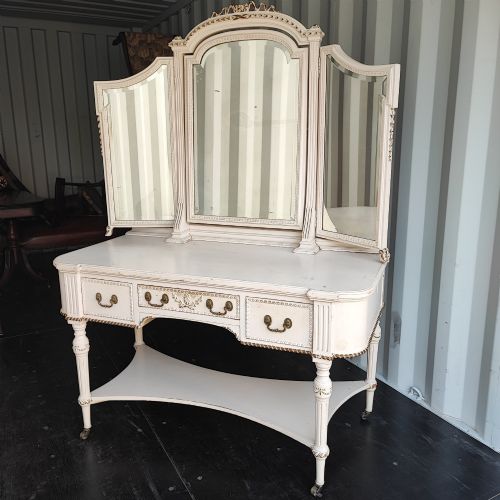
When you search for vintage triple tables, you encounter a diverse group of objects spanning dining furniture, dressing tables with triptych mirrors, and multi-light lamps. These pieces primarily date from the nineteenth and twentieth centuries, encompassing Edwardian, Art Deco, and revival styles.
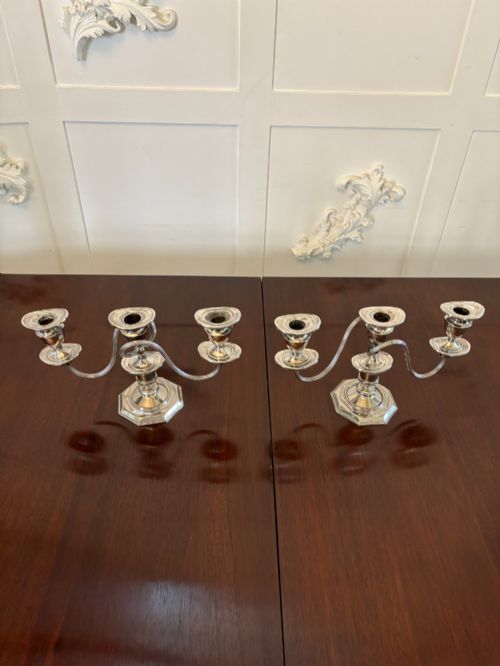
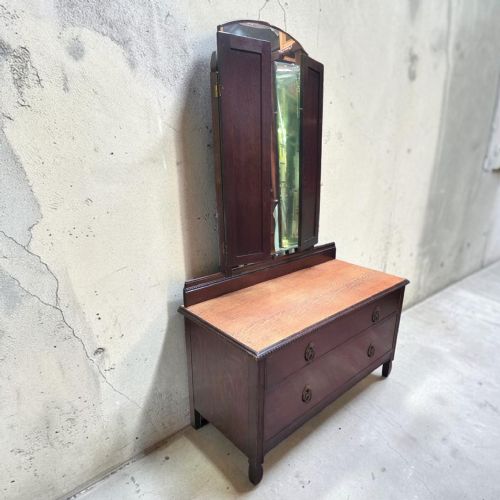
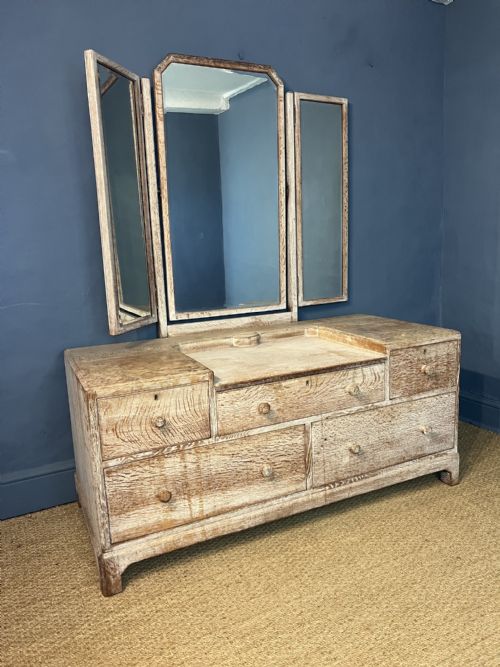
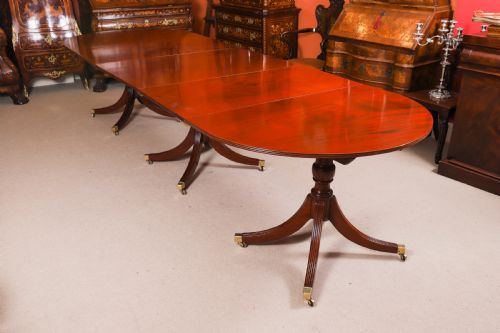
The dining examples span mahogany triple pedestal extending tables, while bedroom pieces feature walnut and oak dressing tables equipped with triple folding mirrors. Brass and toleware bouillotte desk lamps also appear with triple light configurations, alongside candelabras.
Makers such as Maples and Heals represent the notable cabinet work found within these selections. Walnut, mahogany, and oak dominate the timber choices across the varied forms.
How they were made
Cabinet makers utilised solid woods and decorative veneers like burr walnut and figured mahogany over sturdy carcases. Table mechanisms require solid pillar supports and extending leaves to bear heavy timber weights.
Mirror frames and dressing furniture employ carved woodwork alongside bevelled glass plates hinged in three sections. Metalwork components utilise brass, silver plating, and painted toleware for lamps and candelabras.
Vintage Triple Tables Retail Price Guide 2026
Typical asking prices for vintage triple tables among the pieces listed under this phrase on Sellingantiques today, from the lower quarter to the upper quarter. They describe what is for sale here now, not the wider market.
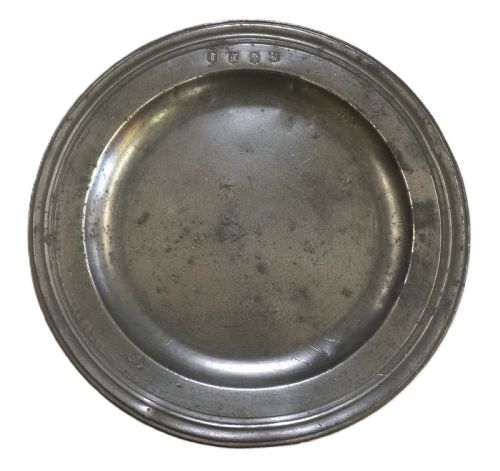
A solitary pewter plate from sixteen ninety sits among the walnut mirrors and mahogany dining tables.
What varies in quality
The standard of timber selection and veneer matching defines the upper tier of cabinet pieces. Finely figured burr walnut and rich mahogany display careful grain continuity across extending leaves and curved drawer fronts.
Original hardware, sound mirror silvering, and maker marks elevate certain dressing tables and lamps above standard production items. Robust structural joinery in pedestal dining tables ensures lasting stability during extension.
Maples of London and Paris·Heals·Wm Tonks and Sons·Arundel Clocks
The Vintage Triple Tables Glossary
- Triptych
- A three-panel mirror arrangement where the two outer hinged wings adjust angles around a fixed central glass. This configuration appears frequently on dressing chests.
- Triple pedestal
- An extending dining table supported by three distinct pillars or pedestals rather than four corner legs. This design provides robust support for long mahogany leaves.
- Burr walnut
- A prized timber harvested from walnut tree growths that produces highly figured, swirling grain patterns. Cabinet makers apply it as a decorative veneer on statement pieces.
- Toleware
- Painted or lacquered metalware, typically tin or steel, utilised for lamp bodies and shades. Green and other muted tones appear frequently on French bouillotte desk lamps.
Vintage Triple Tables: Frequently Asked Questions
How do I care for walnut veneer?
Keep walnut furniture away from direct sunlight and heat sources to prevent the timber and veneer from drying out or splitting. Dust regularly with a soft dry cloth and apply occasional appropriate wax feeds.
Avoid using silicone polishes or excess moisture on antique surfaces. Proper humidity control in the room protects both the timber substrate and the underlying glue joints.
What is a triptych mirror?
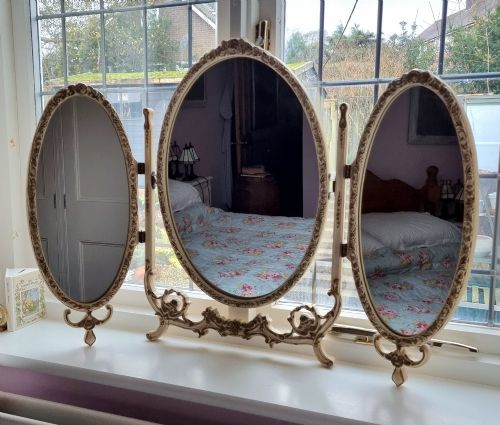
A triptych mirror consists of three distinct glass panels mounted in frames, with the two side sections attached by hinges to the main central glass. This allows the user to angle the side mirrors for multidirectional reflection.
These mirrors appear standalone on tabletops or integrated directly into dressing chests and vanity tables. The hinged design provides practical utility alongside decorative symmetry.
Where were bouillotte lamps used?
Bouillotte lamps originated in France as specialised lighting for the card game of the same name. Their adjustable metal shades directed light downwards onto the playing table.
Over time, these triple-light brass and toleware fixtures transitioned into sophisticated desk and reading lamps. They suit study spaces, sideboards, and living rooms requiring focused illumination.