





Vintage Treen Collectable
Vintage treen collectable pieces comprise small wooden domestic items, kitchenware and personal objects shaped by hand and lathe across centuries.
Vintage Treen Collectable
When you search for vintage treen collectable, you encounter small wooden objects made for domestic, professional and personal use across the seventeenth, eighteenth, nineteenth and early twentieth centuries. These pieces encompass kitchenware, snuff boxes, nutcrackers, mortars, tobacco jars and various tools shaped from timber.
The selections span utilitarian workshop items alongside decorative household goods. You meet turned fruitwood bowls, carved spice grinders, coopered tobacco boxes, knitting sheaths and children's rattles originating from English, Welsh and French makers.
The items range from austere Georgian utilitarian vessels to Victorian figural nutcrackers and folk art carvings. Each object reflects the daily tasks and trades of past centuries through the medium of turned and carved timber.
How they were made
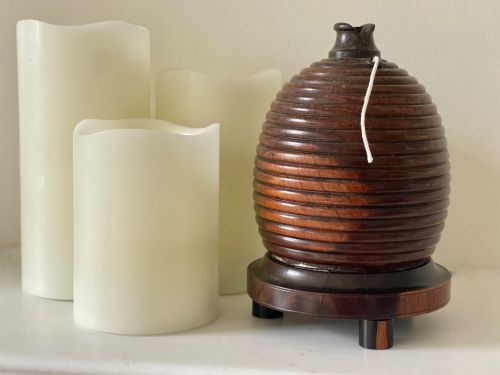
Maker's workshops utilised dense hardwoods such as boxwood, lignum vitae, walnut, fruitwood, yew-wood and beechwood. These timbers provided the durability required for mortars, mallets, lemon squeezers and string dispensers subjected to constant daily friction.
Craftsmen shaped these materials using woodturning lathes and hand carving tools. Many items display precise annular turning marks from the lathe, while others reveal naive hand carving seen in figural nutcrackers, snuff boxes and butter prints.
Vintage Treen Collectable Retail Price Guide 2026
Typical asking prices for vintage treen collectable among the pieces listed under this phrase on Sellingantiques today, from the lower quarter to the upper quarter. They describe what is for sale here now, not the wider market.
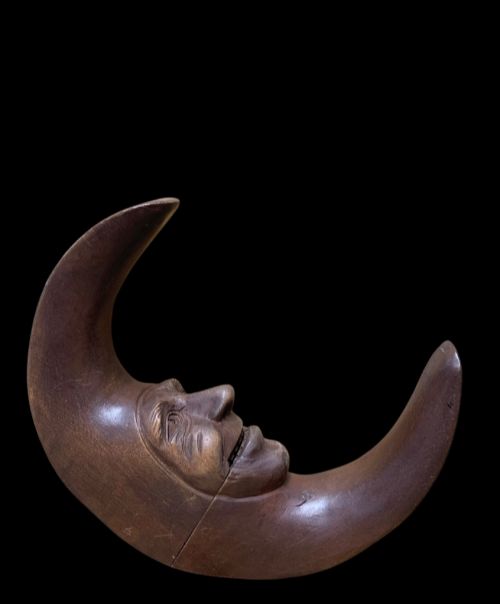
Among the utilitarian items wait a teachers clicker, a pigeon bird call and a man in the moon nutcracker.
What varies in quality
Patina and surface preservation separate exceptional items from ordinary ones. Pieces retaining their original untouched surfaces, tool marks and rich handling sheen demonstrate superior age and careful preservation over generations.
The Vintage Treen Collectable Glossary
- Treen
- Small wooden domestic artefacts made by turning on a lathe or by hand carving. The term derives from the old English word for tree.
- Lignum vitae
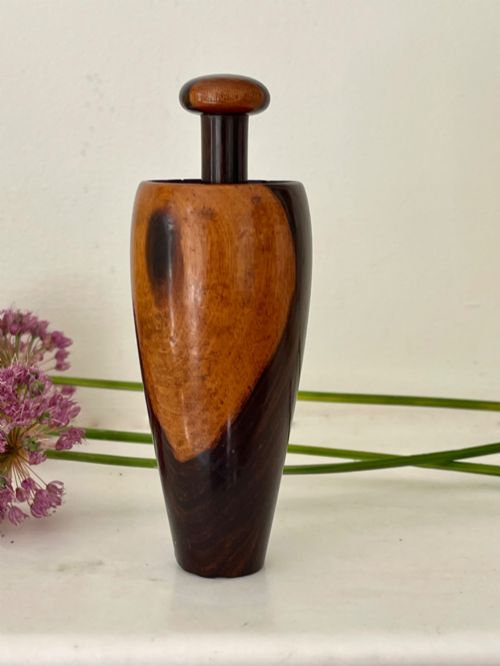
- A dense, heavy self-lubricating hardwood imported from the Americas and utilised for mortars, mallets and string holders. It sinks in water due to its high density.
- Fruitwood
- Timber sourced from fruit-bearing trees such as apple, pear or plum, favoured by turners for its fine grain and ability to take sharp detail. It acquires a warm honey tone with age.
- Coopered
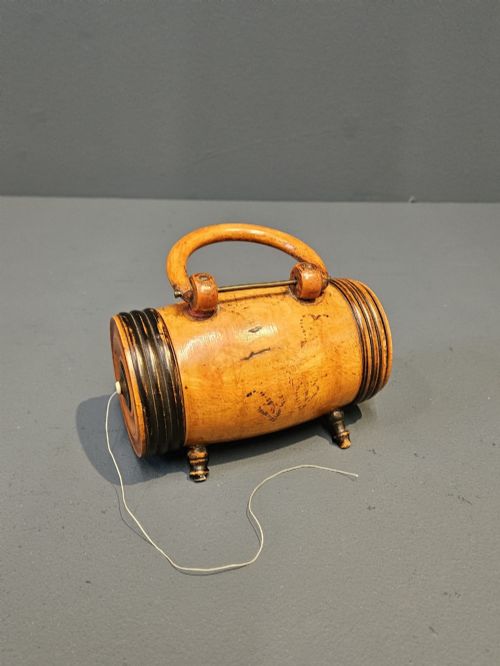
- Constructed from curved wooden staves bound together with hoops, a method used for making barrels, tobacco boxes and pipe stands. This technique mirrors full-scale cask making.
- Snuff box
- A small pocket container designed for holding powdered tobacco. These were frequently carved into whimsical shapes including shoes, animals and geometric forms.
- Butter print
- A carved wooden stamp used to impress decorative motifs such as acorns and wheat sheaves onto pats of butter. They preserve regional folk art designs.
Vintage Treen Collectable: Frequently Asked Questions
What is vintage treen collectable?
Vintage treen collectable refers to small wooden objects and utility wares produced by hand or lathe across the seventeenth to early twentieth centuries.
These items range from kitchen implements and pharmaceutical tools to personal accessories like snuff boxes and tobacco jars.
How were these wooden items used?
They served practical daily functions in domestic kitchens, apothecaries, workshops and parlours. People used them for grinding spices, squeezing lemons, storing tobacco, darning socks and cracking nuts.
Many objects also served recreational or decorative purposes, including children's toys, bird calls, spinning tops and folk art carvings.
Which woods were used for treen?
Turners and carvers selected dense, hard timbers that could withstand friction and handling without splitting. Common choices include boxwood, fruitwood, walnut, beechwood and heavy lignum vitae.
Some items featured native hardwoods while others incorporated exotic imports brought to British workshops.
How do I date vintage treen?
Dating relies upon tool marks, construction methods, timber species and stylistic indicators associated with periods like the Georgian and Victorian eras. Turned profiles and wear patterns help establish the age of each piece.
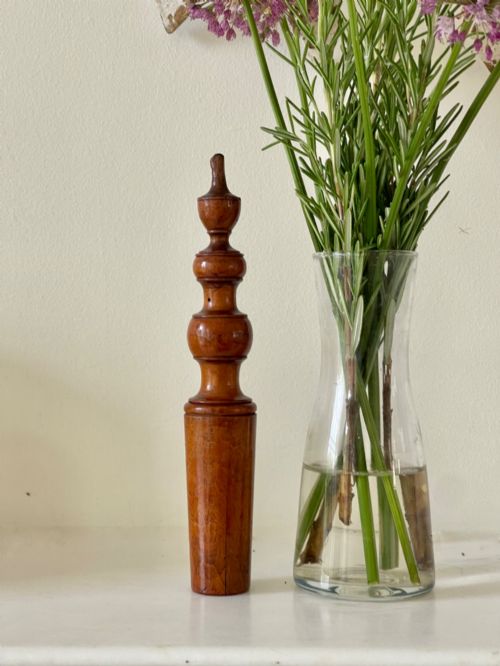
Historical context from specific objects such as nineteenth-century medical stethoscopes or knitting sheaths also provides chronological markers.