




Vintage Tree Rug
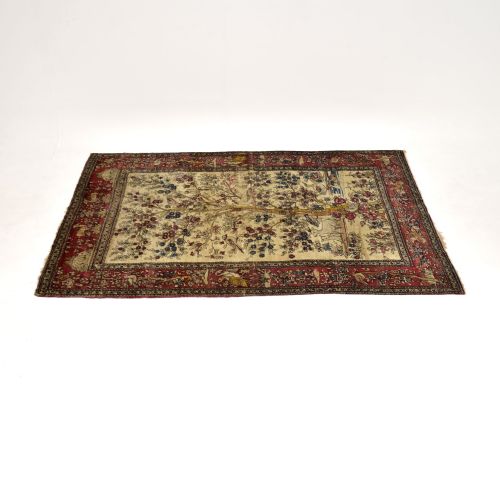
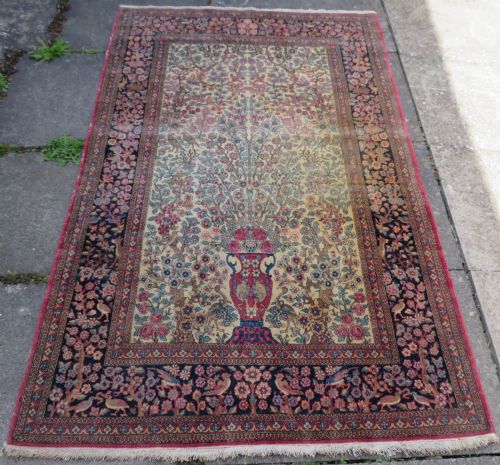
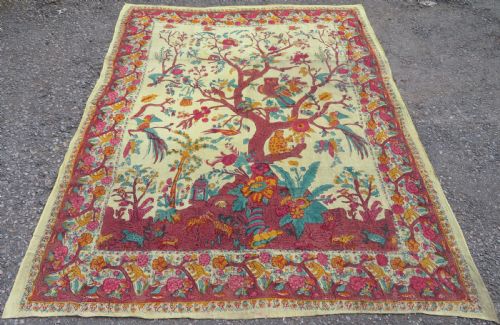
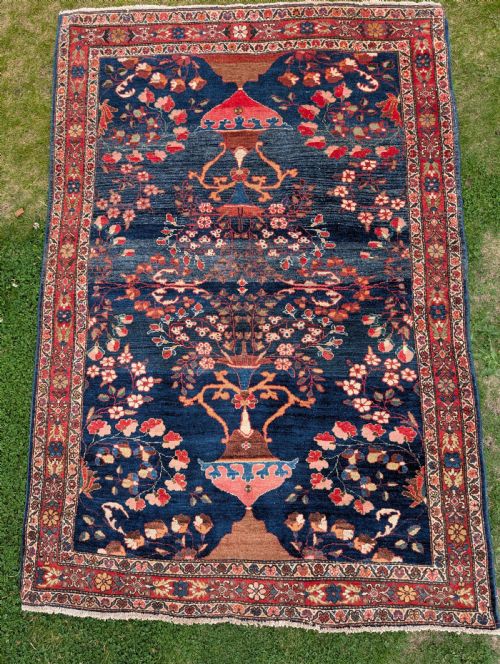
These vintage tree rug examples bring woven Persian and tribal imagery into a room, offering botanical and architectural motifs rooted in nineteenth and early twentieth century traditions.
Vintage Tree Rug
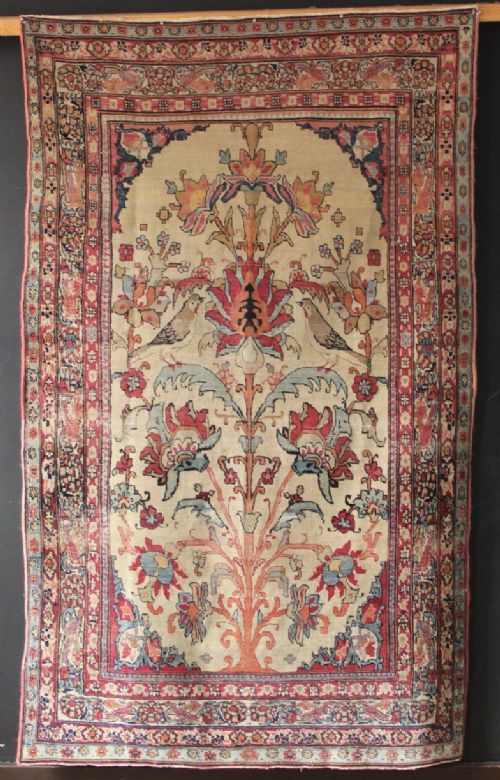
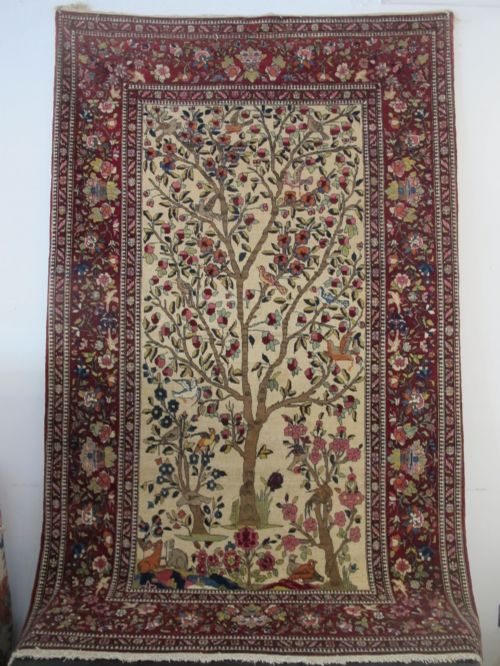
When searching for a vintage tree rug, a buyer encounters woven floor coverings and textiles featuring central tree of life, flowering tree, and garden designs. These pieces originate primarily from Persian centres such as Kashan, Isfahan, Kirman, and Bakhtiari workshops, alongside tribal regions like Baluch and Qashqai territories.
The most common examples on this page are handwoven pile rugs and carpets dating from the late nineteenth century through the 1930s. They combine traditional botanical iconography with regional weaving structures, spanning room-sized carpets down to smaller prayer formats.
Quality variations
Knot density, clarity of botanical detail, and the depth of natural dye palettes separate standard village work from finer city productions like Isfahan or Kirman Lavar. Master workshops achieved sharper precision in architectural prayer arches and floral vase arrangements.
The integrity of the wool foundation, retention of original borders, and the complexity of the tree of life or garden imagery dictate the standing of an individual carpet.
Vintage Tree Rug Retail Price Guide 2026
Typical asking prices for vintage tree rug among the pieces listed under this phrase on Sellingantiques today, from the lower quarter to the upper quarter. They describe what is for sale here now, not the wider market.
Several Baluch prayer rugs include woven depictions of local flora alongside small animal figures hidden within the branches.
The Vintage Tree Rug Glossary
- Tree of life
- A central botanical motif symbolising creation and eternity, frequently depicted with branches spreading across the field of the rug. It forms the core visual subject for many tribal and city pieces.
- Prayer rug
- A format defined by a mihrab or architectural arch at one end, designed to direct the placement of the rug during daily devotions. These pieces often incorporate floral lamps or vases beneath the arch.
- Kilim
- A flatweave textile produced without pile, created by tightly interweaving warp and weft threads. Examples from Sarkoy and Pirot demonstrate this crisp, geometric approach to botanical patterns.
- Kelleh
- A long, rectangular format of carpet traditionally suited for specific room layouts in Persian homes. They provide an elongated canvas for large central medallions or repeating tree motifs.
- Natural dyes
- Colourants derived from plants, roots, and insects before the widespread adoption of synthetic alternatives. They yield complex, shifting tones that develop a distinct patina with age.
Vintage Tree Rug: Frequently Asked Questions
Where were these rugs made?
The pieces originate primarily from Persian weaving centres and tribal regions, alongside related traditions in Anglo-Indian and Balkan areas like Pirot and Sarkoy.
Major cities include Isfahan, Kashan, and Kirman, while nomadic groups such as the Baluch and Bakhtiari produced distinct regional interpretations.
What materials make up these carpets?
The primary materials are wool and cotton, with select pieces incorporating camel hair for natural brown and golden ground tones.
Natural dyes provide the palette, while finer city rugs occasionally utilise silk highlights within the pile.
How do I care for an antique wool rug?
Protect the textile by placing it in areas away from direct, harsh sunlight to preserve the natural dyed wool.
Vacuum gently without using a rotating brush roll, and consult a specialist in antique textiles for professional cleaning.