
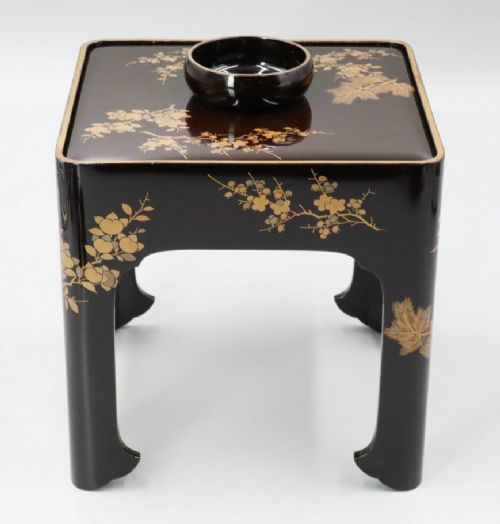
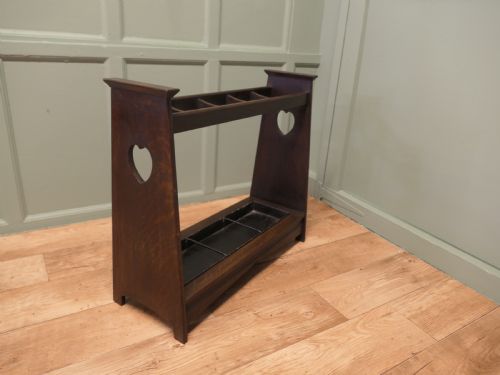

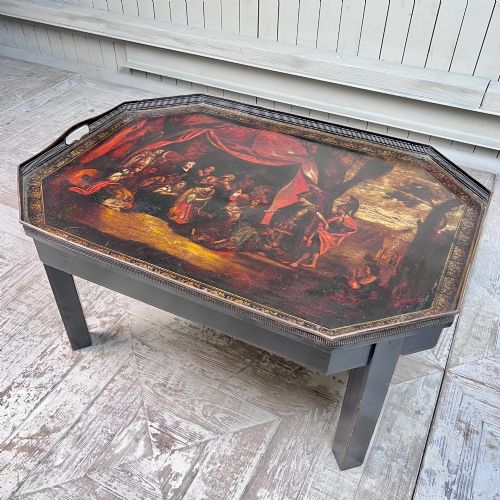
Vintage Tray on Stand
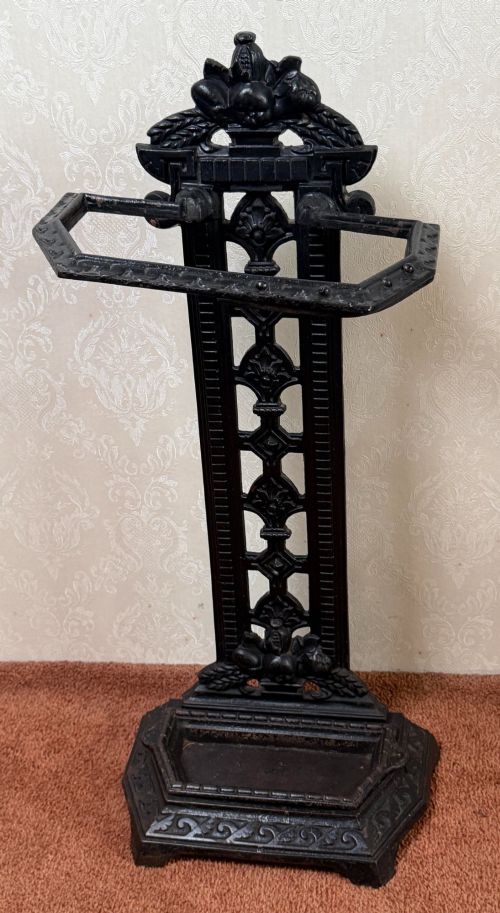
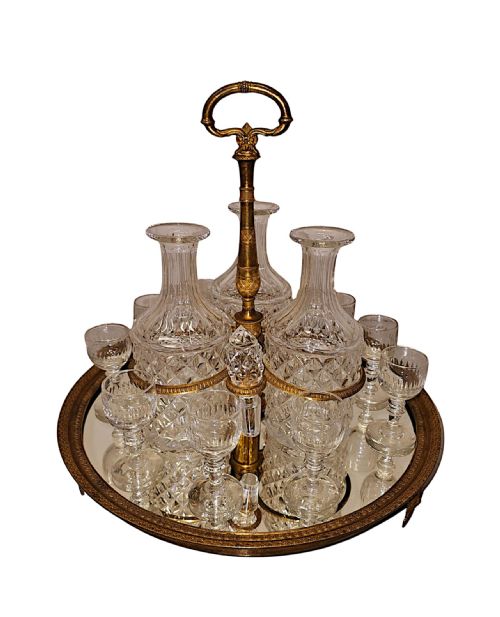
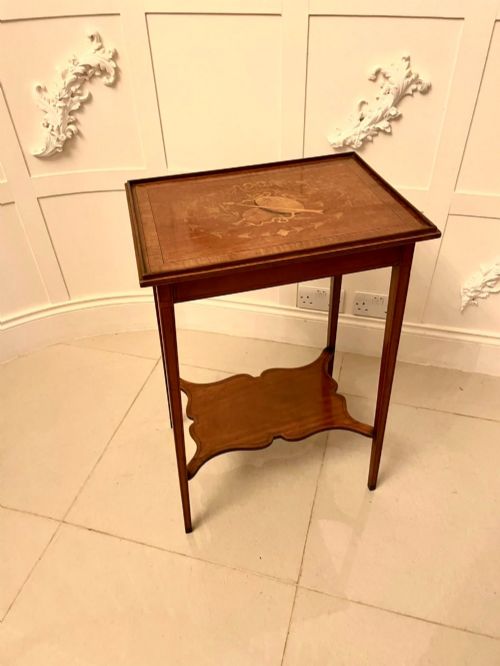
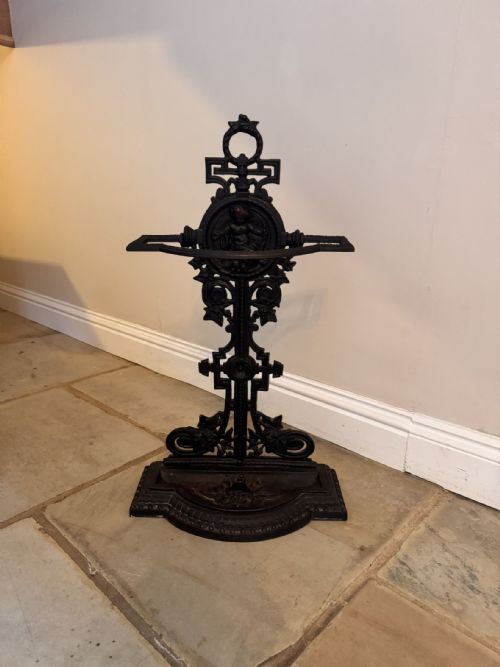
A vintage tray on stand brings practical folding utility and period timber character to a corner or parlour.
Vintage Tray on Stand
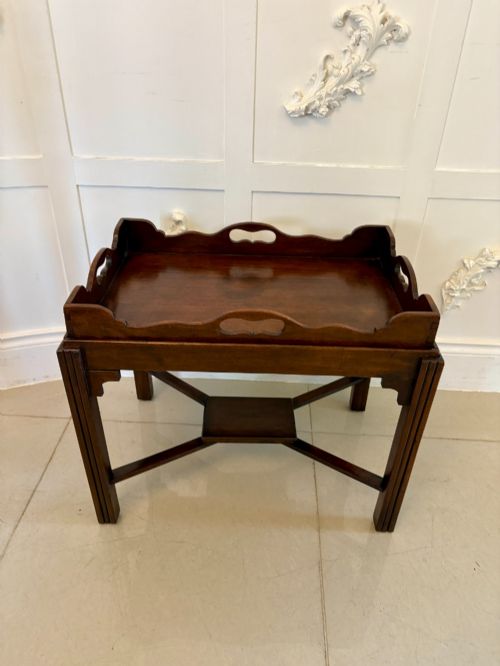
When you search for a vintage tray on stand, you are looking at raised serving surfaces and removable butler trays paired with folding or fixed wooden supports. These pieces bridge the gap between portable serving equipment and permanent occasional tables, originating from periods when hospitality required adaptable furniture.
The versions you are most likely to meet on this page span the 19th century and the Edwardian era, constructed predominantly in rich timbers like mahogany and oak. Many examples combine traditional folding cross-frame stands with deep-lipped trays designed for carrying glassware and china without mishap.
Materials and construction
Cabinetmakers relied heavily on dense hardwoods such as mahogany and oak to construct both the folding stands and the removable trays, ensuring durability under regular weight. Joints were frequently pegged or dovetailed to withstand the daily stress of opening and closing the support frames.
Metal elements occasionally entered the construction through brass hinges, handles, and supporting brackets, adding both structural reinforcement and decorative contrast to the dark timber surfaces.
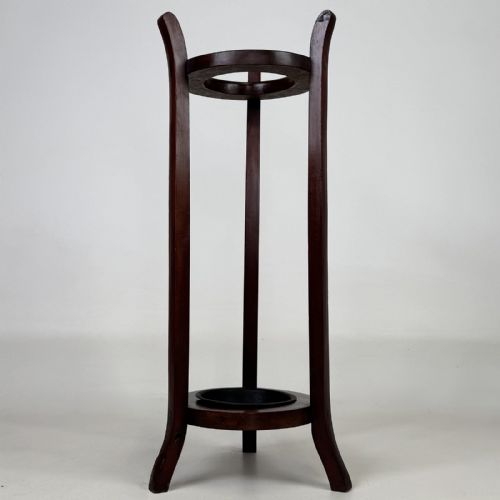
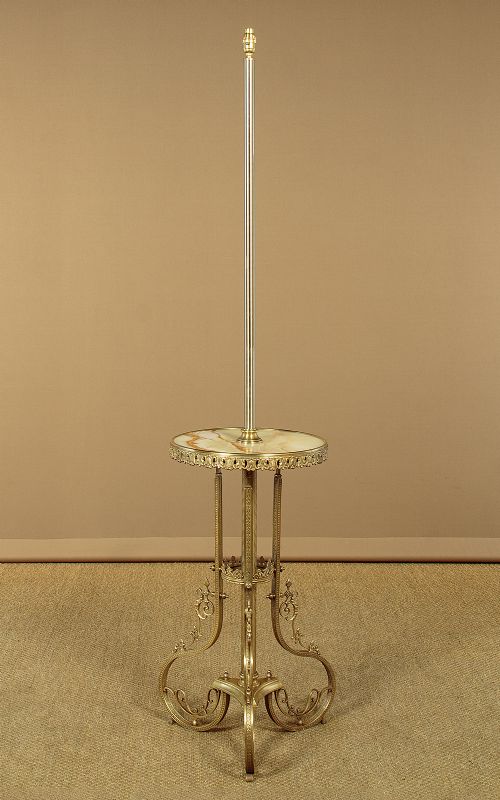
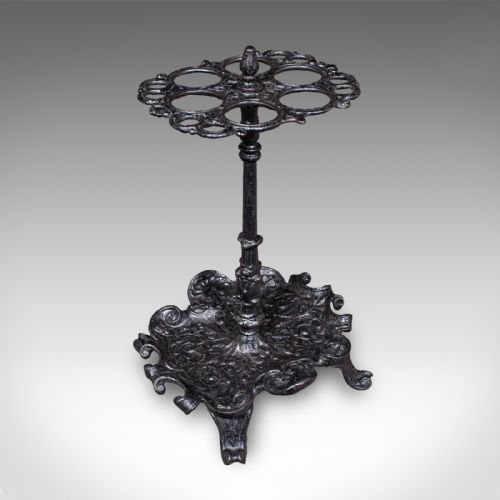
Listings feature oak, mahogany, brass, and cast iron across Victorian, Edwardian, and Arts and Crafts periods.
Judging quality in a vintage tray on stand
The distinction between ordinary utility items and superior examples lies in the crispness of the timber grain, the weight of the wood, and the subtlety of edge moulding on the tray itself. Higher quality pieces display precise joinery in the folding stand that locks firmly into position without wobble.
Makers of finer pieces invested attention in matching the wood figure across the tray base and its surrounding gallery rail, whereas simpler workshop items utilised plain planks intended purely for heavy domestic service.
Liberty Design
The Vintage Tray on Stand Glossary
- Butler tray
- A portable rectangular wooden tray, often featuring hinged sides that fold flat, designed to sit upon a separate folding stand. These pieces allowed servants to clear rooms swiftly after dining.
- Gallery rail
- A raised wooden border fitted around the perimeter of a tray to prevent items from sliding off during transit. It is typically shaped from a single piece of timber or assembled with mitred corners.
- Cross-frame stand
- A folding support structure formed of intersecting wooden legs that pivot on a central pin. This design allows the entire base to collapse flat when not in use.
- Mahogany
- A durable tropical hardwood prized by cabinetmakers for its deep reddish-brown colour and fine grain. It resists warping well, making it ideal for portable furniture.
Vintage Tray on Stand: Frequently Asked Questions
What is a vintage tray on stand used for?
These pieces served originally as portable serving trays that could be lifted from their folding supports to clear dining tables or carry drinks across a room. In modern settings, they function effectively as flexible coffee tables or side tables.
Because the tray lifts away from the stand easily, homeowners often use the tray alone for serving guests before returning it to its wooden base for display.
How do I date a vintage tray on stand?
Dating relies on observing timber choices, joinery methods, and the style of the gallery rails surrounding the tray. Georgian and early 19th-century examples tend to feature hand-cut dovetails and heavier mahogany.
Later Edwardian pieces often incorporate lighter satinwood stringing or simpler bracket construction on the folding bases. Examining the underside of the tray for tool marks helps confirm the manufacturing era.
Are tray stands stable enough for daily use?
Traditional cross-frame stands are engineered to lock securely under the weight of the tray placed upon them. Well-made examples from the Victorian and Edwardian periods remain entirely sturdy for holding lamps or books.
Checking that the pivot joints and folding cross-members move smoothly without excessive looseness ensures safe everyday placement in a busy room.
How do I care for mahogany tray tables?
Maintenance requires little more than dusting with a dry cloth and occasionally applying natural beeswax to nourish the timber grain. Avoid placing wet glasses directly on antique wood surfaces to protect the original finish.
Keeping these pieces away from direct heat sources and strong sunlight preserves the rich colour and prevents the timber from drying out over time.