


Vintage Travel Luggage Case
A vintage travel luggage case brings the tactile history of early exploration into modern spaces through sturdy construction and weathered finishes.
Vintage Travel Luggage Case
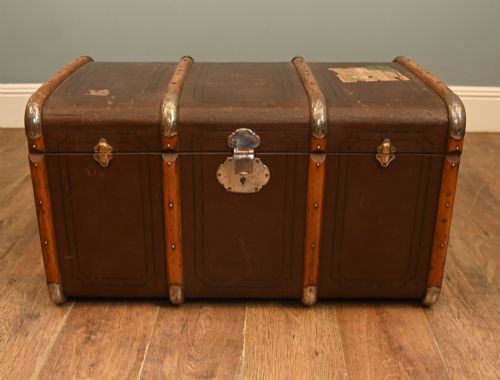
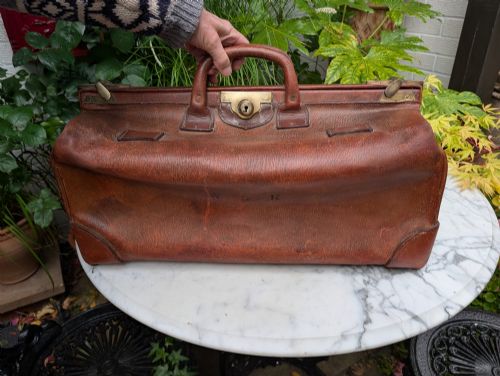
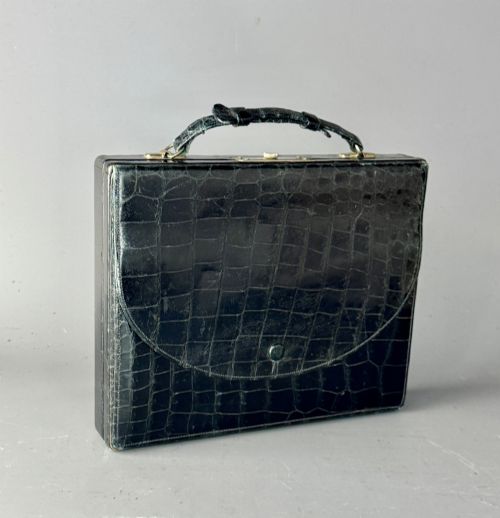
A vintage travel luggage case encompasses a wide variety of storage forms, from compact weekend bags and vanity boxes to massive shipping trunks and hat boxes. Buyers seeking a vintage travel luggage case will find pieces spanning the Victorian era through the mid-twentieth century, with strong representation from the Edwardian period and the nineteen-twenties.
The materials reflect practical journeys of the past, combining dense hides, durable canvas, and structural wood frames with metal and brass reinforcements. Common configurations include fitted gentleman's suitcases, double hat boxes, and military campaign chests designed for serious transit.
Most examples encountered on this page originate from English makers and French ateliers, showing influences from Art Deco design as well as utilitarian military styles. Whether utilised for shop display or modern domestic storage, these pieces retain the labels and markings of their original global voyages.
Construction and materials
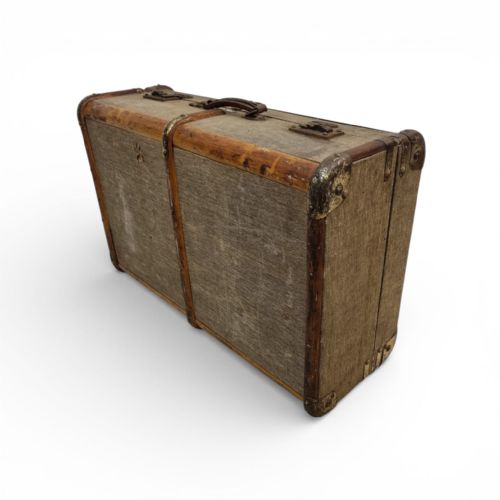
Makers constructed these cases around sturdy wood or metal frames, cladding the exterior in heavy-grained leather, durable canvas, or vellum. Brass corners, secure locks, and reinforced straps protected the edges from the rigours of shipping and train travel.
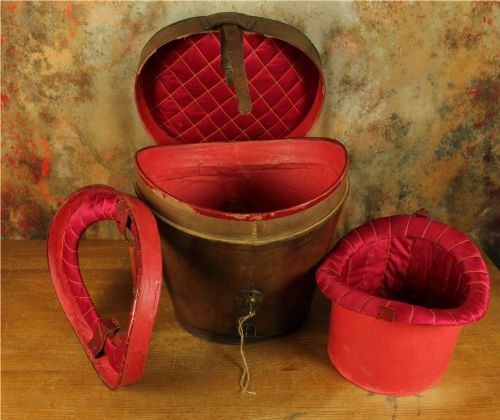
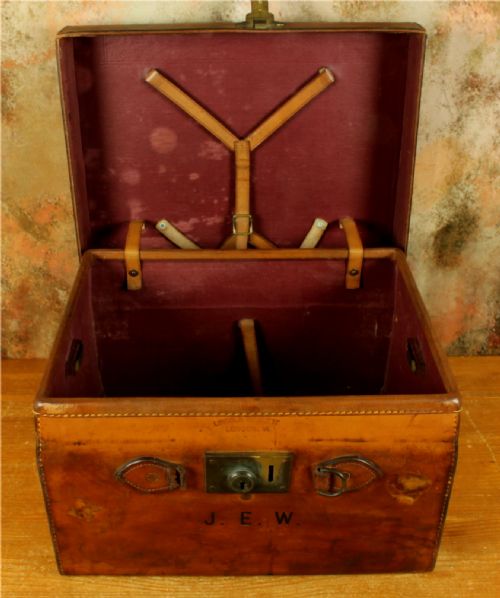
Interiors often featured bespoke fittings, including silk linings, silver dressing table accessories, and specialised compartments for top hats or veterinary kits. Hand-stitching and riveted hardware ensured that the heavy hides remained securely fastened to the internal structure over decades of use.
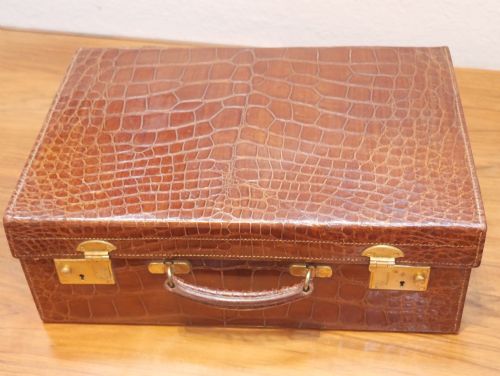
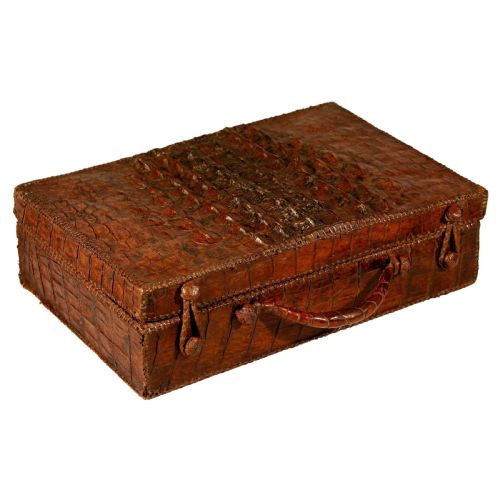
Listings feature durable materials including brass, canvas, wood, and crocodile leather across periods from the Victorian era to the nineteen-forties.
Assessing quality in early luggage
Quality rests upon the integrity of the core materials, such as thick hornback crocodile leather or substantial oak frames, compared to lighter paper or basic fabric constructions. Superior pieces retain original brass locks, working keys, and complete internal compartments rather than stripped or altered interiors.
The presence of distinguished maker signatures, fine silver dressing components, and original travel labels elevates an item from standard utility luggage to high-end bespoke craftsmanship.
Dunhill London·Lincoln Bennett·Army and Navy·Drew and Sons·Allen of London·John Pound·Harrods·Finnegans of Bond Street·Goyard·Mr Selfridge·J.Burton London·Bick Bros
The Vintage Travel Luggage Case Glossary
- Portmanteau
- A large leather travel trunk that opens into two distinct compartments. These heavy cases were standard for long journeys by train or ship.
- Vellum
- Fine calfskin or parchment stretched over a rigid core to create a lightweight yet tough outer shell. It provides a smooth, pale finish seen on select luxury trunks.
- Campaign case
- Modular furniture and storage designed for military officers on the move. These pieces feature recessed brass handles and rugged construction for field deployment.
- Hat box
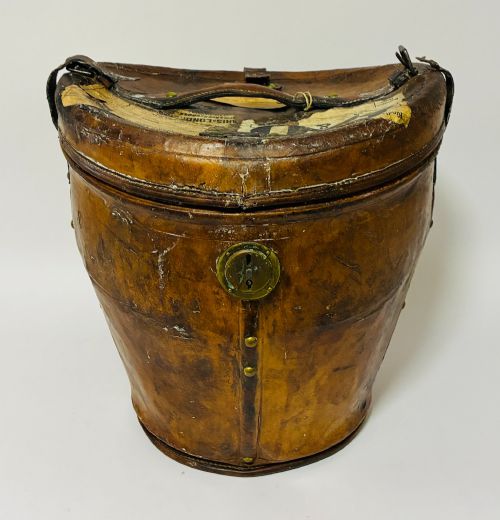
- A rigid cylindrical or square container designed to protect tall headwear during transit. Victorian and Edwardian examples often feature internal wooden mounts.
- Fitted interior
- An internal arrangement of leather straps, velvet slots, and compartments built to hold specific grooming items, bottles, or garments securely.
Vintage Travel Luggage Case: Frequently Asked Questions
Can I use these cases for daily storage?
These robust pieces function well for storing blankets, seasonal clothing, or books in living spaces. Their sturdy frames and hinged lids make them practical coffee tables or bedroom chests.
Ensure the interior linings are clean and dry before storing textiles inside. Keep them away from direct heat sources to protect the aged leather and wood.
How can I date an antique suitcase?
Examine the hardware, locks, and construction materials for clues about the manufacturing era. Victorian and Edwardian pieces often feature heavy brass fittings and hand-stitched leather panels.
Travel labels, railway stickers, and maker stamps provide a timeline of the journeys the trunk undertook. Patent dates stamped onto the locks also narrow down the year of production.
Were all these cases made in Britain?
While a large proportion originate from English workshops and London department stores, continental makers are also represented. French luxury houses produced distinctive hat trunks and vanity cases during the early twentieth century.
Regional differences appear in the brasswork, canvas patterns, and internal fabric choices. Maker plaques and stamps usually identify the country of origin.