
Vintage Toilet Table
A vintage toilet table offers a practical surface and adjustable glass for daily grooming, spanning centuries of cabinet-making skill.
Vintage Toilet Table
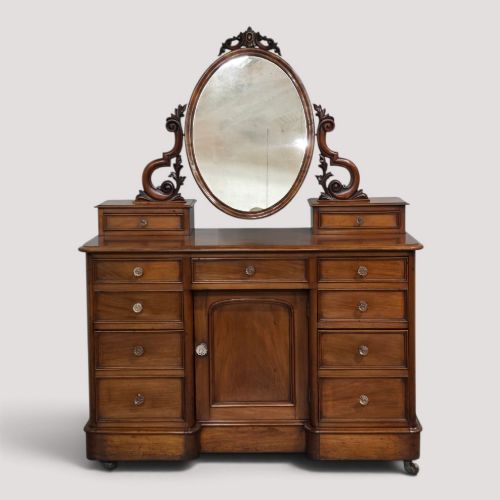
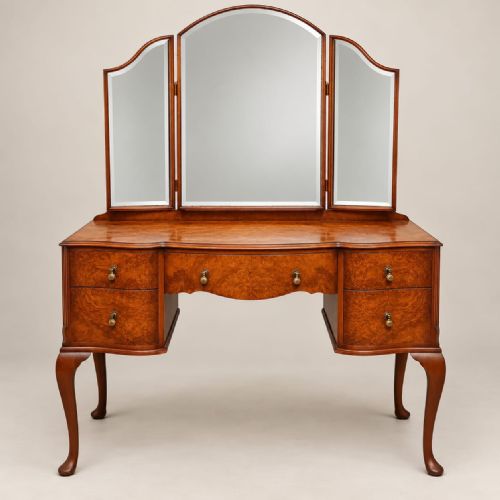
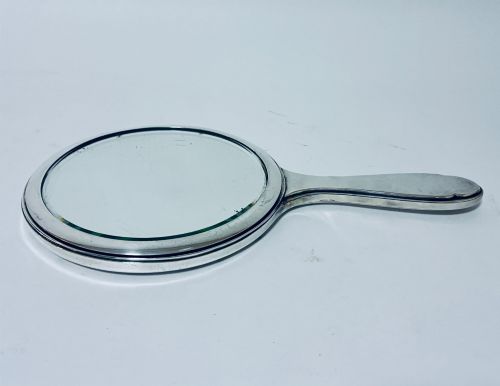
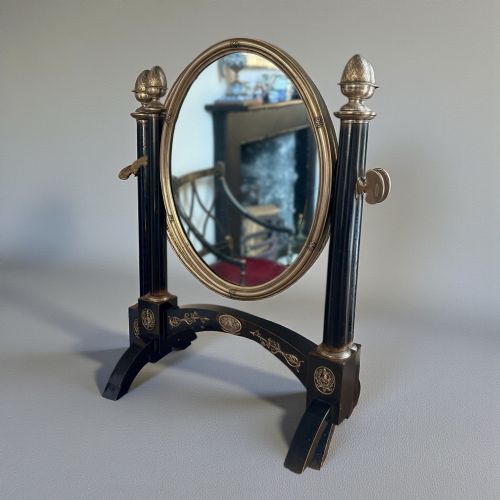
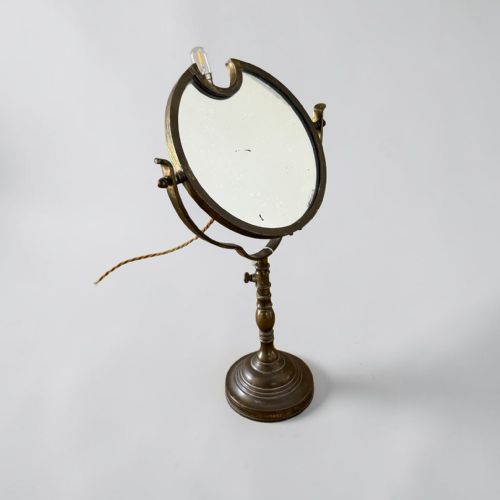
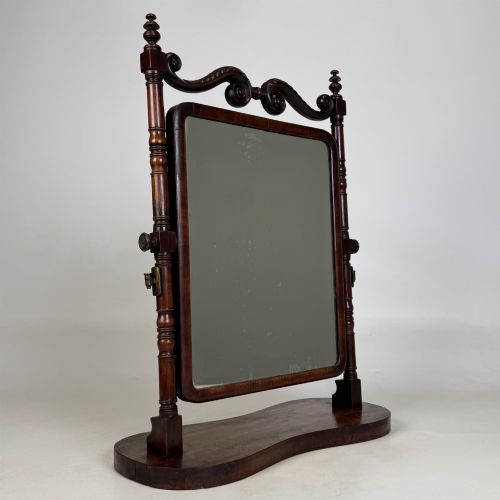
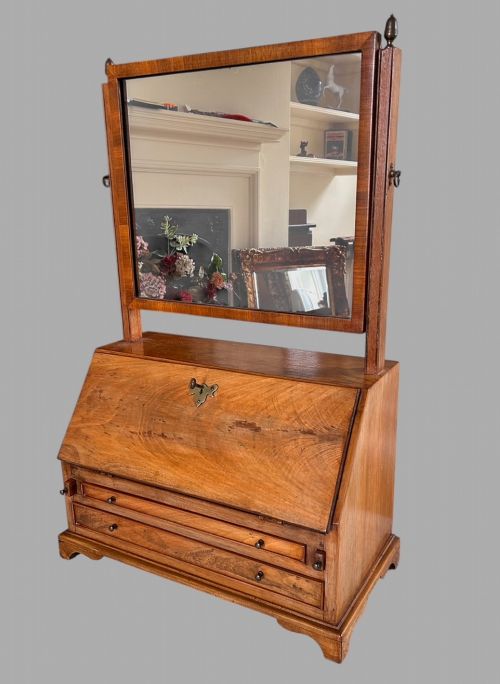
A vintage toilet table encompasses standalone dressing chests, vanity tables, and compact tabletop swing mirrors designed for personal grooming. These forms range from substantial pieces housing multiple drawers to smaller mirrors meant to sit atop an existing surface.
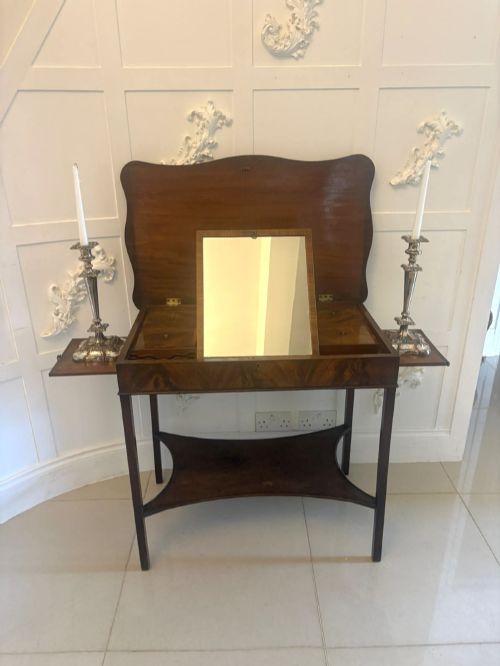
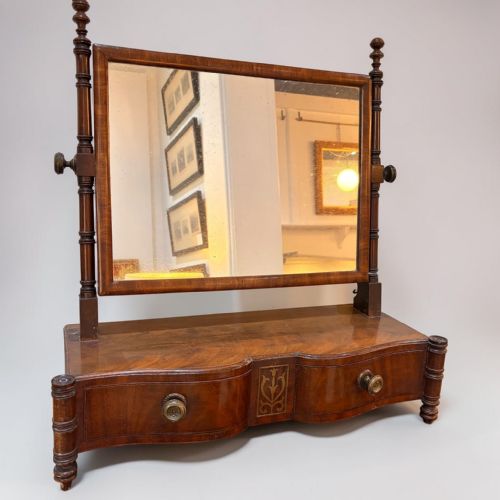
The selections span distinct historical periods, featuring items originating from the 18th, 19th, and early 20th centuries. Buyers frequently encounter mahogany swing mirrors alongside larger walnut and Edwardian dressing chests.
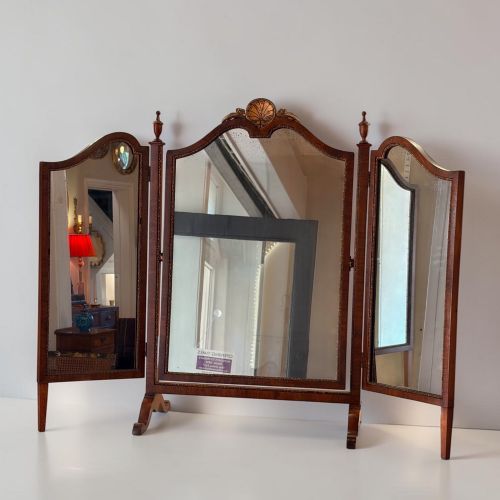
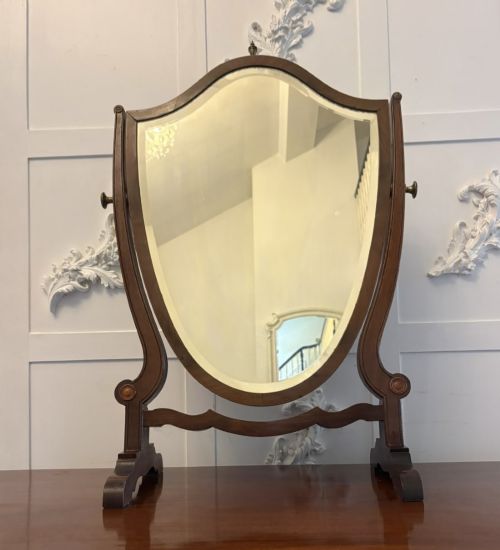
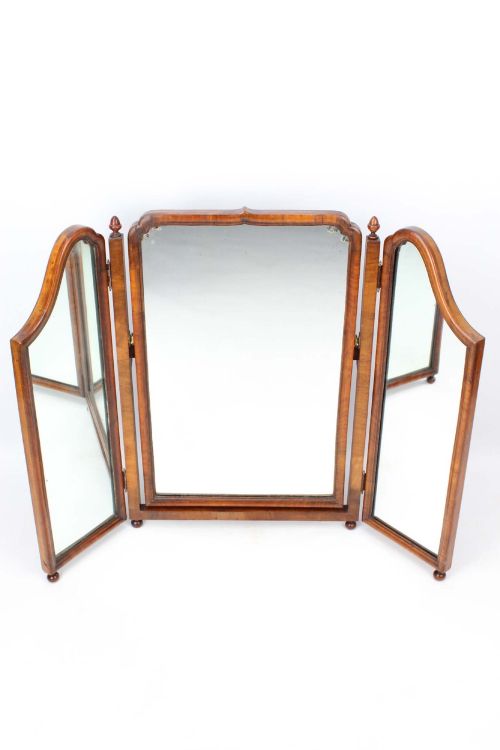
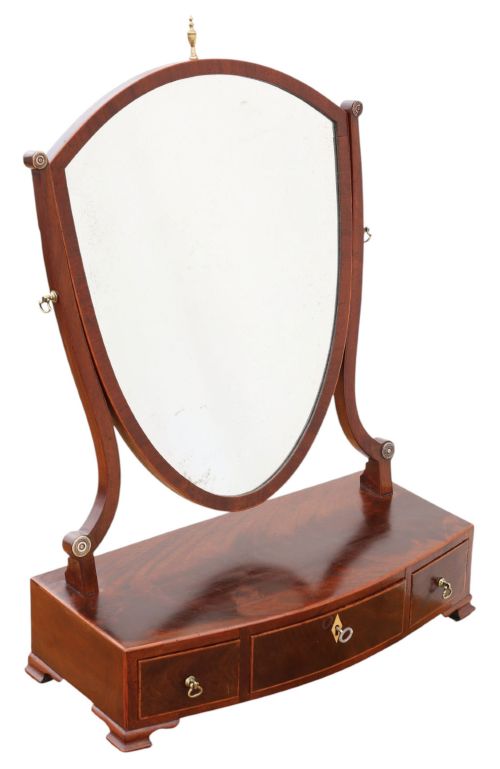
Makers utilised various traditional layouts, including triplate mirrors and shield frames equipped with pivoting brass screws. Each variation reflects the specific domestic habits and interior fashions of its respective era.
How they were made
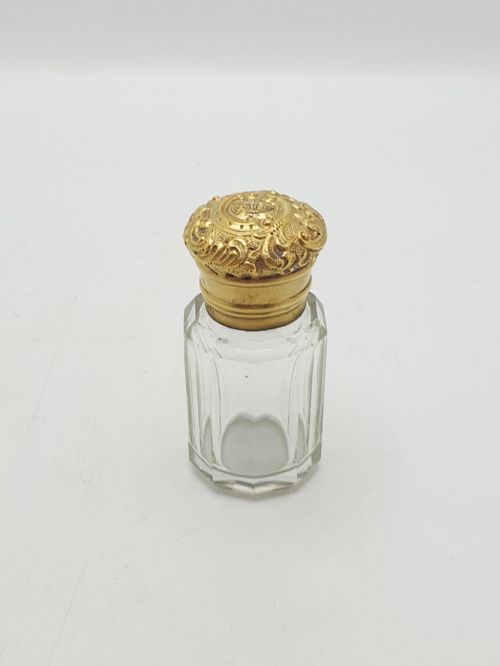
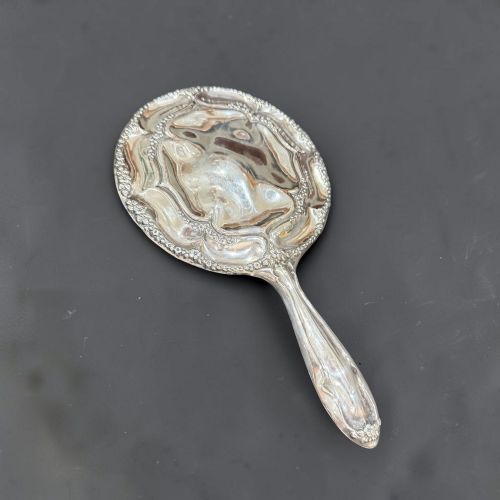
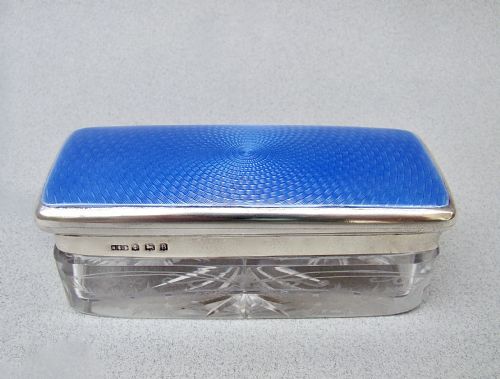
Cabinet-makers constructed the structural frames using solid hardwoods like mahogany, walnut, and oak, often applying delicate crossbanding and decorative veneers. Smaller containers and jars combined cut glass with sterling silver and guilloche enamel.
Makers incorporated brass hardware for hinges, candle arms, and mirror pivots, allowing the glass to tilt smoothly. Carved giltwood, ebonised finishes, and parcel-gilt details provided ornamental contrast to the timber surfaces.
Survival includes a medicine bottle from Paris alongside sterling silver pill boxes.
What varies in quality
The refinement of secondary timbers inside drawer boxes and the precision of dovetailed joints indicate the maker's underlying skill. Superior examples display careful timber selection, such as figured Cuban mahogany or matched walnut veneers.
Proportion and decorative restraint separate standard production items from pieces displaying accomplished carving, such as intricate Renaissance style giltwood or finely shaped shield frames.
Henry Clifford Davis·Heal And Sons
The Vintage Toilet Table Glossary
- Swing mirror
- A looking glass mounted on vertical uprights with pivot screws, allowing the user to tilt the angle. This mechanism is central to most antique dressing mirrors.
- Shield mirror
- A dressing glass shaped like an upright heraldic shield, popular during the Georgian and Edwardian periods. It usually sits above a small box base fitted with drawers.
- Crossbanding
- A narrow strip of veneer laid around the border of a furniture top so that the grain runs at right angles to the central panel. This technique frames the primary wood.
- Guilloche enamel
- Decorative metalwork covered in translucent coloured enamel over an engine-turned geometric pattern. It appears frequently on small jars and cosmetic containers.
- Cheval mirror
- A large full-length dressing glass supported on a freestanding frame with four legs. These tall pieces allow a complete view of attire.
Vintage Toilet Table: Frequently Asked Questions
What is a toilet table?
A toilet table is a low table or chest equipped with a looking glass and compartments for cosmetics, brushes, and personal items. The term historically refers to the morning ritual of dressing and grooming.
These pieces served as functional bedroom furniture where individuals prepared for the day before full-length wardrobes became common.
How do I date a mirror?
Dating relies on observing the timber species, construction joints, edge bevels on the glass, and the fixing screws. Earlier 18th-century pieces often use walnut and laburnum with hand-cut dovetails.
Later Victorian and Edwardian examples incorporate machine-sawn elements, pine secondary woods, and distinct decorative styles like Arts and Crafts or Gothic revival.
Where should I place it?
These items suit bedrooms, dressing rooms, and hallways as functional accent surfaces. Tabletop versions sit easily on top of existing chests of drawers or writing desks.
Freestanding dressing chests require floor space with adequate natural or artificial light directed towards the glass for daily use.
Are the mirrors original?
Looking glasses often suffered damage over long periods and were replaced due to silvering degradation or breakage. Older glass typically shows minor imperfections, tiny specks, and slight distortion.
Examining the backing boards and the retaining pins helps determine whether the glass has survived intact since the original date of manufacture.