




Vintage Tin Vase
These vintage tin vases are tin-glazed earthenware and ceramic pieces originating across the eighteenth and nineteenth centuries, offering classic blue and white display forms for traditional interiors.
Vintage Tin Vase
When searching for a vintage tin vase, buyers encounter tin-glazed earthenware and ceramic vessels spanning periods from the eighteenth century to the mid-twentieth century. The selection on this page centres on historic European ceramics, notably Dutch Delftware, Italian Maiolica, and French faience.
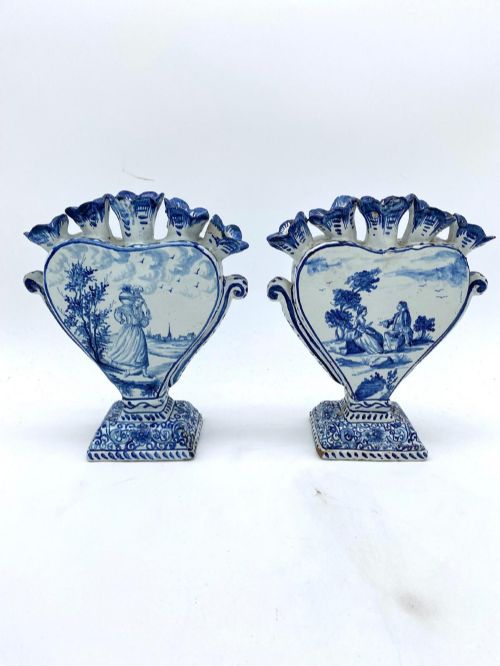
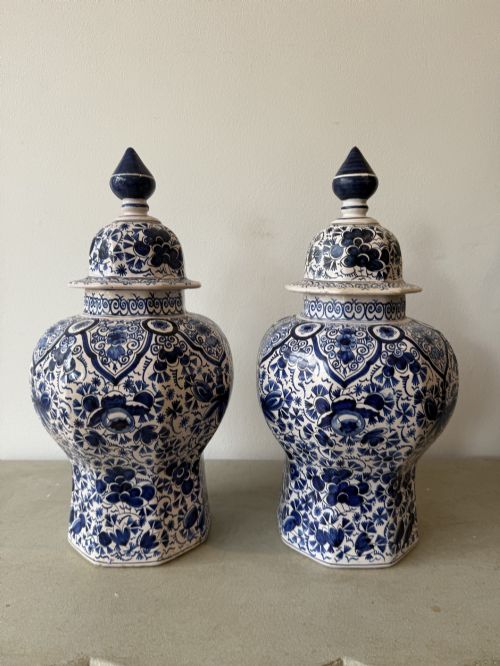
The forms extend beyond standard vessels to include lidded vases, table lamps, decorative jugs, ceramic urns, and tulipieres. Eighteenth-century examples appear alongside nineteenth-century interpretations in styles such as Chinoiserie and Renaissance Revival.
Buyers are most likely to meet blue and white Dutch Delft pieces and converted vase lamps from the eighteenth and nineteenth centuries. These domestic ornaments reflect centuries of European ceramic tradition, utilising tin-glaze techniques on earthenware bodies.
How they were made
Potters shaped these objects from ceramic and earthenware, applying an opaque tin glaze that provided a smooth white surface for painting. Artisans painted directly onto this porous glaze before firing, often using cobalt blue pigments in traditional styles.
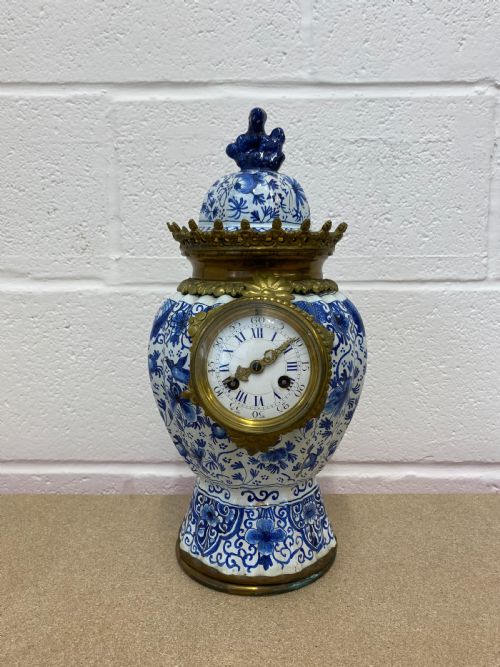
Production methods draw upon historical traditions seen in Dutch Delftware, Italian Maiolica, and French faience workshops. Later examples include alterations such as electrical conversions for table lamps.
Vintage Tin Vase Retail Price Guide 2026
Typical asking prices for vintage tin vase among the pieces listed under this phrase on Sellingantiques today, from the lower quarter to the upper quarter. They describe what is for sale here now, not the wider market.
Some nineteenth-century makers faithfully copied eighteenth-century Delft styles so well that even the blue pigment looks historically confused.
What varies in quality
The standard of painting on tin-glazed earthenware defines the visual merit of each piece, distinguishing hurried factory production from careful studio work. Crisp brushwork in blue and white pigments marks the upper range of these ceramics.
Condition and originality dictate worth among older pieces, particularly given the vulnerability of tin glaze to chipping over centuries. Surviving lids, unaltered bodies, and intact conversions separate well-preserved examples from heavily restored ones.
The Vintage Tin Vase Glossary
- Tin Glaze
- An opaque white glaze made by adding tin oxide to a lead glaze, providing a smooth ground for painted decoration. This technique defines European faience, majolica, and Delftware.
- Delftware
- Tin-glazed earthenware made in England and the Netherlands, typically featuring blue and white designs inspired by imported Chinese porcelain. Production spans from the seventeenth century through the nineteenth century.
- Maiolica
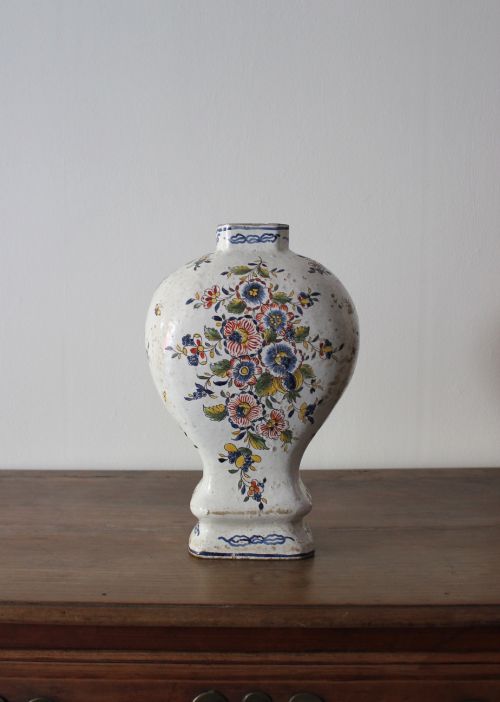
- Italian tin-glazed earthenware decorated with colours on an opaque white background, often displaying Renaissance revival motifs. The tradition dates back to the Renaissance and influenced later European potteries.
- Tulipiere
- A vessel with multiple spouts designed specifically for holding individual tulip stems, popular in historical Dutch interiors. These tiered ceramic forms are prized by collectors.
- Faience
- European tin-glazed earthenware, a term used particularly for French and other continental wares produced outside Italy and the Netherlands. It encompasses various decorative jugs, urns, and vases.
Vintage Tin Vase: Frequently Asked Questions
What is a tin glaze?
Tin glaze is an opaque white ceramic coating created by mixing tin oxide into a lead glaze base. This technique forms the smooth background characteristic of European Delftware and faience.
Potters painted directly onto this absorbent surface before the final firing, allowing the pigments to merge with the glaze for lasting colour.
How do I date a piece?
Dating relies on stylistic clues, potting techniques, and the characteristics of the tin glaze itself. Eighteenth-century pieces often show different potting weights and pigment tones compared to nineteenth-century revivals.
Examining the foot ring, glaze pooling, and painted motifs helps place an item within periods such as the eighteen-hundreds or earlier.
Are vase lamps original?
Many historic vases were converted into table lamps during later periods to suit changing domestic lighting needs. These adaptations often involve drilled bases or fitted metal hardware added decades after initial manufacture.
While purists prefer untouched vessels, converted lamps represent a significant portion of surviving antique ceramic stock on the market.
How should I clean these?
Cleaning requires gentle dusting with a soft, dry cloth to protect the delicate tin glaze from abrasion. Moisture can penetrate old earthenware bodies through hairline cracks in the glaze surface.
Harsh chemical cleaners and immersion in water should be strictly avoided to preserve the historic pigment layers.