





Vintage Timber Drawer Unit
A vintage timber drawer unit is a sturdy storage piece offering practical organisation and rich period character for the home.
Vintage Timber Drawer Unit
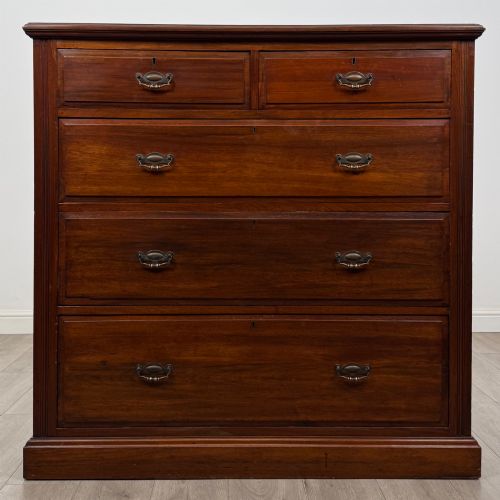
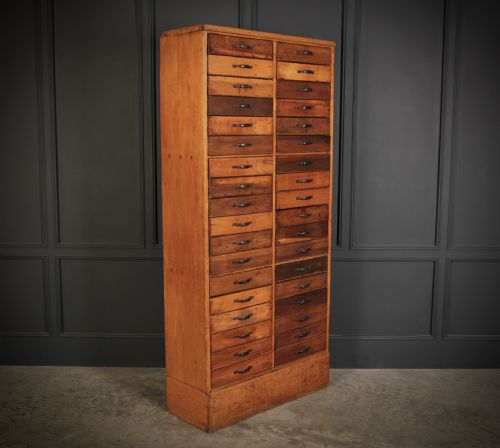
A vintage timber drawer unit encompasses various forms from nineteenth-century chests to oak haberdashery cabinets and French drapers drawers. These items provide functional storage through multiple stacked drawers while displaying the distinctive grain and warmth of traditional woods.
The pieces listed here span periods from the eighteenth century to the early twentieth century, including Edwardian and Victorian examples. Buyers frequently encounter traditional chests of drawers alongside large shop cabinets and bank of drawers configurations.
Origins range widely across British, French, and Dutch workshops, introducing diverse decorative styles such as Dutch Neoclassical, Regency, and French Provincial. Each piece reflects the functional requirements of its original domestic or commercial setting.
Materials and construction methods
Cabinet makers utilised solid timbers including pine, oak, walnut, mahogany, fruitwood, and gonçalo-alvez to build robust carcases and drawer frames. Wood veneer and marquetry details appear on finer surfaces, while paint finishes adorn specific regional pieces.
Hardware components rely on cast brass for handles, escutcheons, and drawer pulls, complementing the rich tones of the natural wood. Structural joinery prioritises durability, ensuring these multi-drawer units withstand decades of daily use.
Trussant & Cie constructed French butchers blocks that likely endured decades of heavy cleaver work before entering the antique market.
Factors of distinction
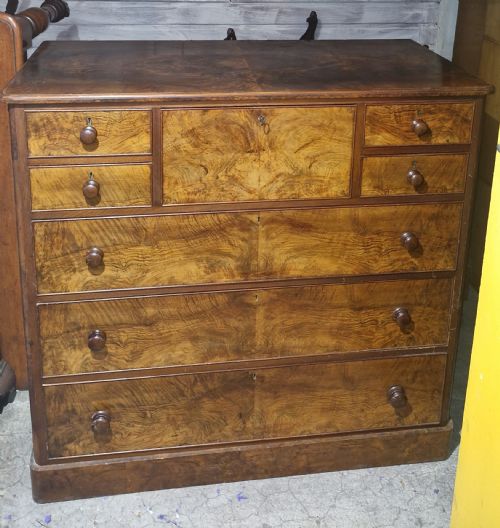
Quality reveals itself in the selection of timber figures, such as burr walnut or figured mahogany, and the precision of the joinery. Superior examples maintain original brass hardware and smooth-running drawers that indicate careful initial construction.
The integrity of decorative elements like marquetry inlay or painted finishes separates standard utilitarian furniture from more ambitious workshop productions. Original patination on the timber surface also dictates the visual appeal of a piece.
Trussant & Cie
The Vintage Timber Drawer Unit Glossary
- Haberdashery cabinet
- A multi-drawer storage unit originally designed for retail shops to display and sort small goods. These large pieces feature numerous shallow drawers, often with glass panels.
- Marquetry
- The art of applying decorative pieces of veneer to a structure to form intricate geometric or pictorial designs. This technique decorates surfaces on selected continental pieces.
- Gonçalo-alvez
- A dense tropical hardwood with distinctive dark brown striping, sometimes known as zebrawood. Makers utilised this exotic timber for luxury Regency furniture.
- Tall boy
- A tall chest of drawers formed by stacking one cabinet atop another or built as a single tall vertical unit. This form maximises storage space while occupying a smaller floor footprint.
- Escutcheon
- A protective plate surrounding a keyhole on a drawer or door. These brass fittings serve both a functional purpose and a decorative role.
Vintage Timber Drawer Unit: Frequently Asked Questions
What rooms suit a bank of drawers?
A bank of drawers provides deep and shallow storage compartments that function well in kitchens, home offices, or hallways. Their modular appearance anchors a room while keeping everyday items neatly concealed.
Larger shop cabinets require ample wall space and generous clearances, making them ideal for open-plan living areas or utility rooms where their functional heritage stands out.
How do I identify a Victorian chest?
Victorian chests typically display heavier proportions, darker timber tones, and robust construction methods using woods like mahogany and walnut. Look for decorative burr veneers and turned wooden pull handles.
Drawer configurations frequently follow a two-over-three arrangement, and the overall aesthetic emphasises solidity and utility rather than delicate carving.
Are haberdashery cabinets practical at home?
Haberdashery cabinets offer exceptional compartmentalisation through their rows of shallow drawers, which suit the storage of stationery, accessories, or craft supplies. Their commercial origins lend an industrial character to modern interiors.
Because these cabinets were built for heavy retail use, their robust timber construction easily withstands domestic environments.
What is the difference between walnut and mahogany?
Walnut timber generally exhibits a lighter brown shade with pronounced dark grain figuring and high decorative potential, especially in burr formations. Mahogany tends to feature a deeper reddish-brown hue with a straighter, tighter grain pattern.
Both woods were favored by period cabinet makers for their strength and ability to take a fine polish.