



Vintage Timber Bucket
A vintage timber bucket brings honest texture and utilitarian history into a room, serving as a planter or fireside store.
Vintage Timber Bucket
A vintage timber bucket encompasses practical vessels originally utilised for grain measurement, washing, well drawing, and fuel storage. These pieces combine robust wooden staves or carved forms with metal bands or handles, spanning the Georgian and nineteenth-century periods.
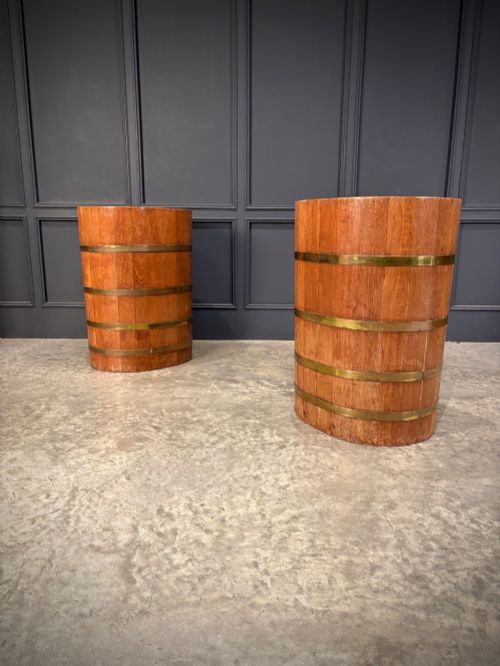
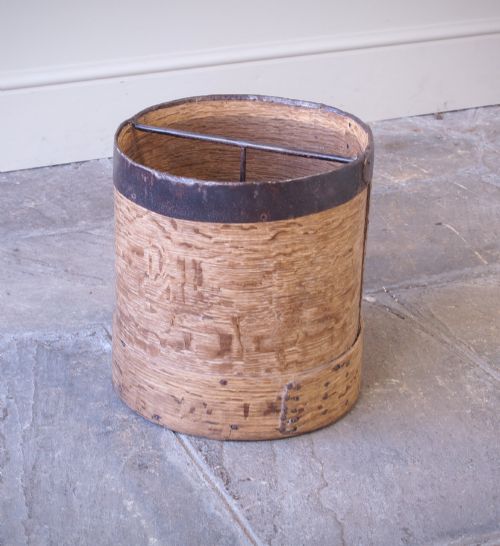
The versions most commonly met on this page range from English well buckets and Victorian brass-bound mahogany cylinders to Scandinavian pine storage barrels and French grain measures. Their origins extend across European country styles as well as Chinese elm mortars.
Buyers select these objects for functional display in gardens, beside fireplaces, or as rustic storage vessels within domestic interiors. Each example displays the weathering and patina accumulated through agricultural or domestic service.
Materials and construction
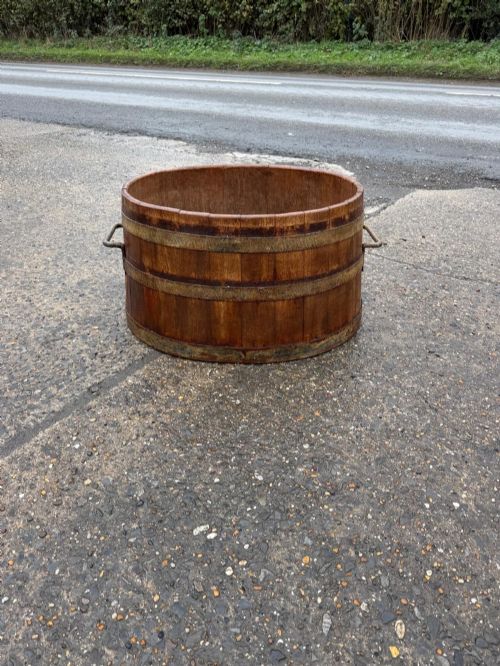
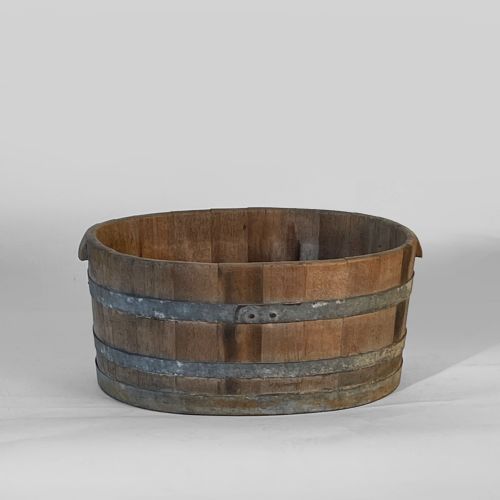
Construction relies heavily on traditional cooperage techniques, uniting curved wooden staves of oak, pine, elm, or mahogany with iron, wrought iron, or brass banding. These metal hoops tension the wooden elements together to withstand liquid and dry contents.
Certain pieces utilise solid wood hand-carving from a single block, as seen in Chinese elm mortars. Metal handles and swing Bails are typically forged or cast by hand to secure the weight of the vessel.
Vintage Timber Bucket Retail Price Guide 2026
Typical asking prices for vintage timber bucket among the pieces listed under this phrase on Sellingantiques today, from the lower quarter to the upper quarter. They describe what is for sale here now, not the wider market.
Several buckets likely spent decades hauling water before retiring to hold firewood.
Assessing quality and character
Quality rests in the integrity of the timber, the tightness of the coopered joints, and the originality of the metal bands and handles. Surviving surface patination and honest wear reflect the true utilitarian history of the vessel.
Finer examples demonstrate refined secondary woods such as mahogany with precise brass binding, whereas vernacular pieces exhibit heavier utility through rustic pine or oak construction.
The Vintage Timber Bucket Glossary
- Coopered
- Assembled from curved wooden staves bound together with metal hoops. This method was essential for making watertight vessels.
- Stave
- One of the narrow vertical blocks of wood that form the body of a bucket or barrel. Staves are shaped to create a tapered cylinder.
- Bail
- The semicircular metal or wooden handle attached to the rim of a bucket. It pivots to allow lifting and carrying.
- Patina
- The surface sheen and colour developed through age, handling, and use. It indicates the authenticity of the material.
- Mortar
- A heavy bowl-shaped vessel used for pounding materials. They are typically carved from solid hardwoods.
Vintage Timber Bucket: Frequently Asked Questions
How were these buckets used originally?
These vessels served demanding practical roles in domestic, agricultural, and industrial settings. They carried well water, measured grain, held washing, and stored fireplace fuel.
Their robust construction allowed them to withstand heavy daily labour before transitioning into decorative and functional items for the home and garden.
Are they watertight for garden use?
Many coopered wooden vessels retain their structural integrity, but older dry storage containers may no longer hold water reliably. Liners are often utilised when employing them as planters.
Examining the tightness of the staves and the condition of the base provides a good indication of whether a piece can still hold moisture directly.
How do I date a timber bucket?
Dating relies on observing the timber species, the hand-forging techniques of the iron or brass bands, and the overall style. Georgian and nineteenth-century examples show distinct tool marks and construction methods.
Comparing the form to documented utility items from specific regions helps narrow down the period of manufacture.
How should I clean the wood?
Maintenance requires minimal intervention to preserve the historic surface and patina. Dusting with a dry cloth and occasionally applying a neutral wax protects the timber.
Harsh chemical cleaners and modern varnishes strip away the aged character accumulated over centuries of service.