



Vintage Teak Chairs
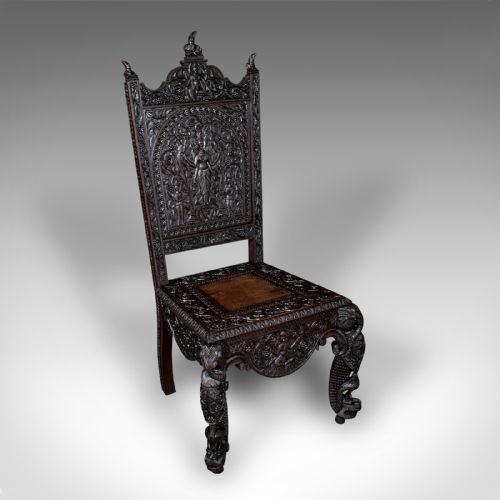
These vintage teak chairs bring together robust hardwoods and intricate regional carving, offering both deep colonial history and striking mid-century simplicity.
Vintage Teak Chairs
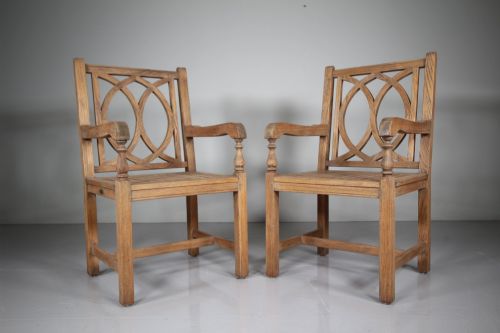
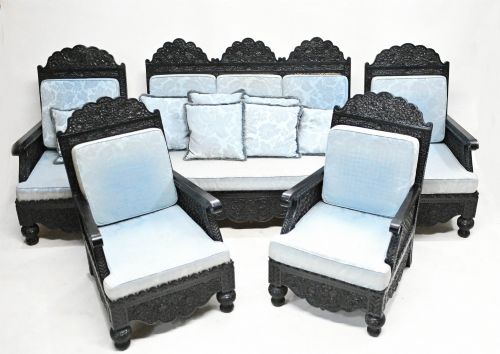
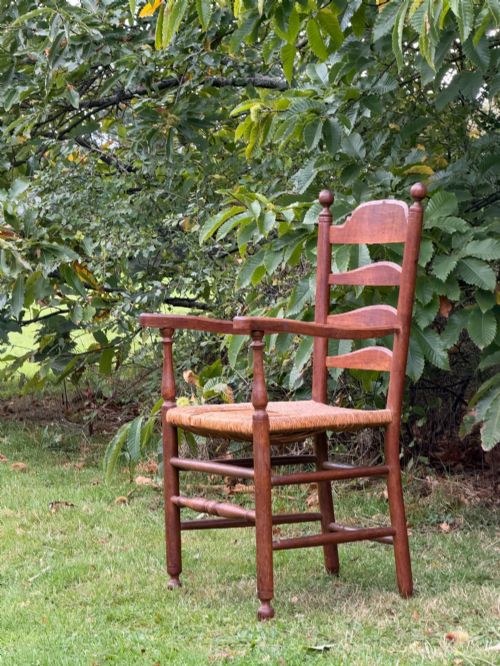
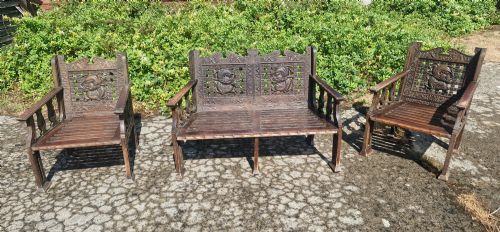
When you search for vintage teak chairs, you encounter a distinct cross-section of heavy colonial seating and simpler garden or mid-century designs. The examples found here span diverse forms such as armchairs, reclining plantation chairs, folding chairs, and complete conservatory suites.
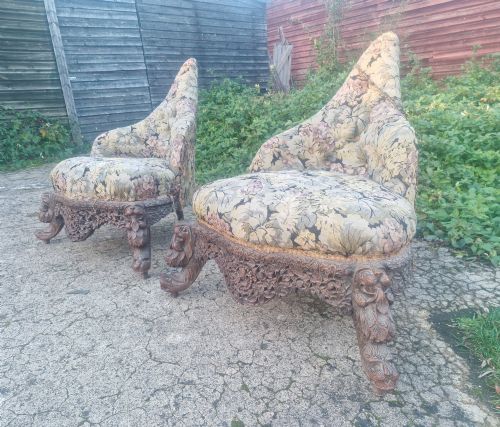
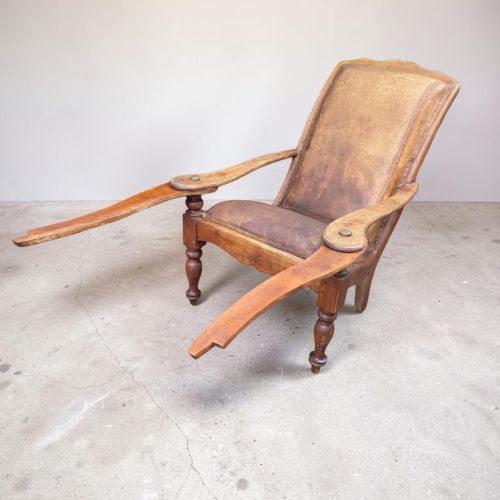
You are most likely to meet Anglo-Indian colonial armchairs featuring dense hand-carved woodwork alongside simpler twentieth-century garden sets and swivel forms. These pieces often incorporate practical regional adaptations like extending arms and reclining backs designed for warm climates.
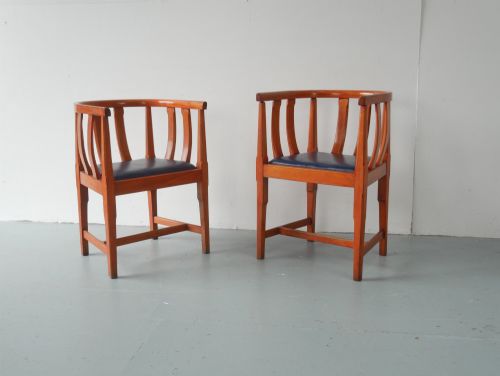
The selection ranges from nineteenth-century veranda chairs and heavy hardwood side chairs to labelled garden furniture from the early twentieth century. Each piece reflects the functional requirements of its era, whether for maritime use, tropical verandas, or domestic interiors.
Materials and construction methods
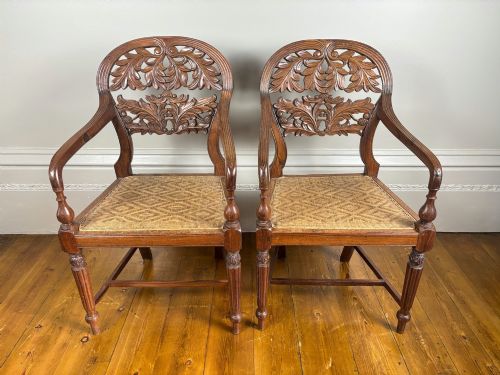
Construction relies heavily on durable timbers, predominantly teak alongside padauk wood and general hardwood. These dense woods are frequently shaped with elaborate carved detailing, particularly on Anglo-Indian and Ceylonese armchairs.
Seating areas and panels incorporate organic woven materials such as cane, rattan, rush, and leather. Additional functional elements include brass fittings and extending arm mechanisms found on specialised plantation and reclining chairs.
Vintage Teak Chairs Retail Price Guide 2026
Typical asking prices for vintage teak chairs among the pieces listed under this phrase on Sellingantiques today, from the lower quarter to the upper quarter. They describe what is for sale here now, not the wider market.
Materials recorded across the selection include brass, cane, rush, rattan, and leather alongside solid teak and hardwood.
Assessing quality in construction and detail
Quality rests primarily on the depth and crispness of the hand-carving and the structural integrity of the dense hardwood frame. Pieces exhibiting intricate pierced woodwork and substantial proportions generally represent finer workshop output.
The preservation of original organic elements like cane work, leather upholstery, and brass mechanical components elevates a piece. Maker attribution, such as factory labels or distinct stylistic adherence to known London designs, also marks superior examples.
Heals
The Vintage Teak Chairs Glossary
- Teak
- A dense, durable tropical hardwood prized for its weather resistance and suitability for carved furniture. It forms the primary structural material for the majority of these pieces.
- Plantation chair
- A specialised reclining armchair featuring wide, extending arms designed for resting the legs in tropical climates. These often date from the nineteenth century.
- Cane
- Strips of rattan woven into open mesh patterns to form seat and back panels. It offers lightweight flexibility well suited to warmer environments.
- Padauk wood
- A heavy, reddish-brown exotic hardwood utilised in colonial seating suites. It provides exceptional durability and a rich natural colour.
- Savonarola chair
- A type of folding chair constructed from intersecting curved wooden slats. The Indian interpretation appears within nineteenth-century records here.
Vintage Teak Chairs: Frequently Asked Questions
What is a plantation chair?
A plantation chair is a traditional colonial armchair designed with unusually wide arms that extend forward to support the legs. These seats were built for relaxation on verandas in warm climates.
Many examples feature reclining backs and adjustable components to maximise comfort. Their generous proportions distinguish them from standard domestic armchairs.
How do I care for teak furniture?
Teak is a naturally oily and resilient wood that requires minimal intervention to maintain its condition. Occasional dusting and gentle cleaning preserve the surface without stripping the natural grain.
Keep these items away from direct heat sources to prevent the dense hardwood from drying out or splitting. Original cane and leather elements require specific, gentle conditioning appropriate to organic materials.
Are these chairs suitable for outdoor use?
While teak is famously weather-resistant and well-suited for garden sets, antique and vintage pieces require careful consideration. Items featuring delicate hand-carvings, cane seating, or historic leather are best kept indoors or on covered verandas.
Robust twentieth-century garden sets handle outdoor environments more readily than intricate nineteenth-century colonial armchairs. Environmental protection ensures the survival of delicate joinery and woven surfaces.
How do I identify Anglo-Indian furniture?
Anglo-Indian furniture typically displays dense, intricate hand-carving executed in tropical hardwoods like teak. These pieces combine traditional British furniture forms with distinctive regional craftsmanship from India and Ceylon.
Common markers include elaborate floral motifs, pierced woodwork, and specialised colonial forms like planter's chairs and reclining loungers. The fusion of European utility with local carving styles defines the aesthetic.