


Vintage Task Lighting Brass
Vintage task lighting brass brings purposeful illumination to a desk, combining adjustable metal frames with period character.
Vintage Task Lighting Brass
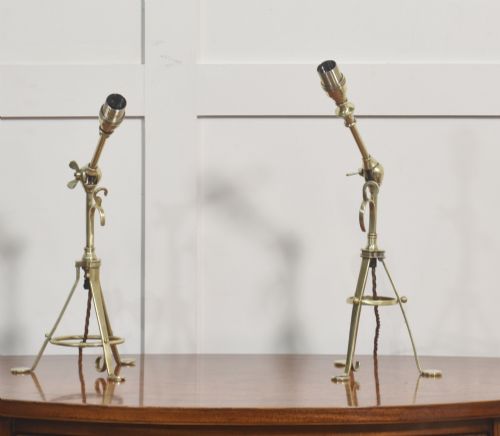
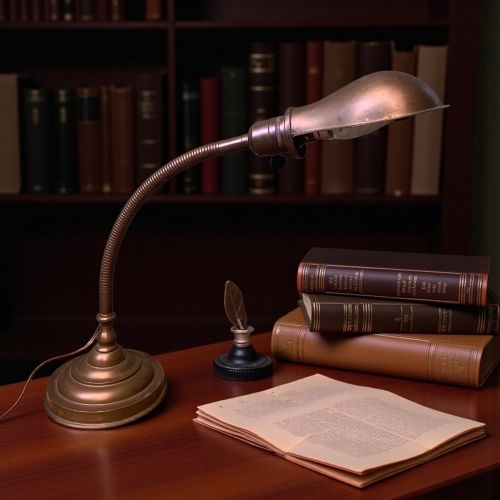
These pieces are functional desk and reading lamps designed to direct light precisely where needed for work or study. When you search for vintage task lighting brass, you encounter adjustable arms, swan necks, and articulated joints that define early twentieth-century workspace design.
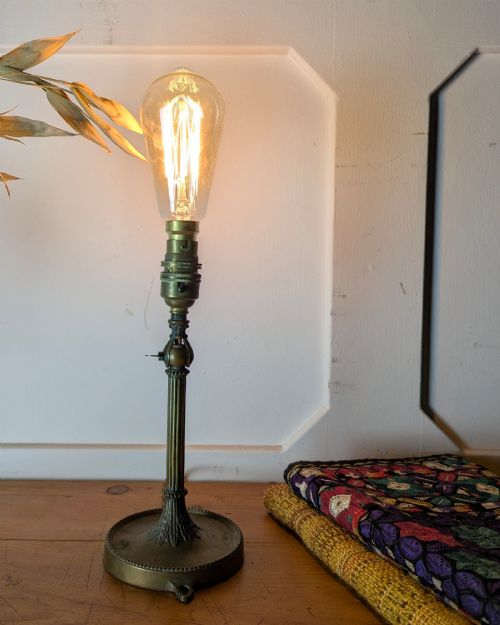
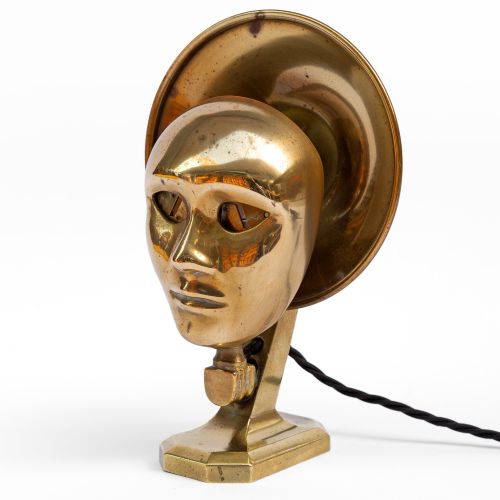
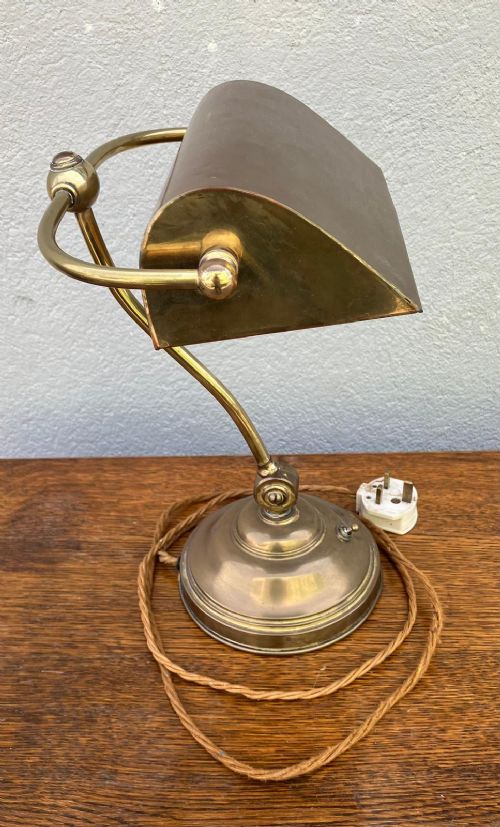
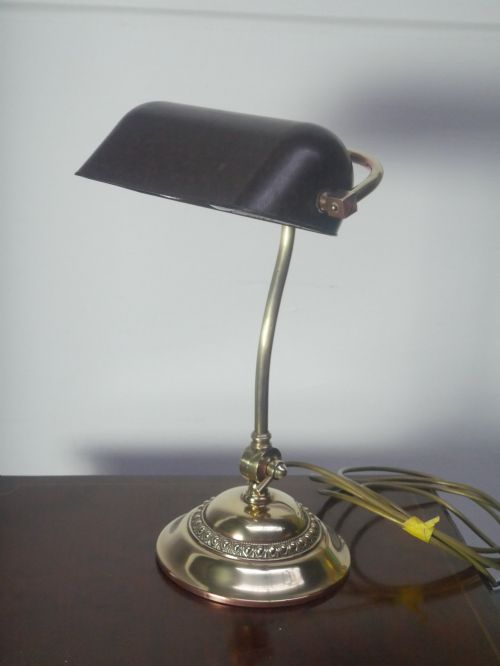
The selection on this page leans heavily towards Edwardian and 1920s examples, alongside earlier nineteenth-century designs and Art Deco variations. Desk lamps and table lamps dominate the forms, often featuring flexible positioning or classic banker shades.
Origins stretch from English Arts and Crafts workshops to French studios and Dutch Amsterdam School creations. This variety ensures that every piece carries the distinct utilitarian aesthetic of its specific decade.
Materials and Construction
Makers relied primarily on brass, bronze, and copper to construct the rigid yet adjustable frames of these lamps. Metal spinning, casting, and hand-articulation allowed craftsmen to create flexible necks and swivelling joints that withstand daily repositioning.
Glass components such as opaline, frosted glass, cranberry glass, and shell-shaped shades diffuse the direct beam of the bulb. Fabric flex and porcelain elements complete the wiring and housing, rooting each lamp in its period manufacturing techniques.
The selection includes pieces spanning the 1860s through the 1930s, constructed from brass, bronze, copper, and various types of glass.
Distinctions in Quality
The distinction between ordinary production and superior craftsmanship rests in the weight of the metal and the precision of the mechanical joints. Heavier brass castings and smoothly operating swan necks or adjustable arms indicate a higher grade of manufacture.
Original details, such as period-correct shades in opaline or frosted glass and patinated copper or bronze finishes, elevate a piece above standard utilitarian wares. Integrity of design, whether adhering to strict Arts and Crafts principles or French Art Nouveau curves, marks the finest examples.
W.A.S. Benson·Wilhelm Wagenfeld·Fritz Lang
The Vintage Task Lighting Brass Glossary
- Swan Neck
- A curved metal arm resembling a swan's neck that allows the lamp head to arch over a workspace. This form is common in Edwardian desk lighting.
- Bouillotte Lamp
- A traditional French table lamp featuring a central shaft, multiple candle-style arms or a single light source, and an adjustable shade. They frequently appear in brass with Tole accents.
- Amsterdam School
- An early twentieth-century architectural and design movement known for expressive brickwork, rich materials, and sculptural metalwork. Pieces from this style often combine brass with patinated copper.
- Opaline Glass
- A translucent milky-white glass popular in period lighting for softening glare while maintaining bright illumination. It is frequently paired with brass bases.
- Articulated
- Fitted with joints or hinges that allow the user to alter the angle and reach of the lamp. This mechanism is central to task lighting functionality.
Vintage Task Lighting Brass: Frequently Asked Questions
How do I adjust the arm?
Many of these pieces utilise flexible brass tubing, swan necks, or articulated joints designed to pivot and tilt. You simply move the upper section gently to direct the beam to your working area.
Take care not to force rigid joints that have settled over decades. Adjusting them slowly preserves the original metalwork and wiring housed within.
Were these used on desks?
The majority of these fixtures served as reading lamps, bankers lamps, and desk lamps for paperwork or drafting. Their primary purpose was focused illumination for commerce and study.
Today, they translate easily to modern home offices and bedside tables, bringing targeted light and historical character to a workspace.
How do I date a brass lamp?
Dating relies on stylistic clues such as the geometric lines of Art Deco, the organic curves of Art Nouveau, or the solid utility of Edwardian designs. Materials like frosted glass, opaline, and patinated copper also point to specific eras between the late nineteenth century and the 1930s.
Makers' marks and construction techniques provide further confirmation of the manufacturing period. Comparing the switch types and flex materials helps narrow down the exact decade.
Are the shades original?
Some pieces retain their period glass or metal shades, ranging from frosted and cranberry glass to opaline and shell-shaped brass. Others may have been paired with replacement shades over their long lifespan.
Examining the fit and material consistency against the base helps determine if the shade matches the period of the lamp.