




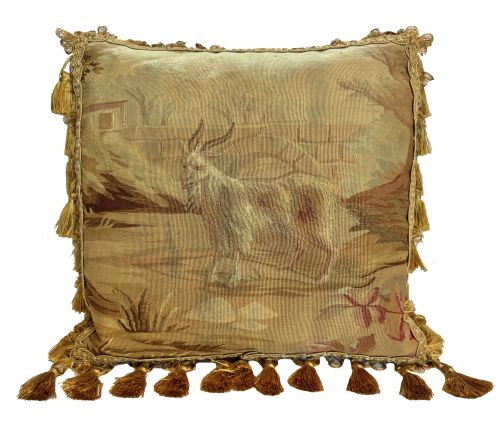
Vintage Tapestry Cushion
A vintage tapestry cushion brings historic texture and woven warmth into a room, uniting centuries-old textile fragments with everyday comfort.
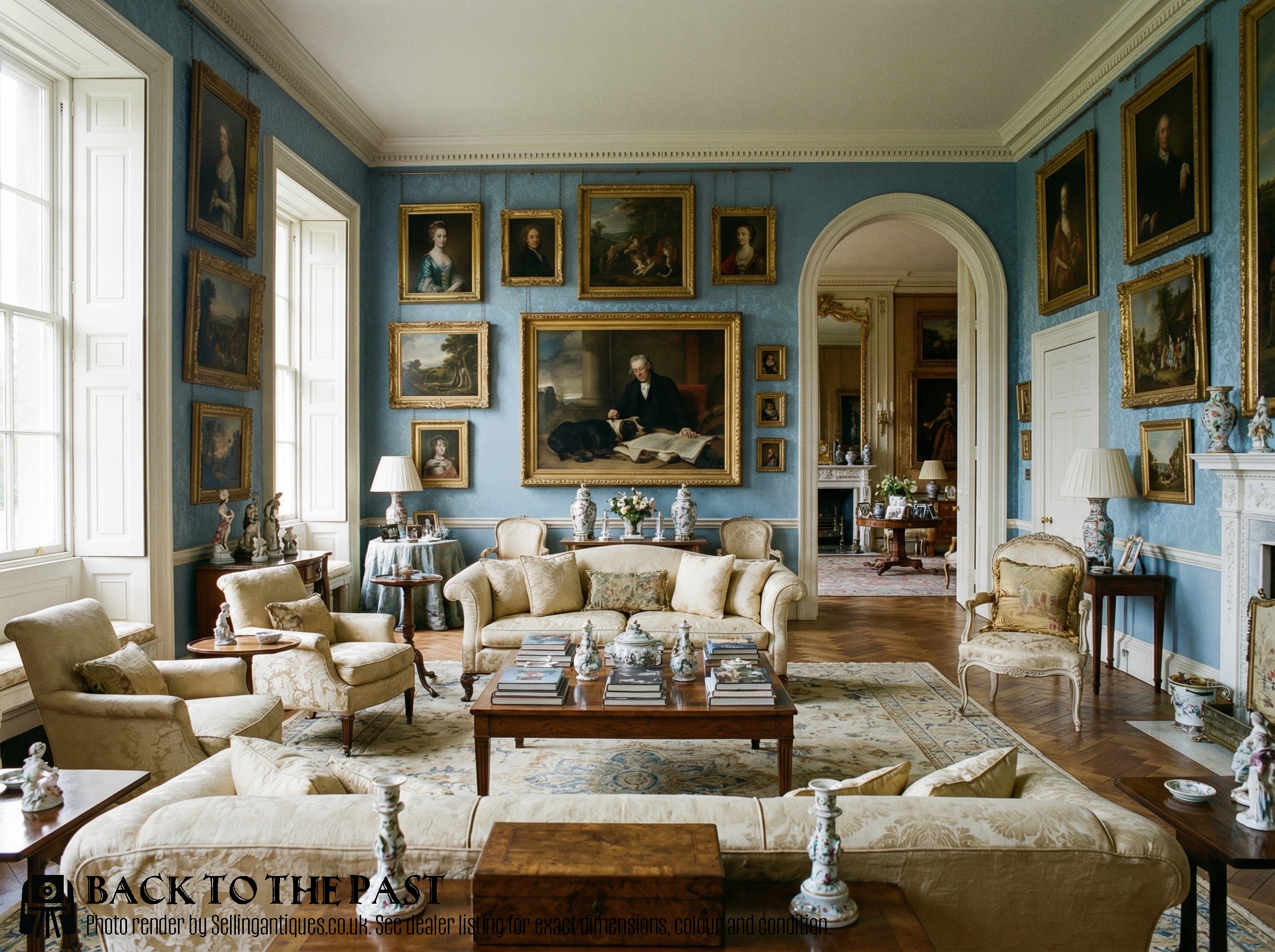
Vintage Tapestry Cushion
The selections span multiple centuries, incorporating pieces from the seventeenth century through to the nineteenth and early twentieth centuries. These items frequently display distinct stylistic influences, ranging from Baroque and Victorian designs to French country aesthetics and Anatolian tribal patterns.
While the inventory includes allied items such as dining chairs and wall art, the core focus remains on cushions utilising wool, silk, cotton, and linen textiles. Each piece demonstrates how older woven works find new life in domestic settings as decorative seat pads and cushions.
Materials and construction methods
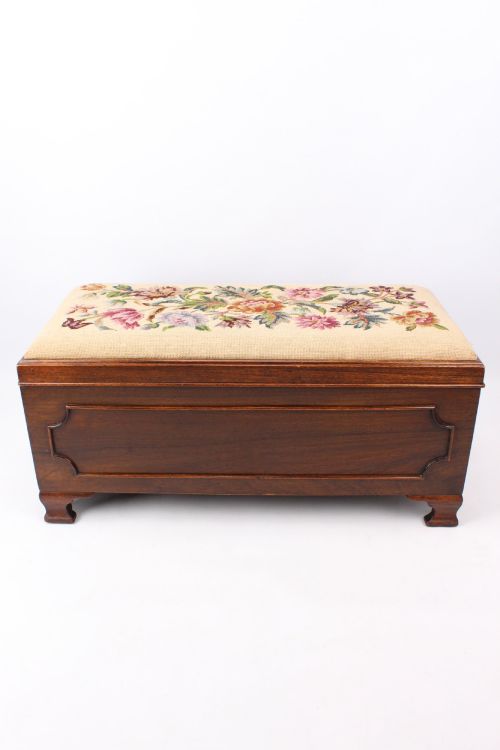
The construction of these items relies heavily on durable natural fibres such as wool, silk, cotton, and linen, woven meticulously to form dense pictorial or geometric surfaces. Artisans incorporated these textiles into wooden frames, mahogany ottomans, or dedicated cushion casings to ensure structural longevity.
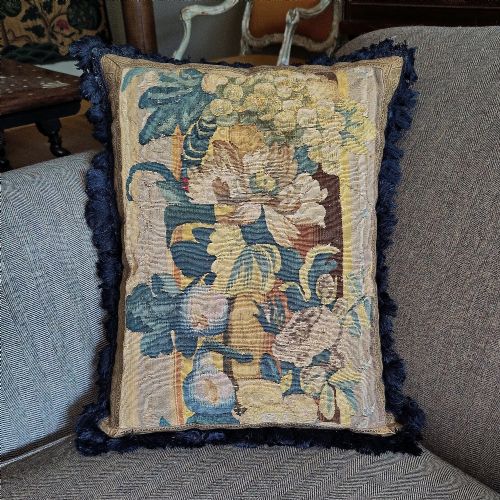
Many examples incorporate antique fragments salvaged from larger wall hangings, rugs, and chuvals, which are then backed and edged for modern use. The integration of textile panels with timber elements demonstrates traditional upholstery techniques applied to historic woven art.
Listings feature textiles spanning from the seventeenth century through to the early twentieth century, including wool, silk, cotton, and linen.
Distinctions in quality and execution
Quality in these textiles depends on the fineness of the weave, the complexity of the polychrome palette, and the integrity of the original fibres. Superior examples display tightly packed wool and silk threads that preserve clear iconography and intricate border details.
The method of assembly and the character of the supporting materials also influence the overall standard. Pieces retaining well-preserved seventeenth-century Flemish fragments or finely knotted tribal rugs demonstrate greater historical depth than later reproductions.
The Vintage Tapestry Cushion Glossary
- Aubusson
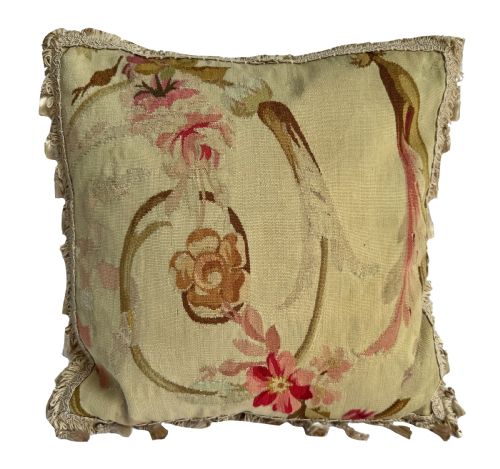
- A traditional French style of tapestry weaving originating from the town of Aubusson, noted for pastoral and floral designs used frequently in nineteenth-century cushion covers.
- Flemish tapestry
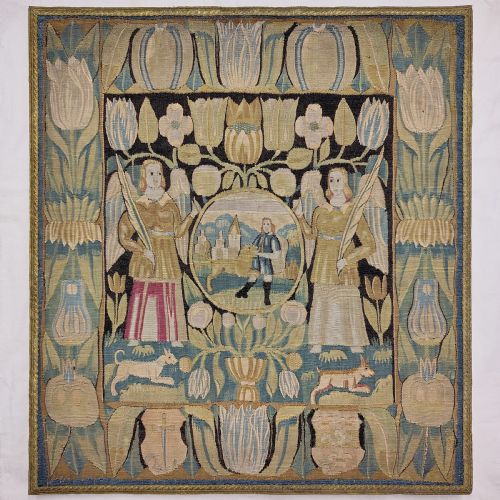
- Woven textile art produced in Flanders during periods like the seventeenth century, known for elaborate borders and historical or allegorical scenes.
- Kilim
- A flatwoven carpet or rug of Anatolian origin, often utilised in antique cushion covers for its geometric and tribal motifs.
- Chuval
- A large tent bag produced by Turkmen tribes, such as the Tekke, featuring traditional gushli goll or other tribal patterns.
- Needlework
- Hand-stitched embroidery executed on a canvas or textile ground, commonly seen on nineteenth- and early twentieth-century seat covers and cushions.
Vintage Tapestry Cushion: Frequently Asked Questions
What is a vintage tapestry cushion?
A vintage tapestry cushion is a soft furnishing made from historical woven textiles, such as French Aubusson panels, seventeenth-century Flemish fragments, or Anatolian flatweaves. These textiles are repurposed into functional cushions and ottomans to add historic charm to interiors.
They combine old-world craftsmanship with practical home decor, allowing historical woven art to be used and displayed daily.
How are antique tapestry cushions used?
These cushions are placed on chairs, sofas, and mahogany ottomans to introduce texture, colour, and historical pattern to a room. They serve primarily as decorative accents that enhance traditional or eclectic seating arrangements.
Because many utilise delicate materials like silk and wool, they are best positioned where they receive gentle daily appreciation rather than heavy wear.
How do I identify seventeenth-century fragments?
Seventeenth-century tapestry fragments often display specific stylistic traits typical of Flemish weaving, such as dense floral borders, mythological motifs, or muted vegetal dyes. Examining the tight structure of the wool and silk threads helps determine the age of the textile.
Comparing the weave density and subject matter with documented historical examples provides further confirmation of the period.
What materials are used in these cushions?
The primary materials found in these pieces include natural fibres like wool, silk, cotton, and linen, which form the woven faces of the cushions. Supporting structures often incorporate wood, mahogany, and secondary textile backings.
These traditional materials contribute to the durability and authentic appearance of each individual piece across various centuries.