

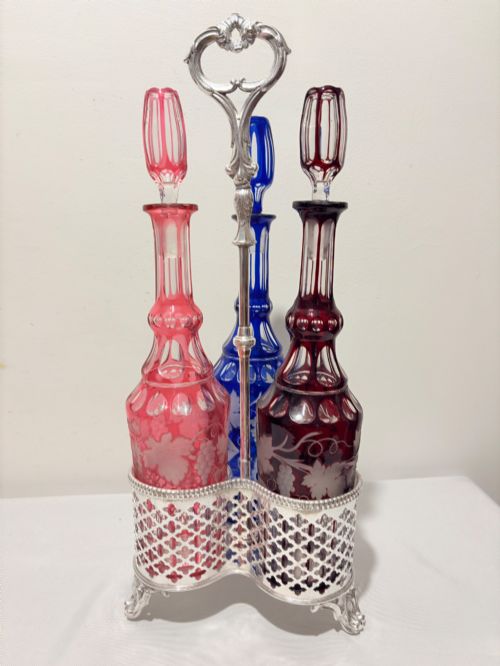
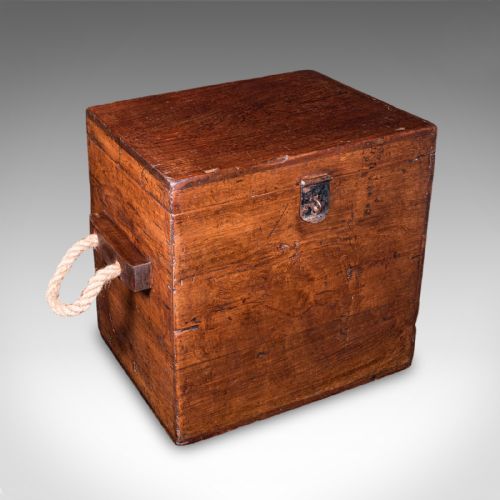
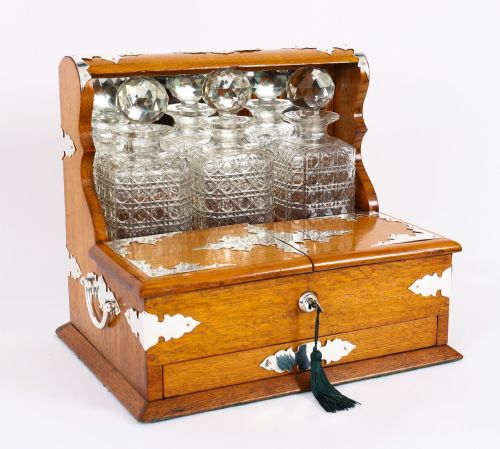
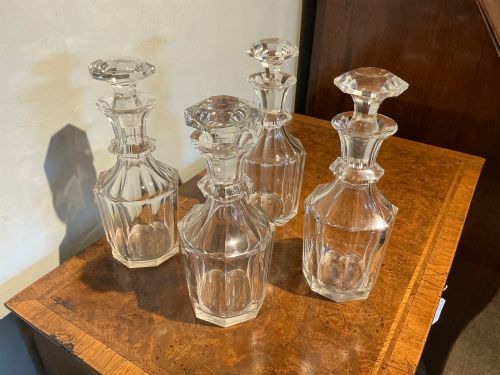
Vintage Tantalus Decanter
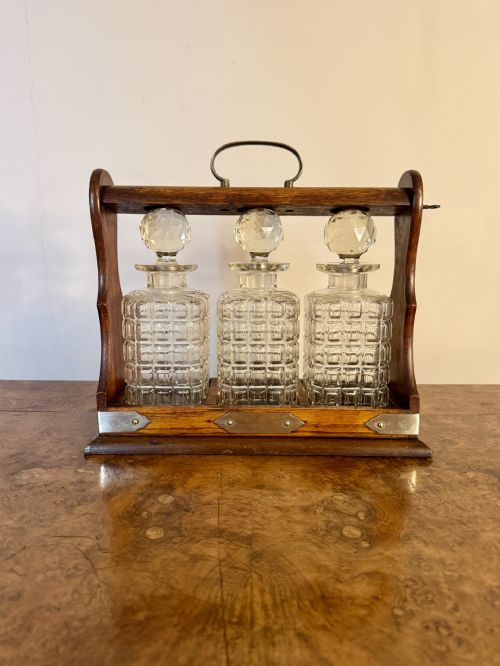
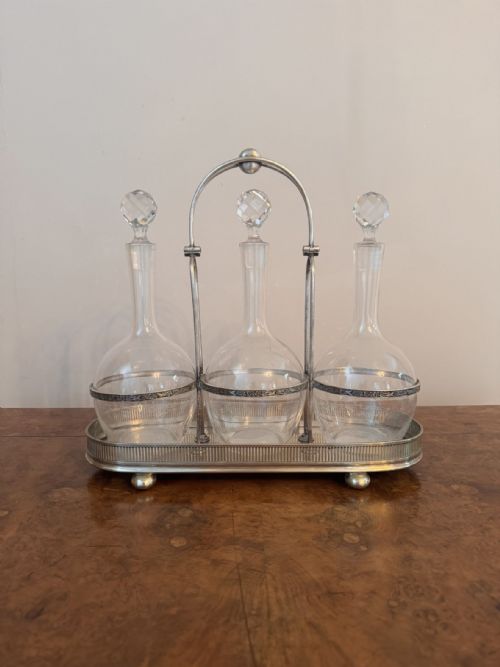
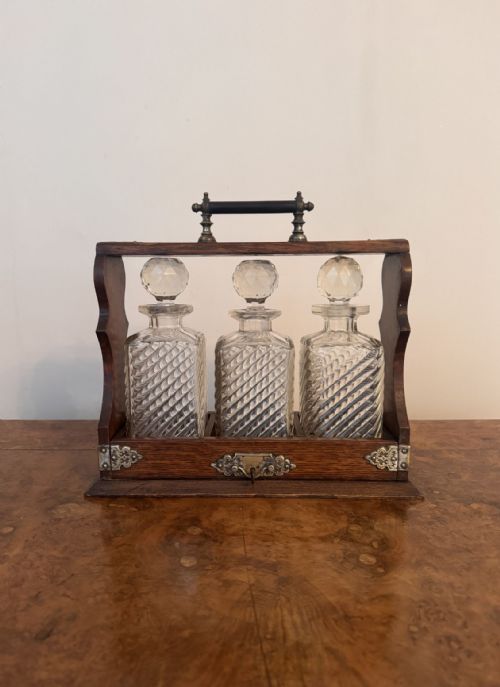
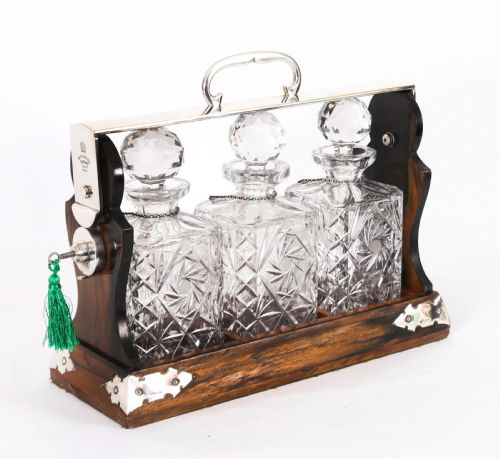
A vintage tantalus decanter secures your spirits behind a locking wooden frame while putting cut crystal bottles on display.
Vintage Tantalus Decanter
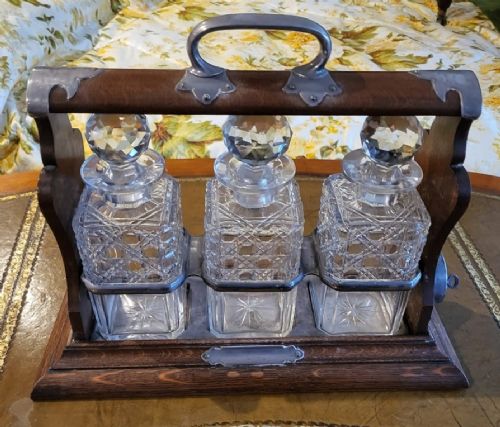
A vintage tantalus decanter combines a secure locking mechanism with open presentation, designed to keep household spirits safe from unauthorised access by servants or guests. The form appears most frequently in Victorian and Edwardian oak, walnut, or coromandel frames fitted with two or three cut glass or crystal decanters.
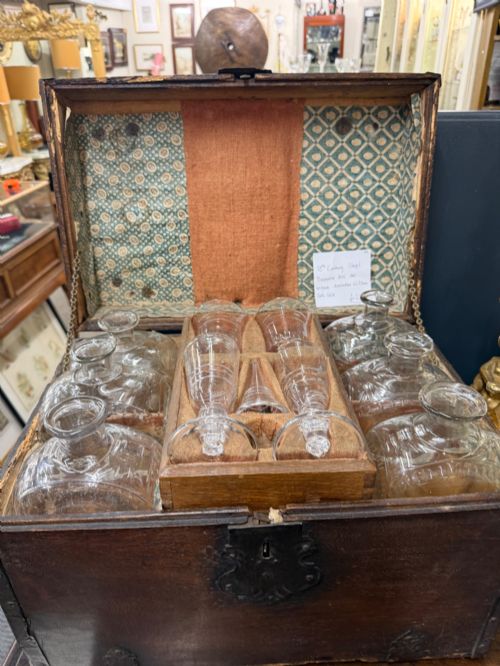
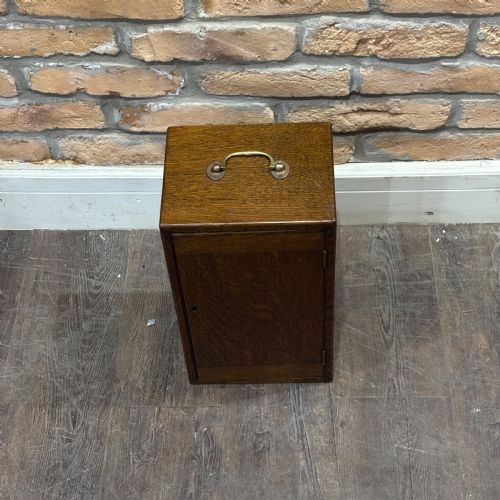
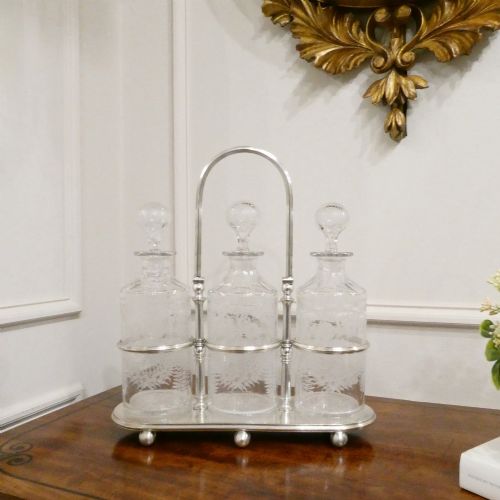
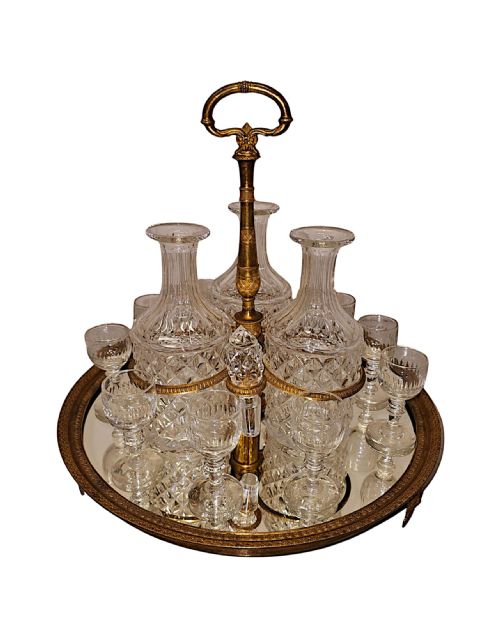
Many examples incorporate games compendiums or dry bar storage beneath the bottle section, combining drinking vessels with card compartments. Alongside traditional wooden locking tantalus frames, related barware includes silver plated stands, decanter boxes, and French liqueur caves lined with fitted bottle partitions.
Materials and construction
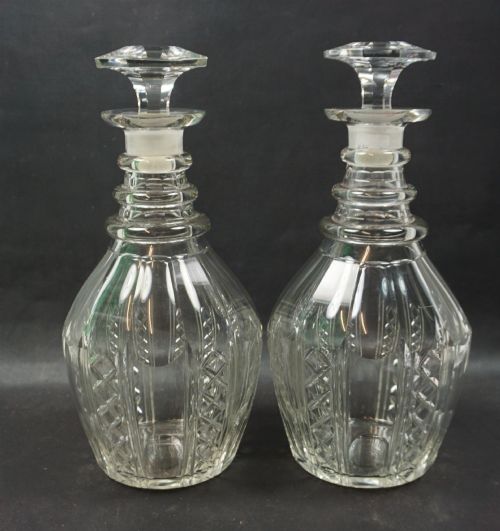
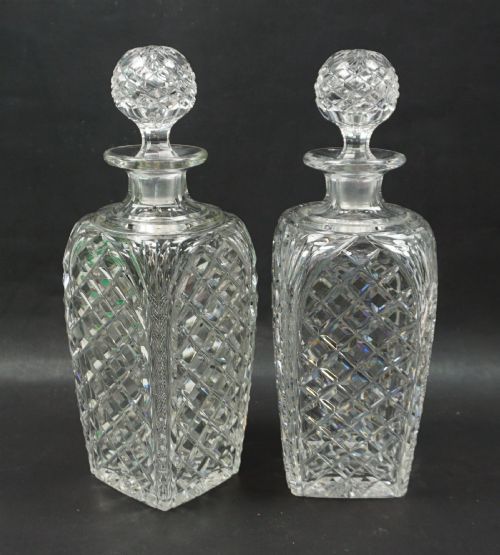
Frames rely on solid timbers such as oak, walnut, satinwood, and coromandel, often enhanced with brass mounts, marquetry stringing, or ornate silver plated hardware. Cut glass and heavy crystal bottles sit within these housings, frequently accompanied by matching stoppers and small tot pails.
Makers utilised silver plating, ormolu, and chrome to accent the locking bars and handles, combining joinery with metalwork to secure the bottles when the key is turned.
Vintage Tantalus Decanter Retail Price Guide 2026
Typical asking prices for vintage tantalus decanter among the pieces listed under this phrase on Sellingantiques today, from the lower quarter to the upper quarter. They describe what is for sale here now, not the wider market.
Listings feature oak, mahogany, walnut, coromandel, and satinwood alongside cut crystal, silver plate, brass, and ormolu.
Assessing quality and craftsmanship
Quality shows in the weight and clarity of the crystal decanters and the precision of the timber joinery in the frame. Better pieces feature integrated games storage, crisply cut glass patterns, and substantial silver plated or brass mounts that operate smoothly with the locking mechanism.
Lee & Wigfull of Sheffield·Walker & Hall·Betjemann·Elkington
The Vintage Tantalus Decanter Glossary
- Tantalus
- A locking drink cabinet or stand that holds decanters upright while revealing their contents but preventing pouring without the key. The name derives from the mythological figure who was kept just out of reach of food and drink.
- Cave à liqueur
- A French portable liqueur set, often veneered in exotic woods or ormolu-mounted, housing several small decanters and glasses inside a fitted box. These differ from open English tantalus frames by fully enclosing the glassware within a hinged case.
- Decanter
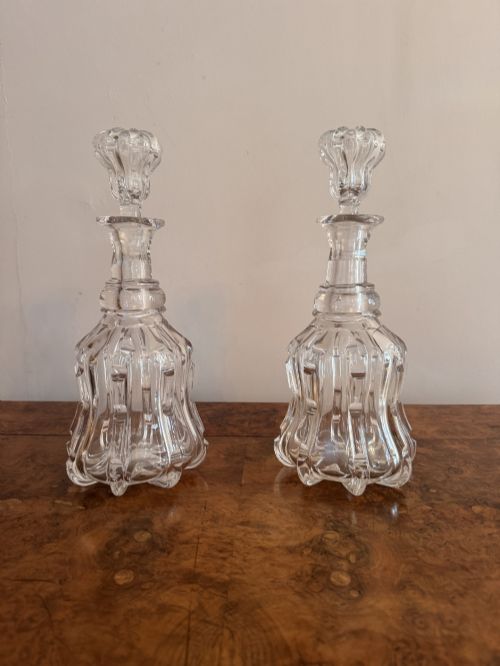
- A vessel designed to hold and serve wine or spirits, typically supplied with a fitted stopper. In tantalus sets, these are often cut crystal or glass shaped in square sections or ovoid forms.
- Silver plate
- A base metal coated with a thin layer of silver, widely used for the handles, locking bars, and stands of Victorian and Edwardian barware. It provided the lustre of solid silver at a lower cost for functional household items.
Vintage Tantalus Decanter: Frequently Asked Questions
How does a tantalus lock work?
A metal bar runs across the necks or stoppers of the decanters, secured at one end by a working lock and key. Turning the key releases the retaining bar so the bottles can be lifted free from the wooden frame.
Most mechanisms require the key to both lock and unlock the upper handle assembly, ensuring the bottles remain firmly fixed during transit or while unattended.
What is the difference between a tantalus and a liqueur cave?
A tantalus usually displays the decanters openly within a locking wooden and metal frame. A liqueur cave encloses the bottles entirely inside a hinged box or cabinet.
Both serve the purpose of securing fine spirits, but French cave à liqueur sets frequently house small glasses alongside the bottles within fitted internal partitions.
How do I date a vintage tantalus?
Dating relies on the primary timber, the style of the hardware, and any maker marks or silver hallmarks on the mounts. Oak and walnut frames with heavy silver-plated mounts are typically Victorian or Edwardian.
Later pieces from the twentieth century often adopt modernist chrome finishes or simpler geometric outlines characteristic of the Art Deco period.
Can missing stoppers be replaced?
Replacement stoppers can be found, though matching the exact cut glass pattern and neck size of period crystal requires patience. Many pieces retain their original matched stoppers, which adds to their completeness.
When buying, check whether the decanters match each other and fit securely into the base cut-outs of the stand.