

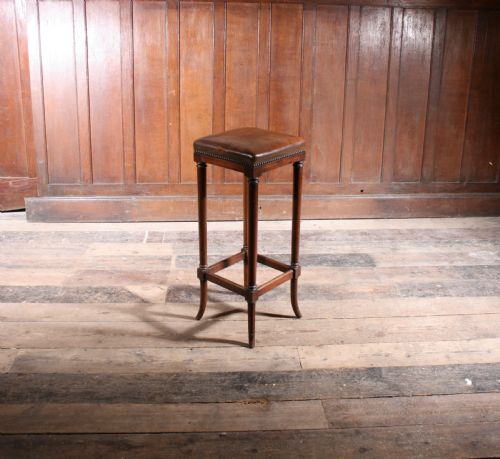


Vintage Tall Wooden Stool
These vintage tall wooden stool pieces are hard-wearing seats built for trade, country houses and pubs, prized for their honest timber and height.
Vintage Tall Wooden Stool
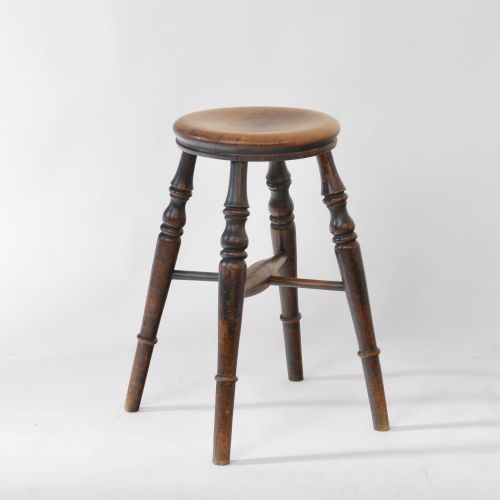
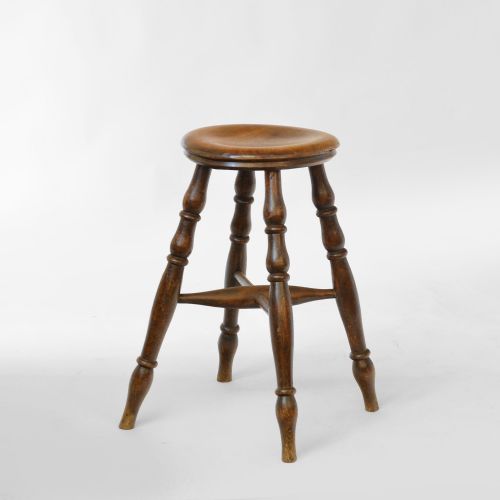
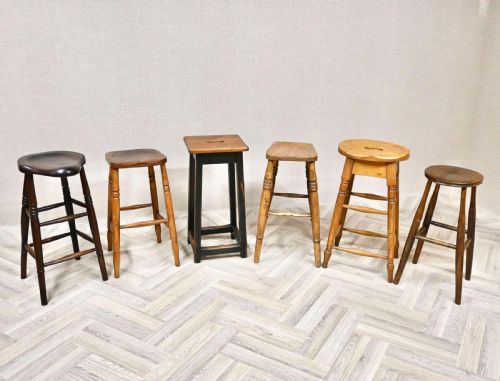
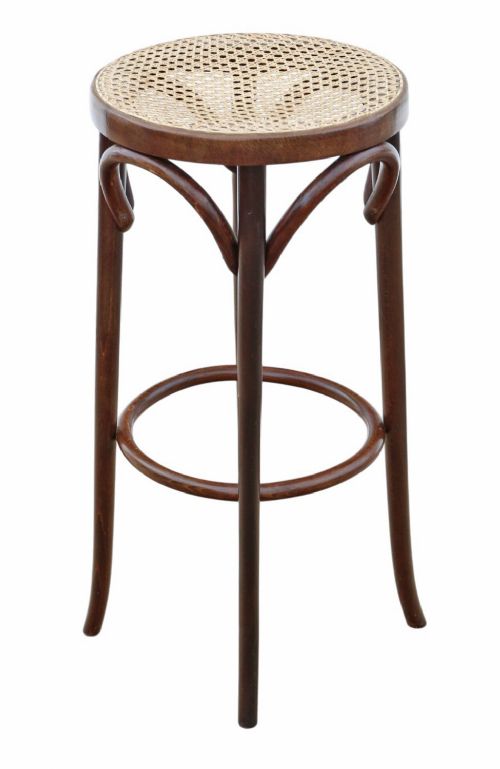
When you search for a vintage tall wooden stool, you encounter practical furniture designed for domestic, commercial and institutional use across centuries. The selection spans utilitarian kitchen seats, pub tavern seating, clerk chairs and library steps constructed from robust timbers.
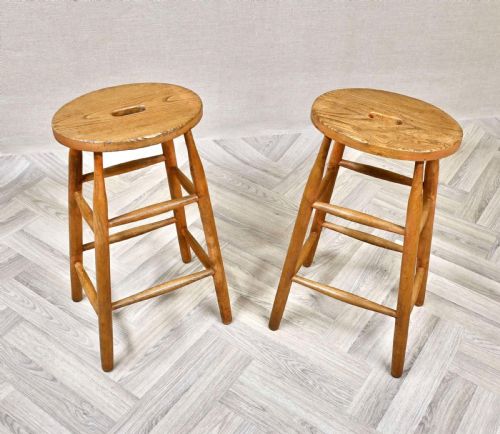
You are most likely to meet nineteenth-century examples alongside early twentieth-century pieces reflecting Victorian vernacular, rustic farmhouse and Edwardian styles. These range from single items to pairs and small sets intended for high counters, bars and desks.
Materials and construction
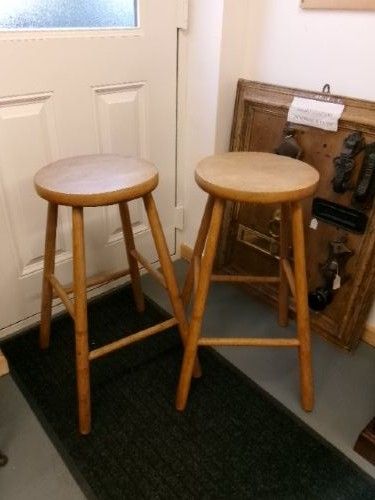
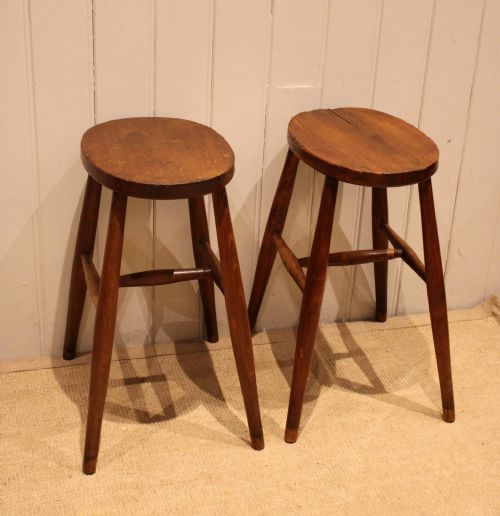
Construction relies heavily on sturdy domestic hardwoods like elm, beech, oak and sycamore, often paired with pine, birch and mahogany. Turning techniques shape the legs and spindles, while solid plank tops provide durable surfaces that endure daily friction.
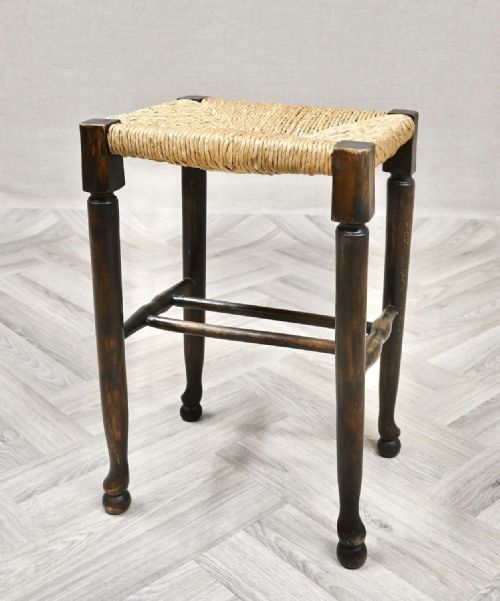
Joinery methods prioritize utility, utilising turned stretchers for stability at high elevations and occasionally incorporating rush seating or leather upholstery. Surfaces show the marks of historical paint finishes, staining and natural wear on the grain.
The listings feature nineteenth-century and early twentieth-century periods, utilising materials such as beech, elm, oak, pine and leather.
Judging quality and proportion
The distinction between ordinary utility items and finer examples rests on the choice of timber and the sophistication of the turning. Selected wild elm or figured sycamore tops combined with well-balanced turned legs elevate a piece beyond standard workshop production.
Proportion and structural integrity define the better specimens, where height does not compromise balance. Original surface patination, whether bare scrubbed timber or historic paint, carries greater appeal than stripped or heavily restored frames.
The Vintage Tall Wooden Stool Glossary
- Vernacular
- Everyday furniture made by regional craftsmen for local use rather than high-style metropolitan workshops. These pieces prioritize function over ornament.
- Turned
- Wood shaped on a lathe by rotating the material against cutting tools to form cylindrical or spindle legs and stretchers. This process adds rigidity to high frames.
- Pub or tavern stool
- A robust high seat designed for commercial hospitality settings, featuring braced legs to withstand heavy public use. They typically display deep patination from handling.
- Clerk stool
- A tall seat traditionally used at high desks for bookkeeping and writing, often incorporating foot rings for posture support. They reflect institutional or office environments.
Vintage Tall Wooden Stool: Frequently Asked Questions
How were tall wooden stools used historically?
These tall seats served workers and patrons at elevated surfaces such as bar counters, tavern tables and high clerk desks.
They provided necessary height for tasks requiring standing or perched sitting in commercial, domestic and office spaces.
What woods are typical for these stools?
Common timbers include native hardwoods like elm, beech, oak, sycamore and birch, chosen for their strength and resilience.
Some examples also incorporate pine or mahogany depending on their regional origin and intended setting.
How do I date a vintage stool?
Dating relies on observing construction marks, timber characteristics, wear patterns and turning styles associated with nineteenth and early twentieth-century craftsmanship.
Details such as historic paint layers and traditional joinery methods help establish the period of manufacture.
Can these stools be used in modern kitchens?
Their enduring structural build and height make them well-suited for contemporary kitchen islands and breakfast bars.
They introduce historical character and practical seating into modern living spaces while retaining their original utilitarian charm.