

Vintage Tall Dresser
A vintage tall dresser offers generous vertical storage, bringing historic character and practical proportions to any room.
Vintage Tall Dresser
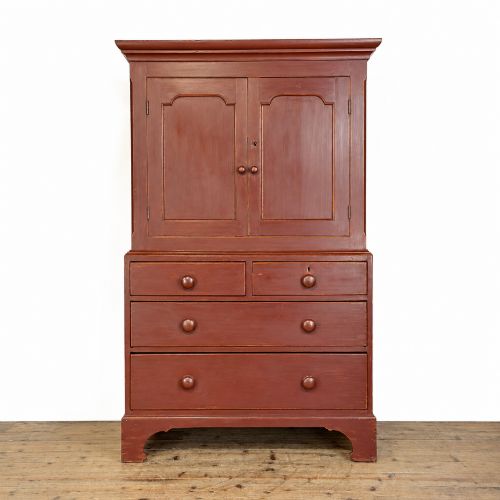
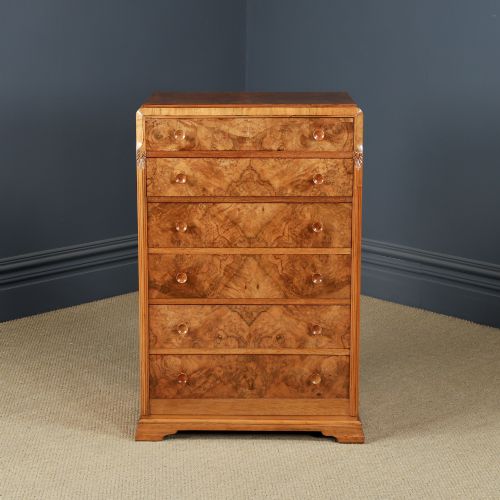
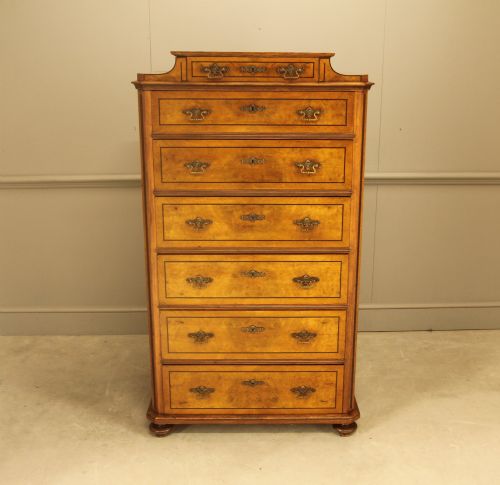
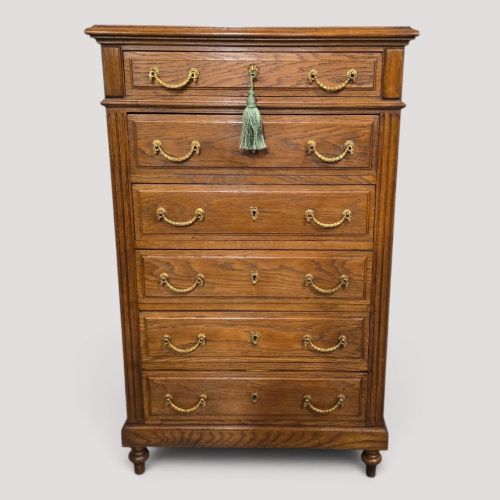
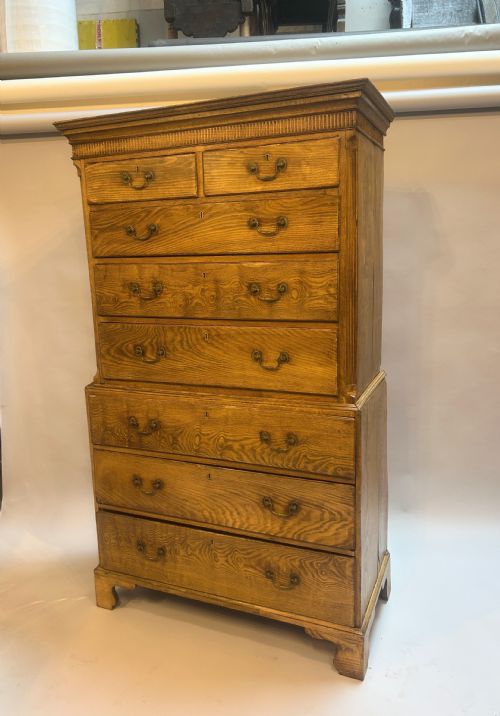
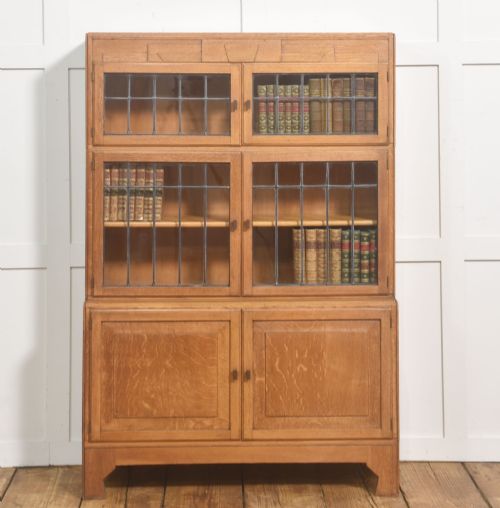
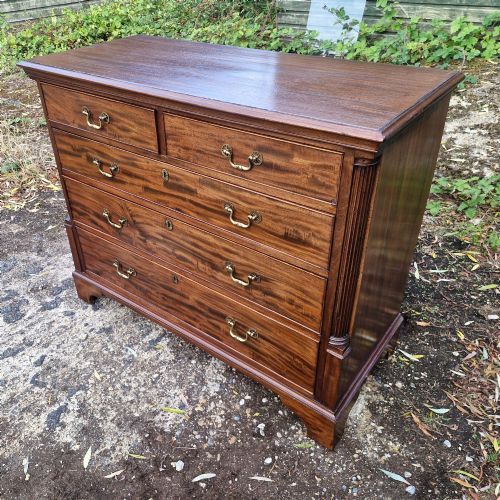
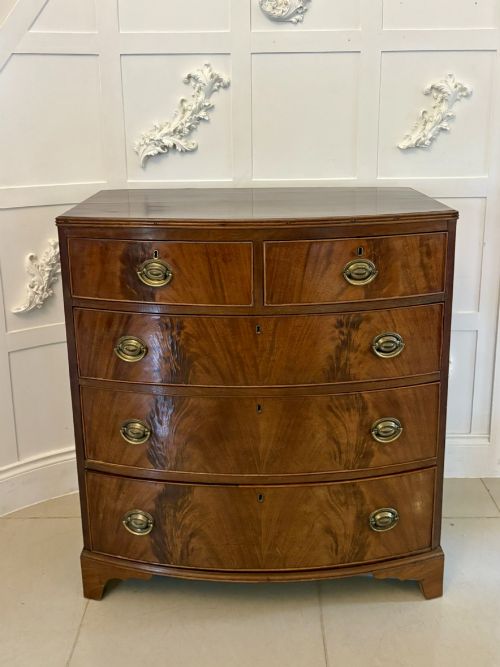
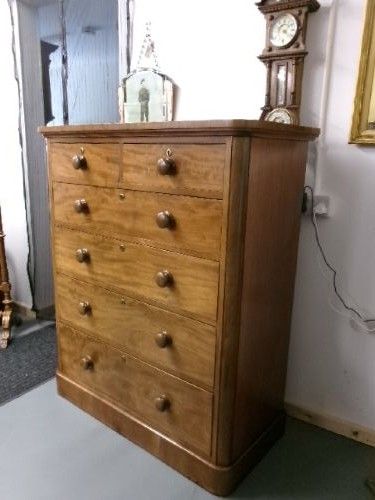
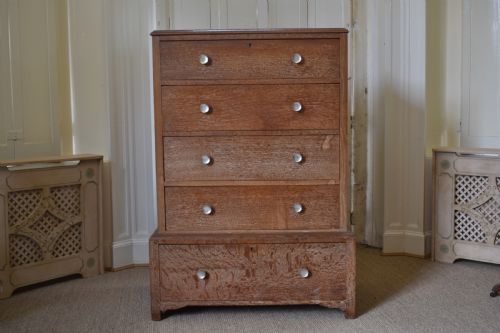
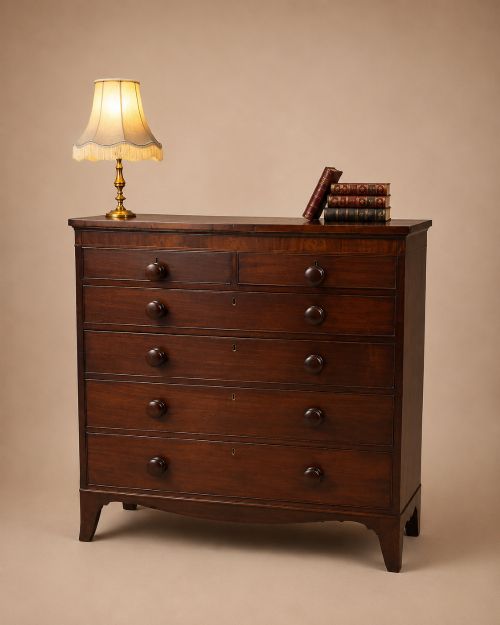
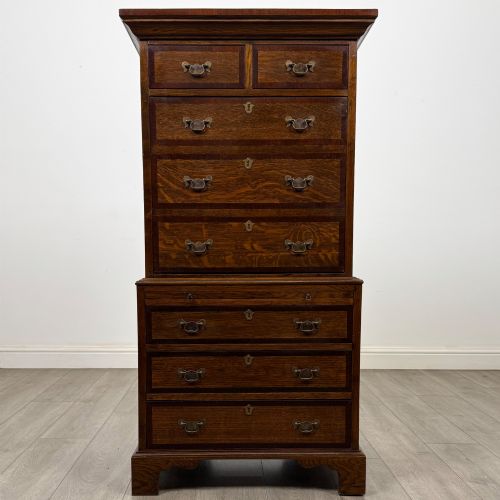
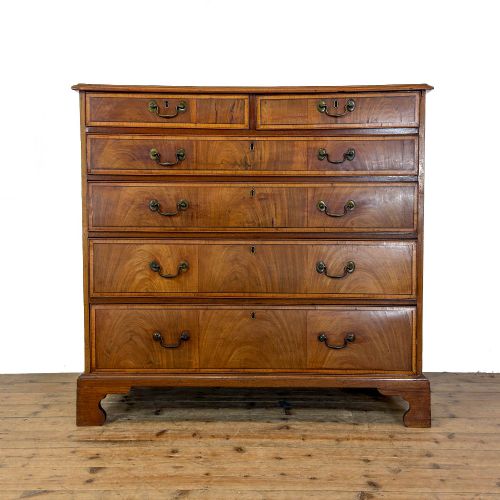
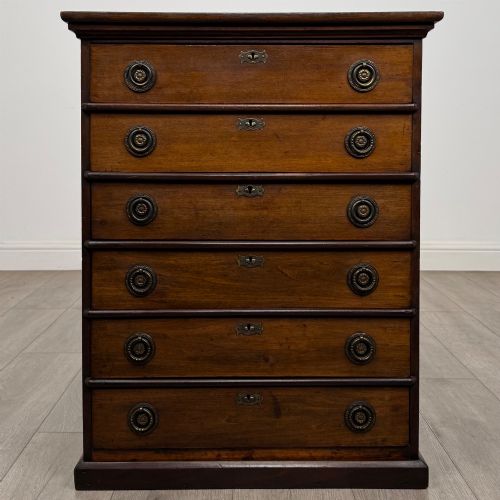
A vintage tall dresser groups several forms designed for vertical storage, appearing across this page as tall chests of drawers, upright chests, and tallboys rather than traditional plate racks. Buyers searching for a vintage tall dresser encounter substantial case pieces built to maximise capacity while occupying a minimal floor footprint.
The pieces spanning this selection originate from the eighteenth, nineteenth, and early twentieth centuries, encompassing Georgian, Victorian, Edwardian, and Art Deco eras. Mahogany, oak, walnut, and pine dominate the forms, reflecting the enduring utility of tall storage across multiple historic periods.
How they were made
Cabinet makers constructed these tall carcasses predominantly using solid hardwoods such as mahogany, oak, and walnut, often applying decorative veneers like burr walnut or figured mahogany to principal drawer fronts. Pine served frequently for internal carcases and backing boards, particularly in country and regional pieces.
Joinery techniques relied upon traditional dovetailed drawer construction and framed panels to accommodate natural timber movement over decades of use. Surfaces received polished French polish, wax, or painted finishes, occasionally incorporating inlay, marquetry, or carved decorative elements.
Listings span the Georgian, Victorian, Edwardian, and Art Deco periods, executed in mahogany, oak, walnut, pine, and satinwood.
What varies in quality
Quality separates along the grade of timber selected for the carcase and the precision of the drawer construction. Finer examples display carefully matched grain patterns, such as crossbanding and figured veneers, whereas simpler utility pieces utilise plain pine or standard oak boards.
The sophistication of the hardware, the retention of original brass handles or locks, and the crispness of any inlaid decoration or carving mark the distinction between standard workshop production and superior cabinet making.
The Vintage Tall Dresser Glossary
- Tallboy
- A tall chest of drawers, often constructed in two sections with an upper chest sitting upon a lower chest or base. This form evolved during the eighteenth century to provide maximum drawer capacity.
- Crossbanding
- A decorative border technique where thin strips of veneer are laid perpendicular to the grain of the surrounding wood. This creates a contrasting frame around drawer fronts or table tops.
- Burr walnut
- Timber taken from a growth deformity on a walnut tree, yielding complex, swirling grain patterns. Cabinet makers prized this wood for high-status drawer fronts and decorative panels.
- Marquetry
- The art of applying pieces of veneer to a structure to form decorative patterns and pictures. Dutch workshops frequently utilised floral and pictorial marquetry on eighteenth and nineteenth century furniture.
- Dovetail
- A joint formed by interlocking wedge-shaped fingers, widely used in drawer construction for superior tensile strength. Hand-cut dovetails indicate earlier periods of craftsmanship before machine production.
Vintage Tall Dresser: Frequently Asked Questions
What is a tallboy?
A tallboy is a historic form of chest of drawers built vertically to hold substantial amounts of clothing while taking up minimal floor space. These pieces often feature five or more stacked drawers.
Many examples separate into two distinct sections to facilitate movement through historic doorways and stairwells.
How do I date a tall chest?
Dating relies upon examining the timber species, construction methods, handles, and overall aesthetic proportions. Eighteenth-century pieces typically exhibit hand-cut dovetailing and native hardwoods like mahogany or oak.
Later Edwardian and Art Deco iterations introduce machine-sawn elements, satinwood inlay, or streamlined geometric veneers characteristic of the nineteen-thirties.
Where do I place a tall dresser?
These upright pieces suit bedrooms, hallways, or living rooms where floor area is restricted but vertical capacity is required. Their height draws the eye upward, making rooms feel taller.
Securing tall furniture to the wall using appropriate brackets ensures stability, particularly when dealing with heavy hardwood carcasses.
What woods were used?
Cabinet makers utilised regional and imported timbers depending on the period and workshop location. Mahogany and walnut dominated formal Georgian and Victorian pieces, often enhanced by decorative veneers.
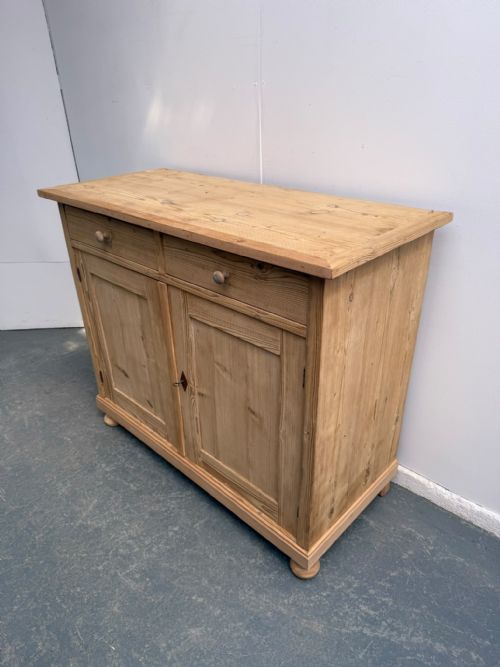
Oak and pine appeared frequently in country workshops, housekeeper cupboards, and utilitarian storage cabinets destined for everyday household service.