

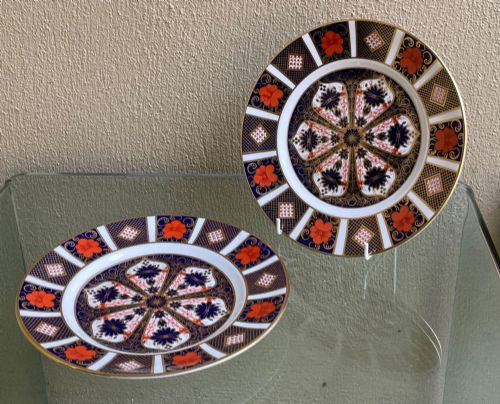



Vintage Tableware Display
Vintage tableware display pieces bring personality to a room, offering practical service alongside centuries of decorative skill.
Vintage Tableware Display
When you search for vintage tableware display, you are looking at functional dining items repurposed for decoration, ranging from cabinet plates to cake stands. The selection spans the eighteenth century through to the mid-twentieth century, capturing diverse historical aesthetics.
You are most likely to meet ceramic plates, ironstone sets, and silver plated chargers on this page. These pieces showcase various forms including serving dishes, dessert services, and circular stands.
Makers such as Royal Crown Derby and William Adams appear alongside unmarked Meissen porcelain and Victorian mahogany stands. The materials shift from earthenware and bone china to heavy silver plate and solid mahogany.
How they were made
Ceramic items utilise traditional firing techniques, applying glaze, gold leaf, and transfer-printed patterns like the blue and white Native design. Ironstone provides a dense, durable body suited to heavy daily use and decorative service.
Silver plated chargers and serving dishes involve plating base metals to achieve a reflective finish. Mahogany cake and cheese stands rely on precision cabinet-making to create stable circular wooden platforms.
Vintage Tableware Display Retail Price Guide 2026
Typical asking prices for vintage tableware display among the pieces listed under this phrase on Sellingantiques today, from the lower quarter to the upper quarter. They describe what is for sale here now, not the wider market.
Even a cheese stand needs to look distinguished when holding a wedge of cheddar.
What varies in quality
The standard of painting and gilding separates ordinary domestic wares from fine cabinet pieces. Hand-applied motifs and crisp transfer printing show a higher degree of artisan control than rushed production runs.
The weight of the metal and the richness of the wood grain determine the standing of silver plated chargers and mahogany stands. Substantial gauge silver plate and well-figured mahogany timber indicate superior manufacture.
Royal Crown Derby·William Adams·Meissen
The Vintage Tableware Display Glossary
- Dessert service
- A matching set of plates and a central comport used specifically for serving the final course of a meal. They frequently feature elaborate painted floral motifs or Imari patterns.
- Ironstone
- A patented ceramic material developed in the nineteenth century to imitate Chinese porcelain while offering greater durability. It forms a heavy, opaque body that holds enamel and transfer prints well.
- Comport
- A raised dish or bowl designed to hold fruit or sweetmeats above the level of the table. It usually forms the centrepiece of a dessert service.
- Imari style
- A decorative scheme originating in Japan and copied by European potteries, characterised by underglaze blue and iron red with added gold leaf details.
Vintage Tableware Display: Frequently Asked Questions
How were cake stands used?
Victorian mahogany circular cake or cheese stands were designed to present baked goods or cheeses centrally on the dining table. They elevated the food to improve visibility and ease of access during service.
Over time, these stands transitioned from active dining implements to decorative display pieces. Their raised wooden forms add warmth and structure to modern room arrangements.
What is a dessert service?
A dessert service is a matched grouping of tableware intended for the final course of a grand meal. It typically includes a raised comport flanked by multiple matching plates.
These sets allowed hosts to present sweet dishes with visual uniformity. Today, surviving services are frequently displayed on walls or within cabinets rather than used for dining.
How do I identify ironstone?
Ironstone is a heavy, durable ceramic body that sits between earthenware and porcelain. It feels dense and rings slightly when struck, designed to withstand frequent use.
Pieces often feature crisp transfer-printed designs or moulded relief patterns. The material takes glaze smoothly, resulting in a robust surface that resists everyday wear.
Where should I display chargers?
Silver plated or pewter chargers make striking wall hangings or tabletop backdrops due to their substantial size. Their reflective metal surfaces bounce light around a room.
Position them behind smaller ceramics or glassware to create depth in a display. Ensure secure fixings if hanging heavy metal pieces on walls.