

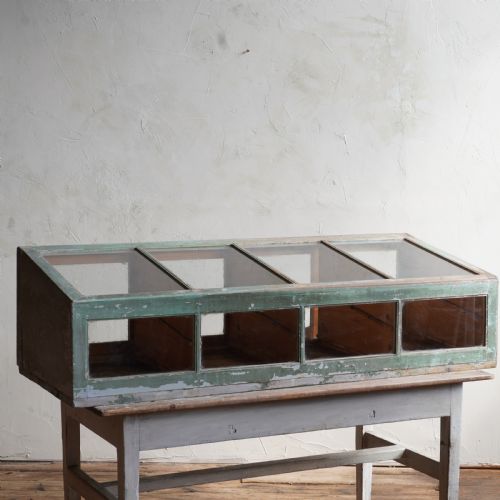


Vintage Tabletop Showcase
A vintage tabletop showcase turns small collections into focal points, offering glass-fronted protection across counter and table surfaces.
Vintage Tabletop Showcase
A vintage tabletop showcase encompasses small glazed display cabinets, countertop shop cases, and desktop boxes designed to hold precious items in clear view. These pieces originate from periods spanning the late nineteenth century through the 1930s, including Victorian, Edwardian, and Art Deco eras.
The versions most commonly met on this page are commercial shop counters and cabinets built from oak, mahogany, or ebonised wood, often fitted with single glass doors or lift-up lids. Alongside these timber frames appear brass jewellery cabinets and decorative glazed boxes lined in materials such as velvet.
Makers and merchants utilised these glazed boxes for trade and domestic display, housing confectioneries like Cadbury and Fry chocolate alongside personal trinkets. The scale remains compact, suited for placement on top of sideboards, desks, and shop counters without dominating a room.
What varies in quality
The calibre of timber selection and the precision of joinery separate utilitarian trade boxes from finer domestic display pieces. Hardwoods like mahogany and polished oak represent higher standards of cabinet making compared to simpler pine structures.
Originality of components, from the glass panes to the brass hinges and interior velvet linings, dictates the integrity of the piece. Sign-written branding and commercial provenance add distinct character to surviving shop counters.
Vintage Tabletop Showcase Retail Price Guide 2026
Typical asking prices for vintage tabletop showcase among the pieces listed under this phrase on Sellingantiques today, from the lower quarter to the upper quarter. They describe what is for sale here now, not the wider market.
Listings feature oak, mahogany, and pine structures, alongside brass frames paired with velvet linings across Victorian, Edwardian, and Art Deco periods.
The Vintage Tabletop Showcase Glossary
- Countertop cabinet
- A small glazed case designed to sit upon shop counters or furniture surfaces for merchandise display. These pieces feature hinged doors or panels for access.
- Ebonisation
- A chemical or pigment treatment applied to timber to imitate ebony. This dark finish appears frequently on twentieth-century display cases.
- Glazing
- The installation of glass panes within a wooden or metal frame. In these cabinets, glazing forms the primary barrier and viewing window.
- Distressed paint
- Surface finishes showing deliberate wear, age, or flaking. This appearance is common on trade cabinets that experienced decades of commercial use.
- Velvet
- A woven tufted fabric used to line the interiors of display boxes. It cushions items and provides a contrasting background for jewellery and small objects.
Vintage Tabletop Showcase: Frequently Asked Questions
What were these cabinets used for?
Merchants used these countertop cabinets to display small goods, confectionery, and tobacco on shop counters while protecting stock from dust and handling.
In domestic settings, similar glass-fronted boxes served to exhibit personal collections, jewellery, and decorative objects safely on tabletops.
How do I clean the glass?
Wipe the glass panes gently using a soft cloth dampened with a mild, non-abrasive window cleaning solution. Avoid spraying liquids directly onto the cabinet to prevent moisture damage to old wood and brass fittings.
Are the cabinets heavy?
Most tabletop showcases are relatively light, constructed from timber frames and glass panels designed for placement on standard furniture. Larger oak and mahogany versions require two people to lift safely due to the weight of the glass.
How do I date these pieces?
Dating relies on stylistic clues such as the geometric lines of Art Deco pieces or the heavy mouldings of Victorian and Edwardian joinery. Materials, construction methods, and any surviving commercial signage further clarify the period of origin.