


Vintage Table Salts
Vintage table salts bring small-scale silver, glass and novelty work to the dining table.
Vintage Table Salts
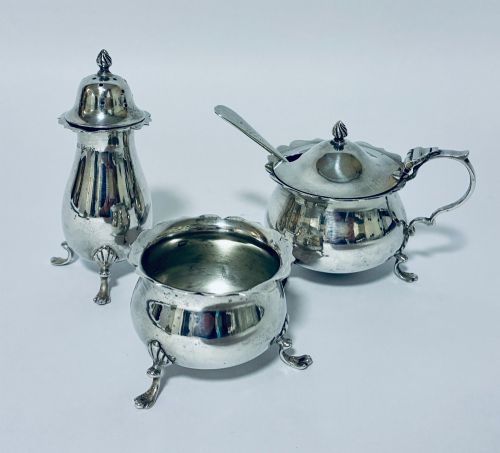
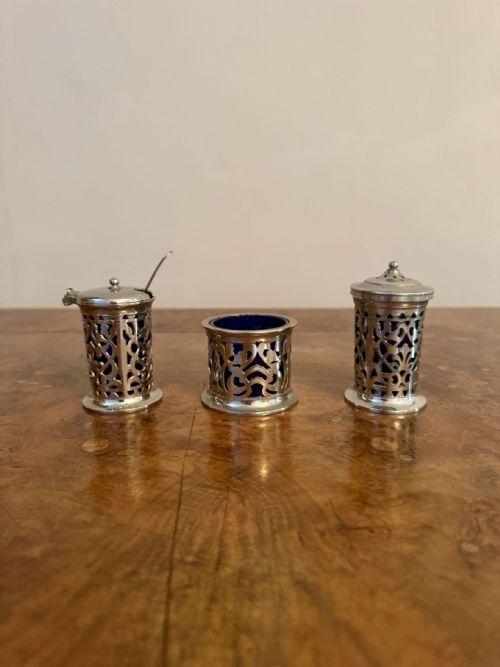
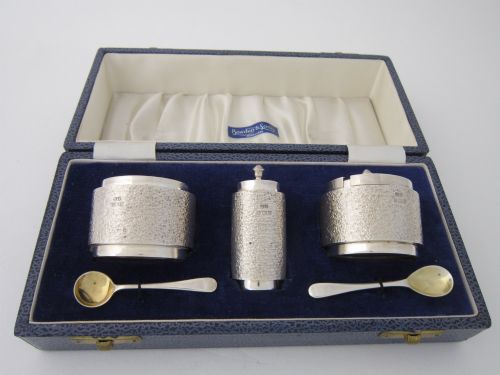
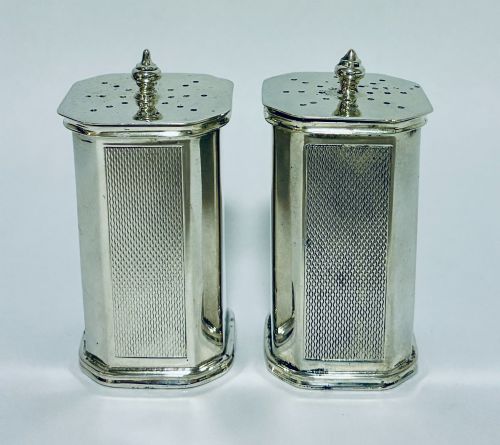
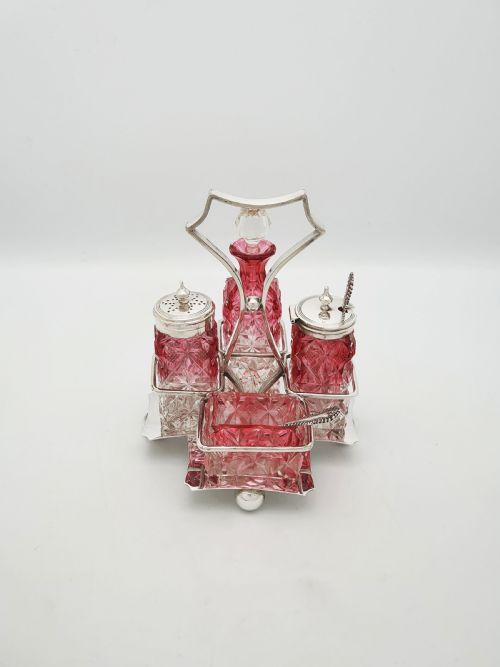
Vintage table salts comprise open salt cellars, condiment sets and cruet frames designed to hold salt, pepper and mustard for the dining table. The listings here span the Victorian, Edwardian and Art Deco periods, alongside mid-century pieces, incorporating both solid sterling silver and silver-plated frameworks.
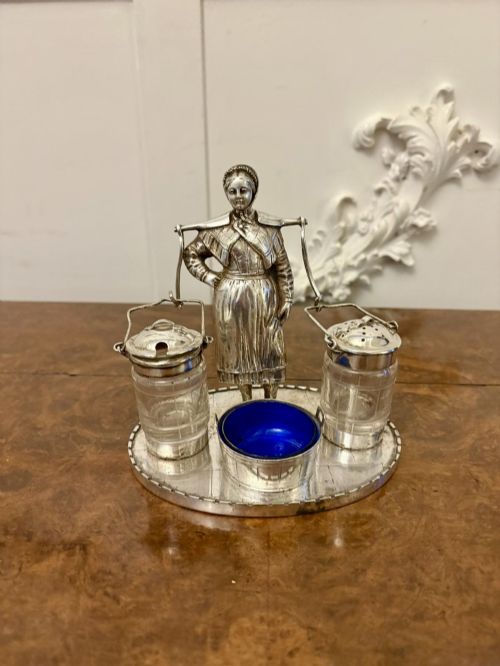
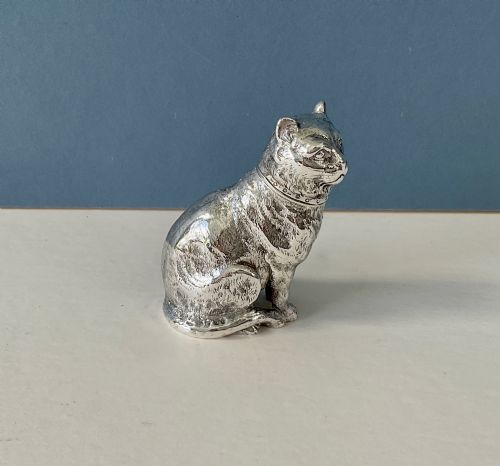
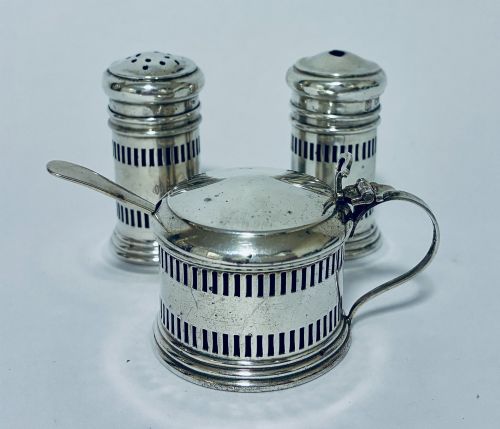
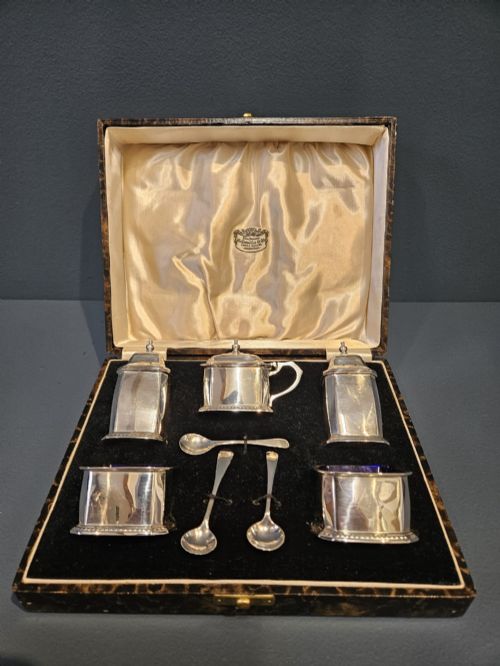
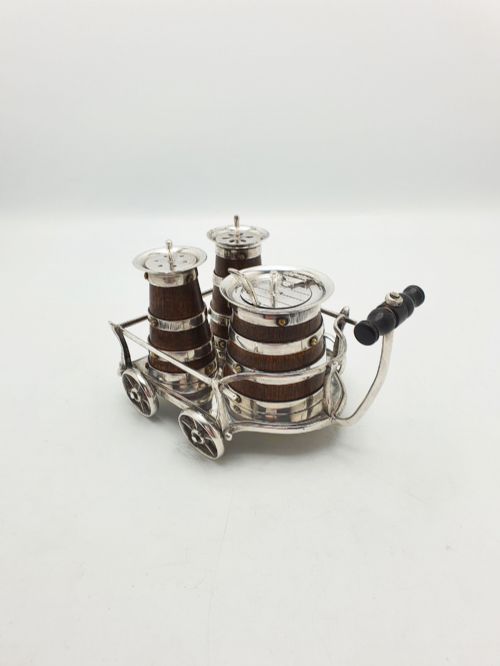
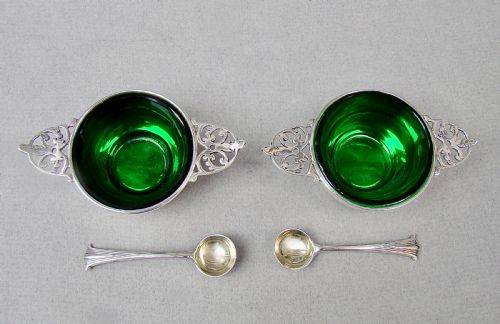
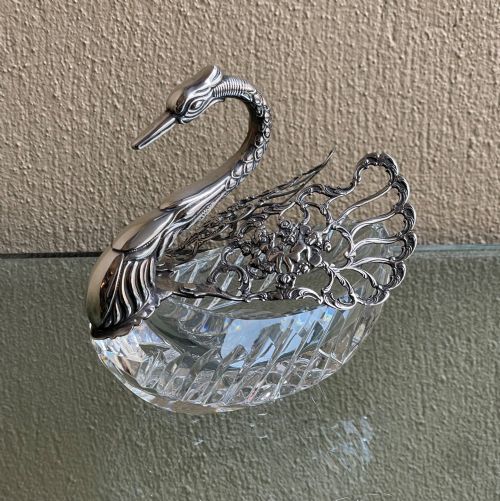
Buyers will frequently encounter Edwardian cruet sets and individual open salt cellars paired with matching spoons. Alongside standard tableware forms, the selection includes novelty salt pots shaped as animals, birds and longships, reflecting a tradition of playful dining accessories.
Materials and construction
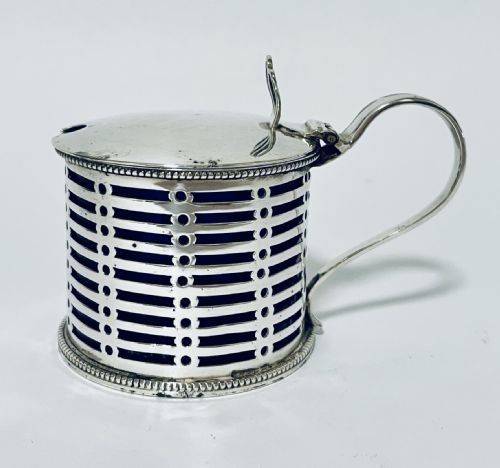
The pieces combine precious and utilitarian metals with glass, utilising sterling silver, silver plate, cut glass and cobalt glass liners. Many open salts rely on clear or flashed glass bowls fitted within pierced silver frames or oak barrels.
Silversmiths employed techniques such as casting, piercing and chasing to shape metal components, while glassmakers utilised hand-cutting and moulding to create heavy bowls and cruet bottles.
Vintage Table Salts Retail Price Guide 2026
Typical asking prices for vintage table salts among the pieces listed under this phrase on Sellingantiques today, from the lower quarter to the upper quarter. They describe what is for sale here now, not the wider market.
Materials span sterling silver, silver plate, cut glass, cobalt glass, velvet and enamel across multiple decades.
Elements of quality
Quality rests upon the crispness of detail in cast or chased novelty forms, such as animal feathers or architectural mounts, compared to softer, mass-produced stamping. Weight and gauge of the silver or silver plate also distinguish finer tableware.
The integrity of fitted glass liners, whether cut glass or coloured cobalt, contributes significantly to the overall standard of a cruet set or salt cellar.
Georg Jensen·HB Quimper·Josiah Williams & Co·Bricks & Sons·Wilmot Manufacturing Co
The Vintage Table Salts Glossary
- Cruet set
- A matched collection of bottles, jars or shakers for condiments, usually held in a metal stand or frame. These sets typically include receptacles for oil, vinegar, salt, pepper and mustard.
- Open salt
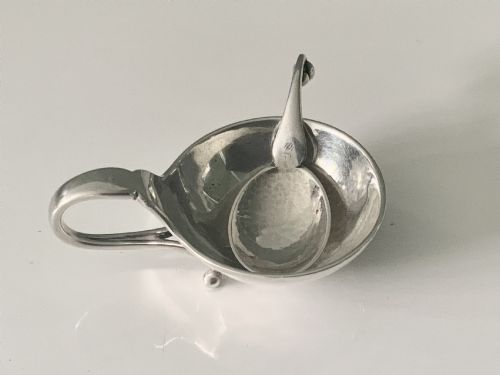
- A small dish or cellar used before the invention of free-flowing table salt, from which diners pinched salt using their fingers or a tiny spoon. They frequently feature glass liners to protect metal from corrosion.
- Silver plate
- A base metal, such as copper or Britannia metal, coated with a thin layer of silver through electroplating or old Sheffield plate techniques. This method offered the appearance of solid silver at a lower cost.
- Faience
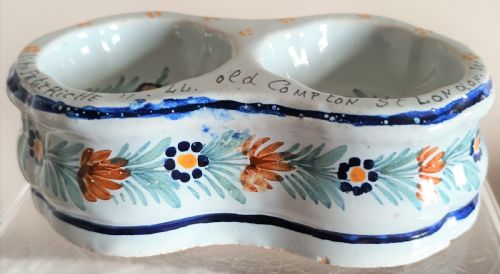
- Tin-glazed earthenware produced in France and other European regions, often hand-painted with floral or geometric designs. It appears in table salts as colourful pottery bodies distinct from porcelain.
Vintage Table Salts: Frequently Asked Questions
How do I use vintage table salts today?
These small open cellars work well on a modern dining table for serving flaky sea salt or individual herb blends. They also function successfully as small desk tidies for paper clips or trinkets.
Matching spoons allow guests to serve themselves cleanly from open glass bowls.
What is the difference between an open salt and a pepper pot?
Open salts are small bowls designed to hold loose salt accessed via a spoon or pinches of the fingers. Pepper pots feature pierced lids intended for shaking ground pepper.
Condiment sets often combine both forms alongside mustard pots within a single framework.
How do I clean silver salt cellars safely?
Wash silver pieces gently in warm water using mild soap, taking care to remove old salt residue promptly to prevent metal pitting. Dry thoroughly with a soft cloth before storing.
Avoid harsh abrasive dips that strip away desirable patination on older silver.
How do I date a silver salt cellar?
Examine the stamped hallmarks on British silver, which typically include a date letter, a town mark and a lion passant indicating sterling standard. These assay office marks provide an exact year of manufacture.
Stylistic cues such as Edwardian pierced work or Art Deco geometric lines offer further chronological context.