



Vintage Table Salt Shakers
These vintage table salt shakers and matching cruet sets bring tactile weight and historic charm to the dining table.
Vintage Table Salt Shakers
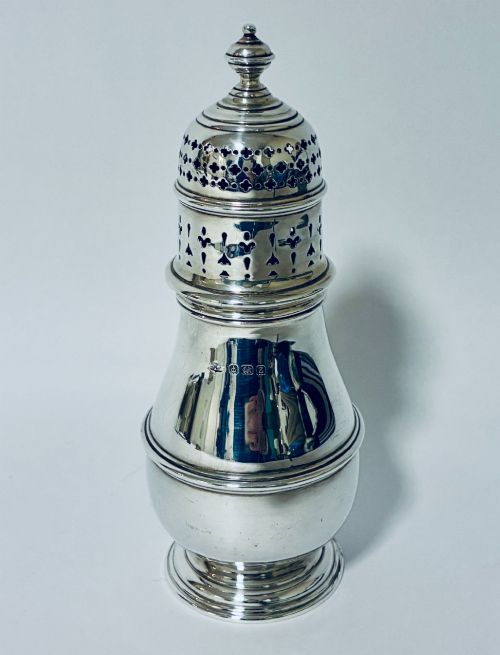
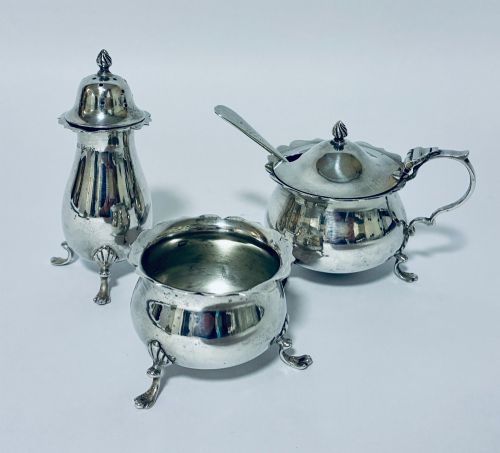
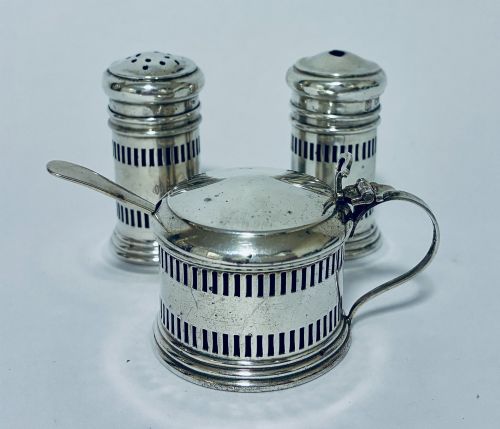
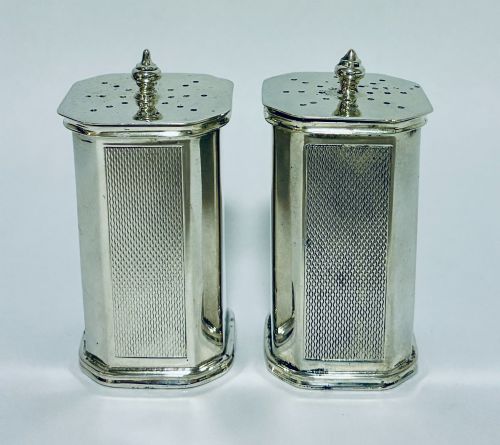
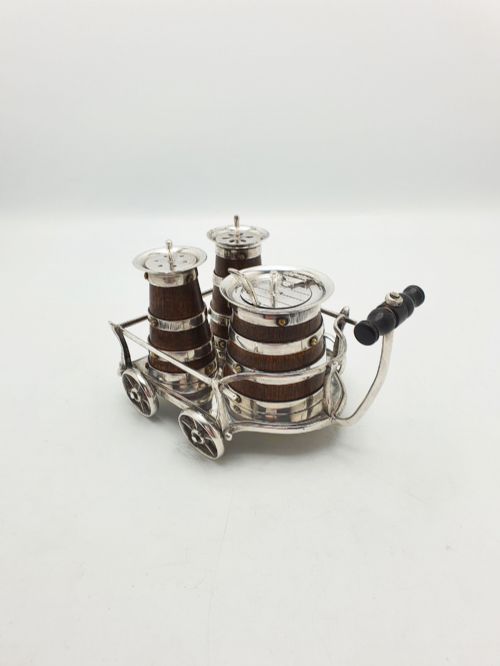
When you search for vintage table salt shakers, you encounter a range of forms spanning from the Georgian period through to the mid-twentieth century, including individual cellars, pairs, and multi-piece cruet sets. The examples met most frequently on this page take the form of silver or silver-plated cruet sets, alongside standalone novelty peppers shaped as animals like owls and pheasants.
The objects originate across diverse eras, from nineteenth-century Victorian designs to Edwardian and Art Deco pieces, occasionally extending into mid-century modern British work. These items served a practical function for dining table condiments, grouping salt, pepper, and mustard containers together on a stand or tray.
How they were made
Makers utilised solid silver, sterling silver, silver-gilt, and silver plate over base metals, combining these with cut glass and wooden elements such as oak barrels. Techniques involved casting solid silver into detailed animal forms, alongside precision silversmithing for framed cruet sets and glass cutting for cellar bodies.
Vintage Table Salt Shakers Retail Price Guide 2026
Typical asking prices for vintage table salt shakers among the pieces listed under this phrase on Sellingantiques today, from the lower quarter to the upper quarter. They describe what is for sale here now, not the wider market.
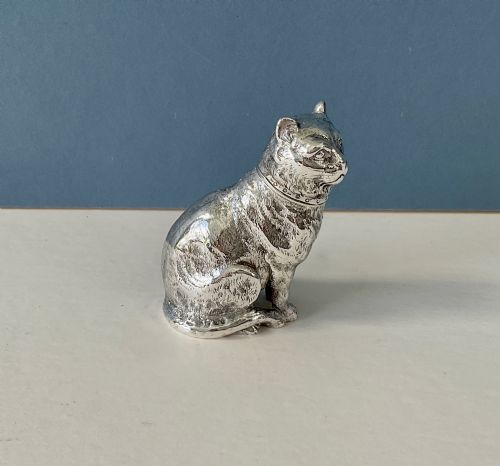
Dining tables gained animated character through small silver owls, cats, and pheasants that doubled as functional condiment peppers.
What varies in quality
Quality rests upon the crispness of casting in figural pieces, where finer examples display sharp feather or fur definition rather than softened contours. The weight and gauge of the sterling silver or silver plate also dictate the substance of the set, alongside the clarity and precision of the cut glass inserts.
Completeness defines the standard of cruet sets, distinguishing matching multi-piece assemblies and original fitted stands from mismatched components or missing spoons and liners.
Bricks and Sons·Wilmot Manufacturing Co·Berthold Muller·Viners
The Vintage Table Salt Shakers Glossary
- Cruet set
- A matched collection of small bottles, jars, or shakers for holding table condiments, typically held together on a stand or frame.
- Sterling silver
- A silver alloy containing by mass ninety-two point five percent silver and seven point five percent other metals, usually copper, ensuring durability while maintaining purity.
- Silver-plate
- A method where a thin layer of silver is bonded to a base metal, such as copper or nickel brass, to provide the appearance of solid silver.
- Silver-gilt
- Silver that has been coated with a thin layer of gold on its surface, adding a warm, two-tone finish to the interior or exterior of the vessel.
- Table salts
- Open glass or silver cellars designed to hold salt, used prior to the widespread adoption of individual shaker bottles.
Vintage Table Salt Shakers: Frequently Asked Questions
How do I date a silver cruet set?
Dating relies heavily upon the stamped hallmarks found on the metal components, which indicate the assay office, the maker, and the year of production. Stylistic cues such as Edwardian restraint or Art Deco geometry also help place the piece within a specific decade.
Comparing the manufacturing techniques and the form of the stand against known historical periods provides further confirmation of the era in which the set was produced.
What is the difference between a salt cellar and a shaker?
Salt cellars are open vessels, often manufactured from glass or silver, from which diners pinched salt using small spoons or fingers. Shakers feature pierced lids designed to dispense free-flowing salt granules when inverted.
Cellars dominate earlier periods like the Georgian and Victorian eras, whereas shakers became increasingly prevalent by the twentieth century.
How should I clean antique silver condiments?
Cleaning requires a soft microfibre cloth and a mild, non-abrasive silver polish formulated to remove tarnish without stripping the underlying metal or plate. Avoid harsh scrubbing on hallmarked areas or delicate cast details.
For pieces with glass or wooden components, keep moisture away from glued joints and fabric linings to preserve the structural integrity of the object.
Are novelty silver peppers rare?
Novelty peppers shaped as animals, birds, and transport forms were produced in varying quantities by specialist silversmiths, particularly during the Victorian and Edwardian periods. Their survival rate depends upon their original production volume and whether they remained complete within sets.
Figural examples modelled after owls, cats, and pheasants represent distinct sub-categories within silver condiment collecting.