



Vintage Swivel Tub Chair
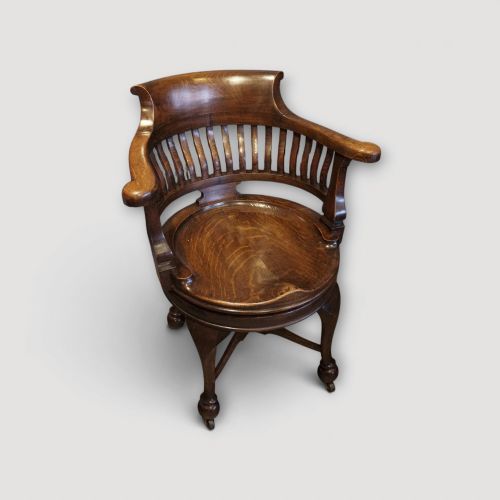
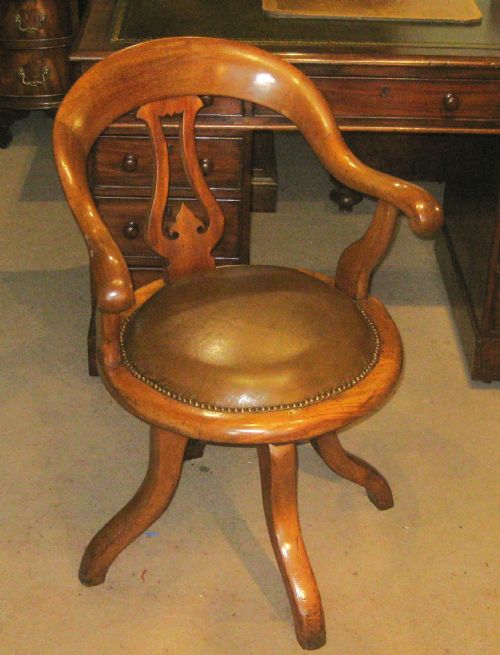
These vintage swivel tub chairs offer sturdy revolving comfort for a study, combining period timber and leather.
Vintage Swivel Tub Chair
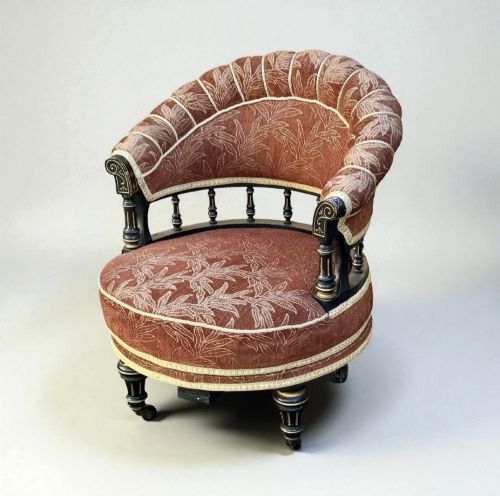
A vintage swivel tub chair provides a revolving seat framed by a rounded enclosing back, making it a functional addition to a traditional workspace. When searching for a vintage swivel tub chair, buyers typically encounter examples dating from the Victorian and Edwardian periods up to the early twentieth century.
The core selection on this page centres on sturdy desk chairs and armchairs designed for practical daily use. These pieces often feature timber frames paired with upholstered leather or hide seats that rotate on central swivel mechanisms.
Materials and construction
Cabinet makers constructed the primary frames of these chairs using solid timbers such as mahogany, oak, walnut, beech, and ebonised hardwood. These woods provided the necessary structural integrity to support both the user and the central revolving mechanism.
Working surfaces and seats were frequently finished with durable leather or tan hide, secured with brass fixings. Iron and cast iron components formed the robust mechanical underpinnings that allowed the seats to swivel smoothly.
Vintage Swivel Tub Chair Retail Price Guide 2026
Typical asking prices for vintage swivel tub chair among the pieces listed under this phrase on Sellingantiques today, from the lower quarter to the upper quarter. They describe what is for sale here now, not the wider market.
Assessing quality and craftsmanship
Superior examples distinguish themselves through the quality of timber selection and the refinement of the joinery around the curved tub back. Rich golden mahogany or carefully figured walnut denotes a higher grade of manufacture than plain utility pieces.
The sophistication of the revolving mechanism also marks the difference between standard and superior pieces. Smooth, integrated swivel action combined with substantial brass or cast iron hardware indicates a well-engineered chair.
The Vintage Swivel Tub Chair Glossary
- Tub chair
- An armchair with a low, rounded back that curves continuously into the arms. This shape offers a supportive and enclosed seating position.
- Swivel desk chair
- A revolving seat designed specifically for use at a writing table or desk. It allows the sitter to turn freely without moving the entire frame.
- Ebonised hardwood
- Timber treated with a dark finish to imitate expensive ebony. This technique was popular in Victorian cabinet making for a formal appearance.
- Tan hide
- A natural leather upholstery material left in a warm brownish shade. It develops a distinct patina with regular handling over decades.
Vintage Swivel Tub Chair: Frequently Asked Questions
How do I date a swivel tub chair?
Dating relies on observing the timber types and construction methods used in the frame. Victorian examples often utilise rich mahogany or walnut, whereas Edwardian pieces frequently feature oak and beech.
The hardware underneath also offers clues to the period. Early mechanical components in iron and brass evolved significantly between eighteen eighty and nineteen twenty.
Can I use these chairs at a modern desk?
These revolving chairs fit comfortably beneath standard modern desks provided the seat height aligns properly. Their compact tub footprint makes them practical for home workspaces.
Many pieces include adjustable height functions that help match them to contemporary desk clearances. The swivel action adds daily convenience for office use.
Are the leather seats original?
Upholstery on pieces of this age often undergoes restoration or replacement to ensure everyday usability. Original leather shows extensive natural ageing and wear patterns developed over generations.
Listings specify whether the hide covering is a later replacement or a period survival. Both options offer distinct visual character depending on preference.
What maintenance does a revolving mechanism need?
The iron and brass swivel parts benefit from occasional light lubrication to ensure smooth movement. Checking the central spindle and fixings periodically keeps the chair stable.
Wooden frames and leather seats require simple conditioning with appropriate waxes or balms. Avoiding direct heat sources preserves the natural timber and hide.