

Victorian Upholstered Tub Chair
A victorian upholstered tub chair brings enclosed comfort and curved nineteenth-century lines to a modern room.
Victorian Upholstered Tub Chair
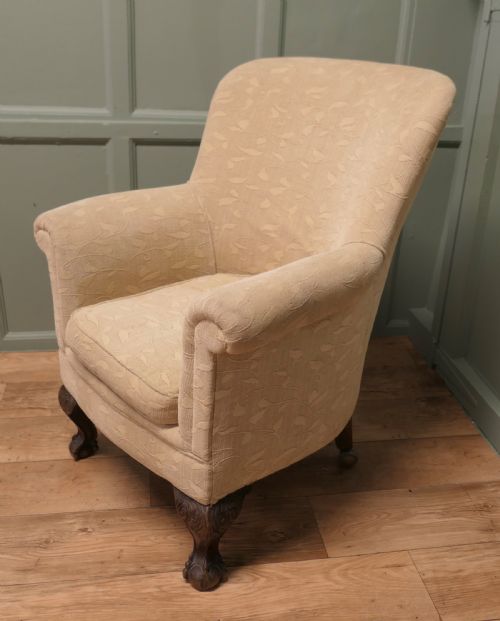
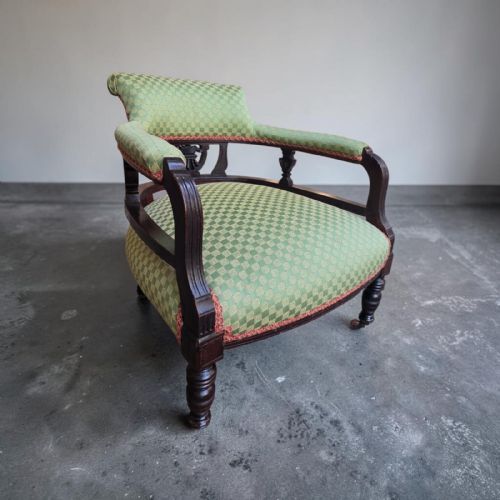
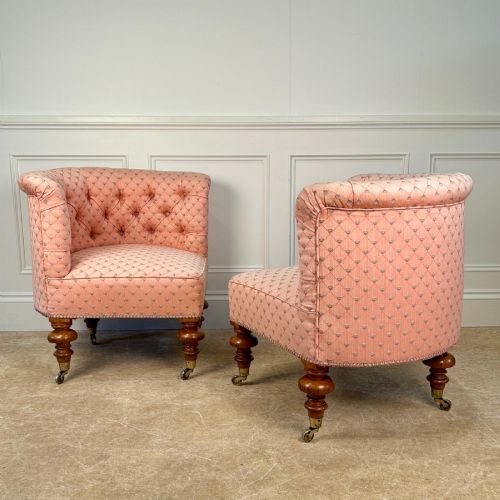
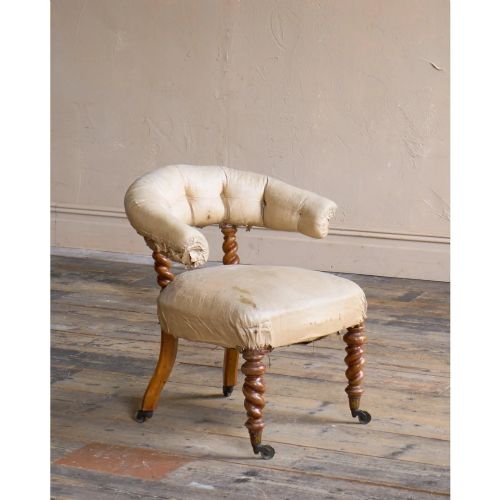
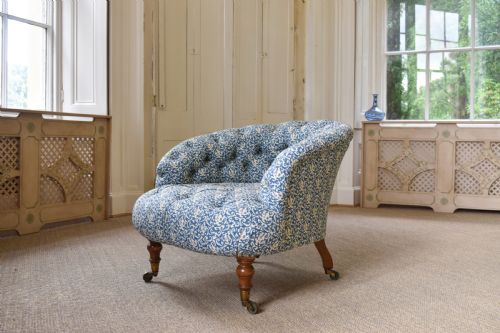
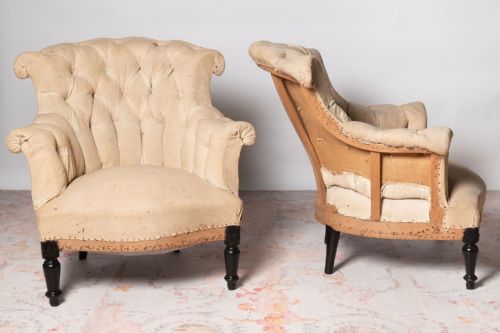
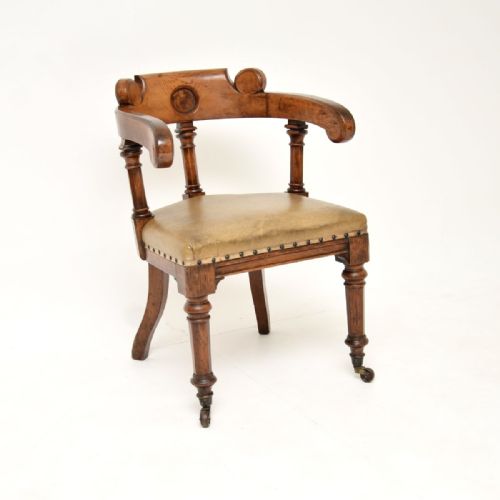
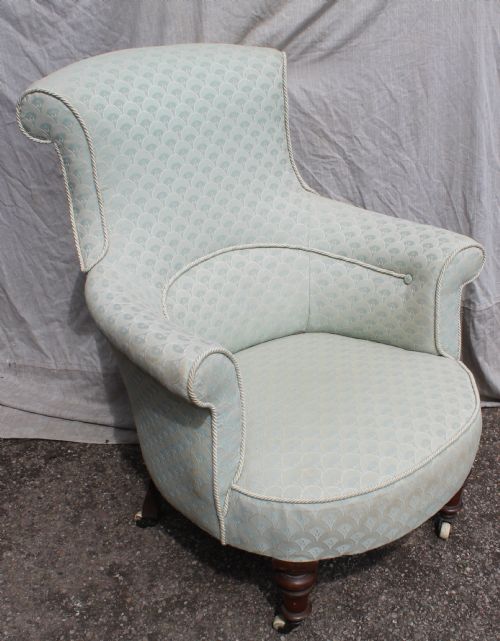
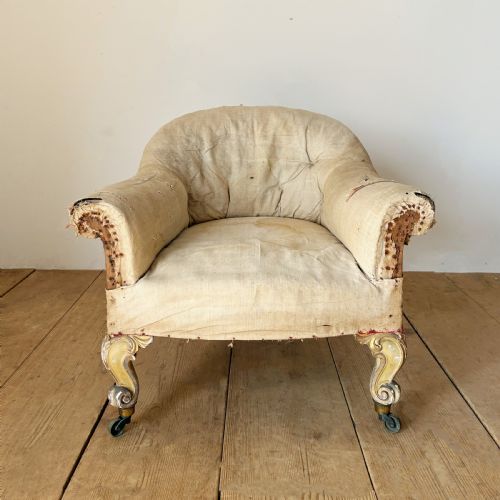
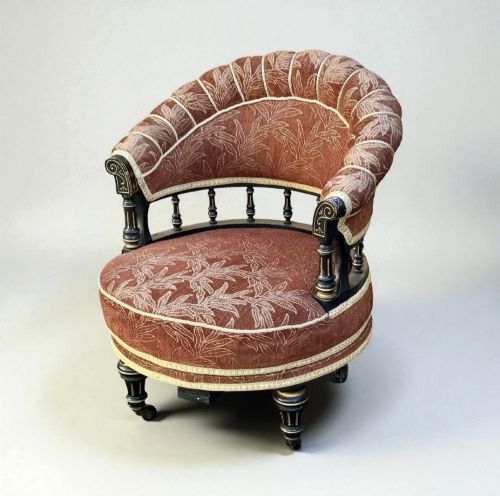
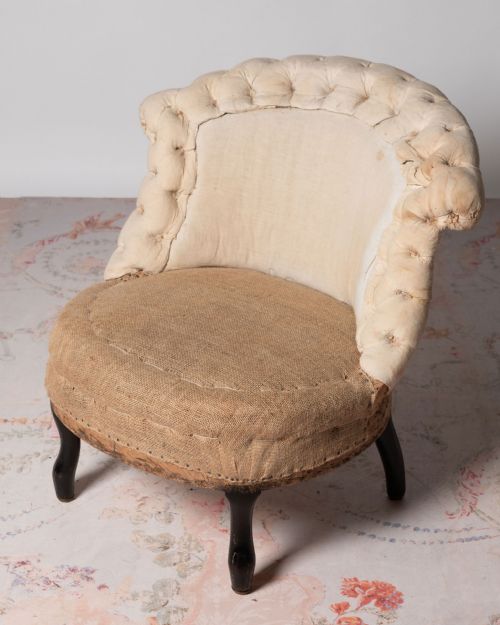
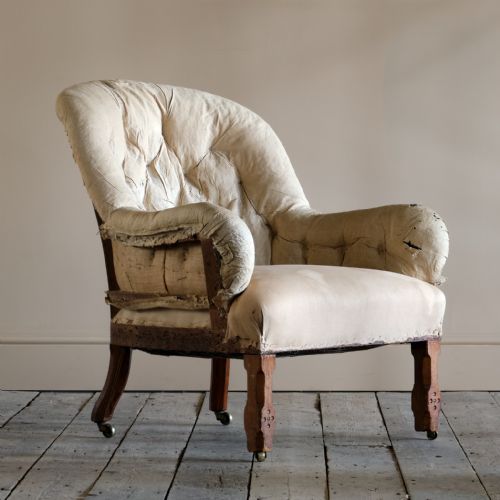
When searching for a victorian upholstered tub chair, a buyer encounters low-backed seating designed to wrap around the sitter with continuous upholstered arms and backrest. These pieces appear frequently across the nineteenth century, including specific iterations like low nursing chairs, library armchairs, and compact parlour seating.
The form developed to keep drafts away from the body while offering a supportive, enclosed seat for firesides and reading corners. Most examples found here originate from the Victorian period, though related Edwardian and late nineteenth-century variations also emerge in the listings.
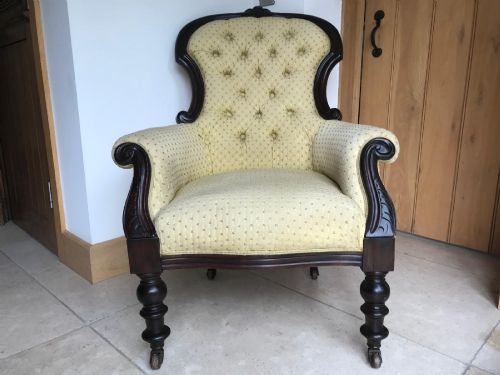
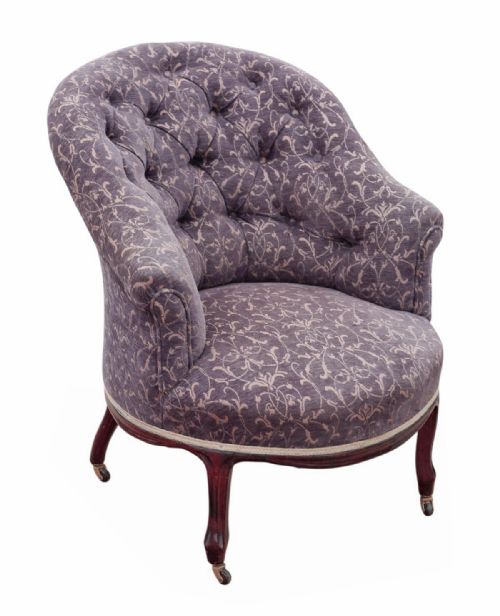
Makers and retail houses of the era adapted the basic tub shape into various formats, from simple mahogany frames to button-backed velvet models set upon castors. The common thread uniting these objects is the horseshoe-curved back rail flowing directly into the armrests.
Materials and Construction
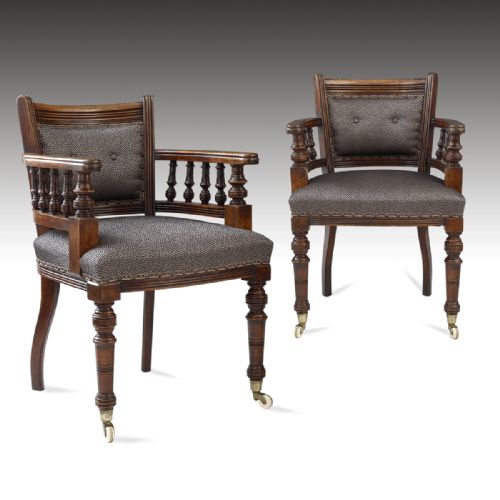
Cabinet makers constructed the foundational frames of these chairs using durable timbers such as mahogany, walnut, oak, and occasionally ebonised woods. Artisans shaped these hardwoods to form the curved structural ribs and exposed show-wood rails that frame the upholstered body.
Upholstery techniques combined traditional stuffing materials with durable fabric coverings like wool, cotton, velvet, and leather. Brass castors frequently fitted to the feet allowed these heavy wooden and stuffed armchairs to move across carpets with ease.
The inventory records pieces incorporating Aesthetic Movement, Gothic Revival, and French revival design influences.
Assessing Quality and Craftsmanship
The distinction between standard commercial seating and exceptional workshop production lies in the rigidity of the timber frame and the depth of the springing. Superior examples maintain firm, supportive curves in the tub back without structural wobble in the joints.
Carving detail on exposed show-wood frames and the precision of button-tufting indicate the tier of the original maker. Well-preserved original castors and branded stamps or paper labels from notable firms further elevate the standing of an individual piece.
C. Hindley & Sons·Howard & Sons·Gillows·Harrods London·Miles & Edward·Jenks & Wood·Hampton and Sons
The Victorian Upholstered Tub Chair Glossary
- Tub chair
- A seating form featuring a continuous curved back and armrests that form a single enclosed barrel shape. This design surrounds the occupant to provide draught-proof comfort.
- Show wood
- The exposed polished or carved wooden portions of a chair frame left visible around the upholstered sections. Walnut and mahogany were frequently utilised for this purpose.
- Button-back
- An upholstery method where deep buttons are pulled through the padding in a diamond pattern to secure the filling and create a textured surface. It provides both structural tension and visual decoration.
- Castor
- A small wheel attached to the base of each chair leg to facilitate movement across flooring. Brass fittings were standard on nineteenth-century library and parlour seating.
- Nursing chair
- A low-seated upholstered armchair designed originally for sitting near a nursery fire or feeding infants. These pieces often feature shortened legs and compact tub backs.
Victorian Upholstered Tub Chair: Frequently Asked Questions
Where should I place a tub chair?
These compact seats suit reading corners, bedrooms, or firesides where their enclosed backs provide a cosy seating experience without dominating floor space.
Their curved profiles also allow them to sit comfortably in room angles or paired opposite a sofa.
Are these chairs suitable for daily use?
Nineteenth-century frames were built from solid hardwoods like mahogany and walnut, making them structurally robust for regular sitting.
Buyers planning frequent use often check that the internal webbing and padding remain supportive.
How do I identify a Victorian period piece?
Look for timber choices like dark mahogany or walnut combined with traditional joinery methods and original brass castors beneath the legs.
Stylistic markers such as button-backed upholstery and curved horseshoe frames point directly to mid-to-late nineteenth-century manufacture.