






Vintage Surveying Tools
These vintage surveying tools are brass, mahogany and boxwood instruments of measurement, offering tactile precision and historic craftsmanship for the discerning collector.
Vintage Surveying Tools
Vintage surveying tools encompass scientific, drafting and nautical instruments spanning the eighteenth, nineteenth and early twentieth centuries. These devices include levels, compasses, rulers and compasses used by cartographers, architects and military personnel in the field.
A buyer examining this selection will frequently encounter Victorian and Edwardian examples housed in fitted timber boxes. These pieces often feature brass and lacquered metal components paired with mahogany or pine storage cases.
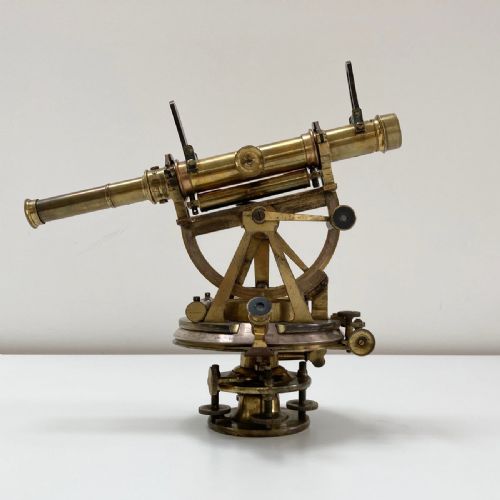
The assortment bridges domestic architectural drafting and wider maritime or military navigation. Objects range from miniature altazimuth theodolites to rolling rulers and artificial horizon sets.
Materials and construction methods
Makers utilised heavy brass and lacquered metal for the primary bodies and dials of these instruments, ensuring durability during fieldwork. Glass components protect delicate compass cards and bubble levels within the housings.
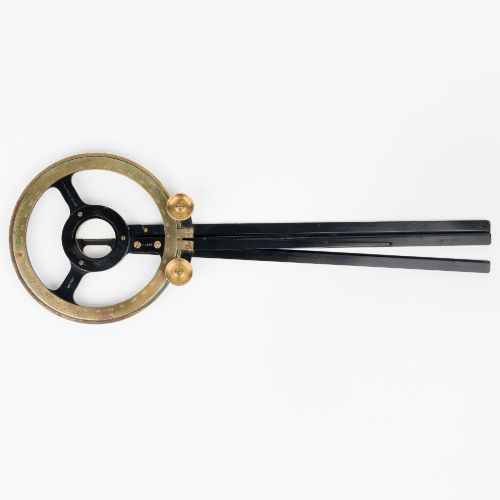
Casing and framing rely on hardwoods such as mahogany and boxwood, frequently shaped into fitted compartments for transit. Steel and timber elements provide structural rigidity for large beam compasses and drafting apparatus.
Vintage Surveying Tools Retail Price Guide 2026
Typical asking prices for vintage surveying tools among the pieces listed under this phrase on Sellingantiques today, from the lower quarter to the upper quarter. They describe what is for sale here now, not the wider market.
Object types include scientific, drafting and nautical instruments housed in fitted pine or mahogany cases.
Distinctions in quality and execution
Superior examples demonstrate precision engineering in the smoothness of rotating dials, the clarity of engraved graduations and the integrity of the optical lenses. Finer pieces retain their original lacquered metal finishes and correctly matched fitted wooden cases.
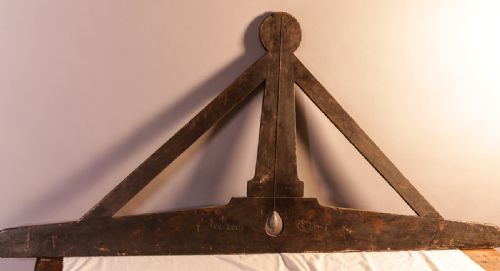
The presence of named maker signatures or retailer inscriptions elevates an instrument beyond standard utility production. Quality is further defined by the survival of specialised components such as folding sights and plummet lines.
Hughes & Son·L Casella & Co·Thomas Dunn·W H Harling·John Lilley & Son·Cox of Devonport·W F Stanley
The Vintage Surveying Tools Glossary
- Theodolite
- A precision instrument for measuring horizontal and vertical angles, mounted on a base or tripod. Miniature versions were utilised for compact field operations.
- Clinometer
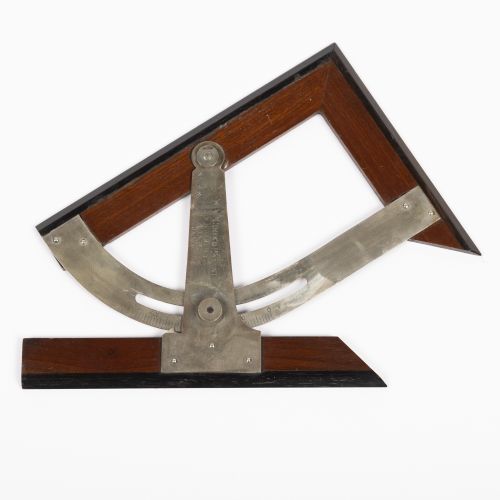
- A tool used for measuring angles of slope, elevation or depression of an object with respect to gravity. Folding ruler variants combine this function with sighting mechanisms.
- Artificial horizon
- A device used to determine the horizontal plane when natural horizons are obscured. Glass artificial horizon sets typically contain trough mirrors or reflective liquid surfaces.
- Beam compass
- An instrument consisting of a bar with adjustable slides used for drawing large circles or transferring measurements. Architectural draftsmen relied on these for scale drawings.
- Station pointer
- A navigational instrument used in hydrographic surveying to determine position by simultaneous angles. Examples from marine manufacturers often incorporate brass arms and graduated circles.
Vintage Surveying Tools: Frequently Asked Questions
What are vintage surveying tools?
These are historical instruments created to measure angles, distances, levels and elevations for construction, mapping and navigation.
They combine metallic engineering with wooden cabinetry to serve scientific and practical applications in the field.
How were drainage levels used?
Drainage levels helped engineers establish precise height differences across terrain to ensure proper water flow and land grading.
Operators sighted through the telescope while observing a bubble vial to confirm a true horizontal plane.
How should I display these instruments?
Many instruments sit neatly atop desks or within their original fitted wooden boxes made of mahogany or pine.
Keeping them away from direct sunlight protects the timber casings and prevents degradation of the lacquered metal finishes.
How do I identify the period?
Makers often engraved signatures, dates or exhibition details directly onto the brass plates or associated wooden cases.
Stylistic shifts in typography, box construction and metal finishing help narrow down the decade of production.