



Vintage Style Statement Ring
A vintage style statement ring brings undeniable presence to the hand, drawing the eye with bold gemstones and distinctive period character.
Vintage Style Statement Ring
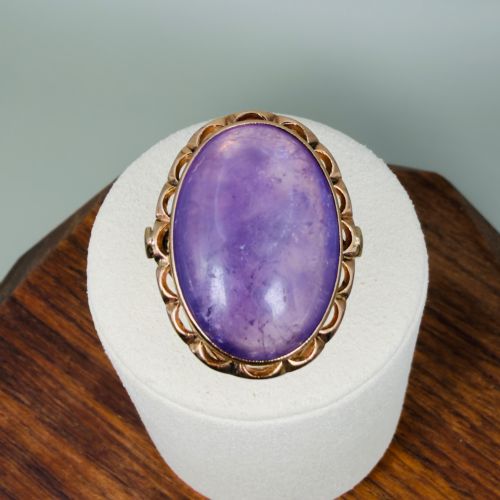
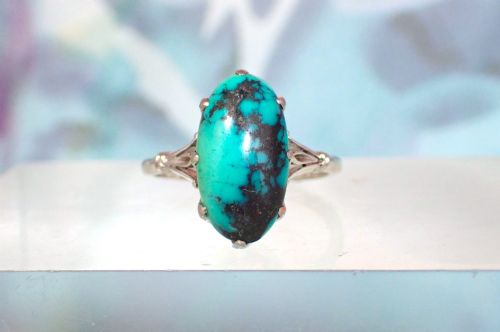
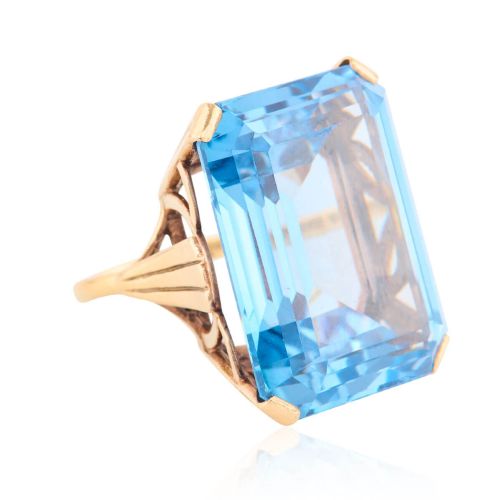
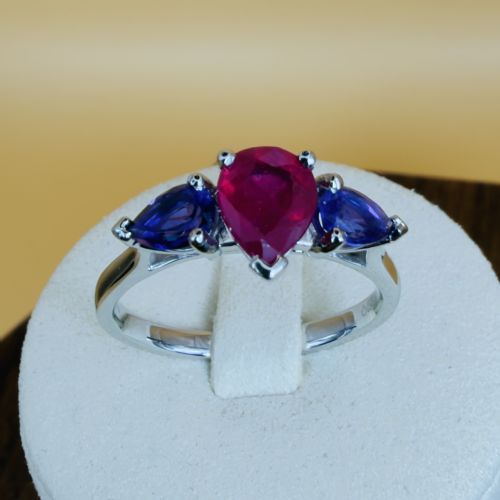
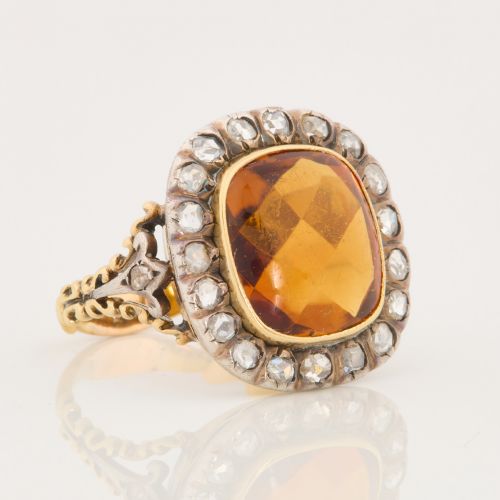
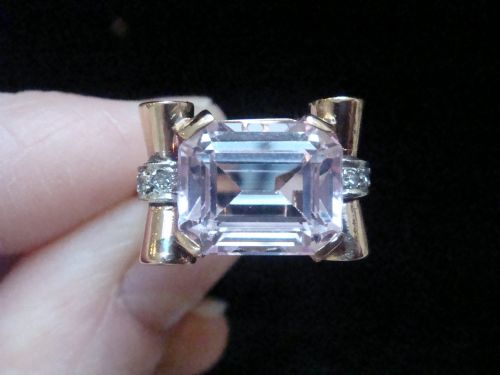
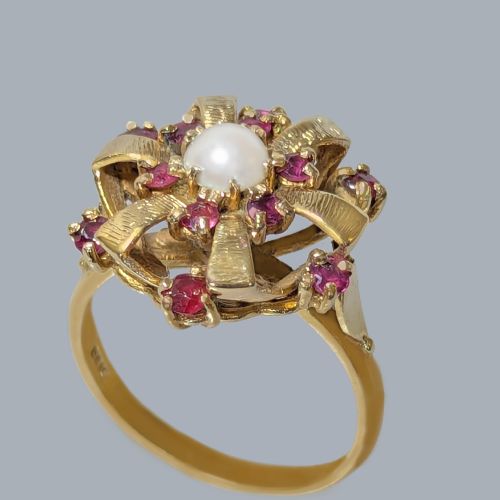
A vintage style statement ring encompasses striking cocktail rings, dramatic cluster designs, and weighty dress pieces intended to stand out. When you search this phrase, you encounter substantial gemstone mountings designed to dominate the finger with architectural flair.
The selections span decades from the nineteenth century through the mid-twentieth century, capturing the dramatic shifts in design from Victorian sentimentality to Art Deco geometry and Retro Modern volume. Mid-century and nineteen-sixties iterations appear frequently alongside earlier Edwardian and nineteenth-century examples.
Makers utilised prominent centre stones such as amethyst, emerald, ruby, sapphire, and opal, often surrounded by diamond halos or set in elaborate clusters. These pieces served traditionally as evening wear accessories or bold daytime statements.
How they were made
Goldsmiths constructed these mountings predominantly in yellow gold, rose gold, white gold, platinum, and silver, varying the metal choice according to the prevailing fashion of each era. Platinum and white gold found favour during the Art Deco period to emphasise clean geometric lines, whilst yellow and rose gold dominated mid-century and earlier Victorian workshops.
Gemstones underwent various specialised cuts, including cabochon, pear, heart, and high zircon configurations, secured in prong, bezel, or ballerina settings. Cluster arrangements frequently layered diamonds around central coloured stones to maximise visual impact and light refraction.
The selection covers a chronological span from the nineteenth century through the nineteen-sixties, incorporating distinct Victorian, Edwardian, and mid-century styles.
What varies in quality
The distinction between standard examples and the finest pieces rests upon the calibre and weight of the central gemstones, such as large natural emeralds or high-carat amethysts. Superior items exhibit exceptional stone clarity, balanced proportions, and robust metalwork that securely anchors heavy feature stones.
Artistry in the setting work elevates a piece significantly, particularly in intricate platinum ballerina mounts or structured tank cocktail rings from the nineteen-thirties and nineteen-forties. Heavier gram weights and fully legible hallmarks further separate exceptional survivals from ordinary production.
The Vintage Style Statement Ring Glossary
- Cocktail ring
- A large, showy ring featuring prominent gemstones designed to draw attention during social gatherings. These pieces gained immense popularity during the mid-twentieth century.
- Cluster ring
- A ring design featuring a central stone encircled by a group of smaller surrounding stones, typically diamonds. This arrangement enhances overall sparkle and visual volume.
- Ballerina ring
- A distinctive mid-century cluster setting where tapered baguette or brilliant-cut diamonds radiate outward like a tutu around a central gemstone. The silhouette resembles a dancer frozen mid-spin.
- Tank ring
- A bold, architectural jewellery style originating in the nineteen-forties, characterised by heavy geometric goldwork inspired by military hardware. These substantial pieces embody the robust aesthetic of the era.
- Cabochon
- A gemstone shaped and polished with a smooth, rounded convex surface rather than faceted edges. This cut is frequently utilised for opaque or translucent stones like opal, jade, and star sapphires.
Vintage Style Statement Ring: Frequently Asked Questions
What is a statement ring?
A statement ring is a purposely oversized or visually striking piece of hand jewellery designed to attract attention and anchor an outfit.
These rings typically feature large centre gemstones, elaborate cluster work, or sculptural metal settings that stand apart from subtle everyday bands.
How do I style a cocktail ring?
Cocktail rings work best when worn on their own as the singular focal point of your hand accessories, avoiding competing rings on adjacent fingers.
They pair naturally with evening attire or simple daytime tailoring to let the historical design take centre stage.
What periods do these rings come from?
The available pieces span the nineteenth century, Victorian era, Edwardian period, Art Deco years, and mid-century nineteen-fifties and sixties.
Each era imparts distinct geometric, organic, or volumetric characteristics to the metalwork and stone selection.
How do I identify an Art Deco ring?
Art Deco rings are defined by rigid geometric symmetry, linear patterns, and a frequent preference for white gold or platinum paired with diamonds and contrasting calibré-cut stones.
This aesthetic reflects the machine-age influences of the nineteen-twenties and nineteen-thirties.