




Vintage Style Opal Ring
A vintage style opal ring brings together the luminous play of colour in the stone and the enduring craftsmanship of past decades.
Vintage Style Opal Ring
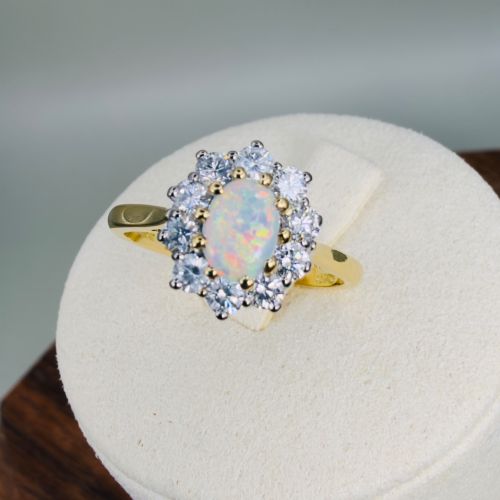
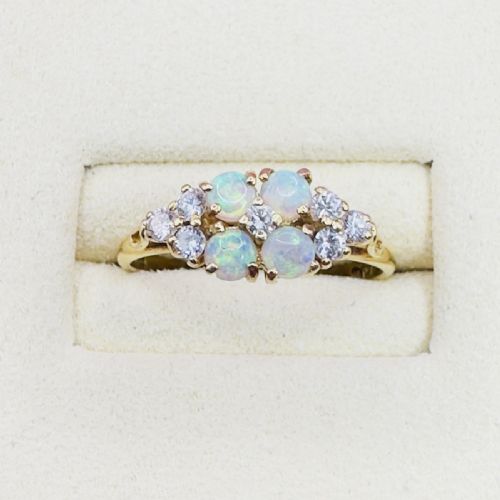
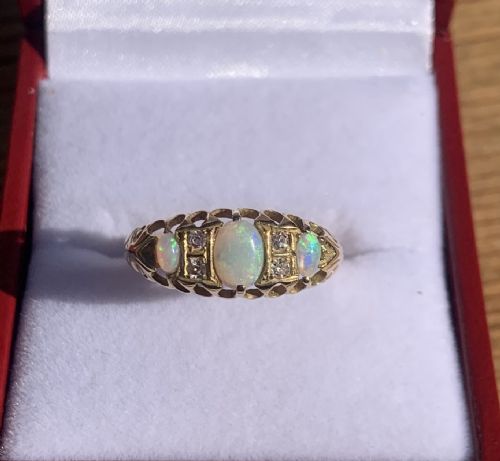
A vintage style opal ring encompasses pieces created across multiple eras, ranging from authentic Victorian and Edwardian examples to mid-century revivals. When you search for this phrase, you will most frequently encounter cluster and multi-stone settings featuring cabochon-cut opals paired with diamonds.
The selections available span various gold purities, including 9ct, 14ct, and 18ct yellow gold. Alongside traditional cluster designs, you will discover boat shapes, trilogy arrangements, and twist formations that reflect the distinct aesthetic preferences of their respective periods.
Many of these rings demonstrate a clear stylistic lineage, such as Victorian-inspired pieces or George V designs, while others embrace the bolder lines of the 1950s and 1960s. The common thread is the prominent display of the central opal, supported by accent stones like diamonds and sapphires.
Materials and construction
Makers of these rings relied heavily on various grades of gold, utilising 9ct, 14ct, and 18ct yellow gold to form sturdy bands and intricate settings. Cabochon cutting remained the preferred method for shaping opals, allowing the curved stone surface to maximise the internal play of light.
Diamonds and occasionally sapphires were frequently set alongside the central opal to frame or accentuate the main stone, particularly in cluster and boat configurations. Traditional claw and bezel settings secured these stones firmly while letting light pass through the gems.
Some rings manage to squeeze nine separate stones into a single cluster, proving that the Victorians understood the concept of maximum sparkle.
Distinguishing quality in these rings
Quality in a vintage style opal ring often depends on the vibrancy and intensity of the opal's play of colour across the stone's surface. Finer examples display a rich spectrum of shifting hues that remain visible from multiple viewing angles.
The weight and purity of the gold mount, such as 18ct gold versus lower purities, contribute significantly to a piece's substance and durability. Additionally, the precision of the stone setting and the quality of accompanying diamonds elevate the overall standard of the jewellery.
The Vintage Style Opal Ring Glossary
- Cabochon
- A gemstone shaped and polished with a smooth, rounded surface rather than faceted. This cut is particularly favoured for opals to highlight their internal play of colour.
- Cluster ring
- A ring design featuring a central gemstone surrounded by a cluster of smaller stones, typically diamonds. This arrangement maximises visual impact on the hand.
- Boat ring
- A boat-shaped ring setting featuring a gently curved, elongated profile that tapers towards the shoulders. This style gained particular popularity during the Georgian and Victorian eras.
- Trilogy ring
- A ring set with three stones, often representing the past, present, and future. In these pieces, opals are frequently paired with flanking diamonds.
- Play of colour
- The optical phenomenon displayed by opals where internal flashes of shifting spectral colours appear as the viewing angle changes.
Vintage Style Opal Ring: Frequently Asked Questions
How do I care for my opal ring?
Opals are softer than diamonds and require gentle handling to avoid scratches and impact damage. Remove the ring before engaging in heavy manual work.
Clean the stone using only a soft cloth and warm water, avoiding harsh chemical cleaners and ultrasonic jewellery baths that can damage opals.
What periods do these rings come from?
These rings originate from diverse periods including the Victorian and Edwardian eras, the George V reign, and mid-century decades like the 1950s and 1960s.
Styles often overlap, with later decades actively reproducing or drawing heavy inspiration from earlier Victorian aesthetics.
Are diamonds always used with opals?
Diamonds frequently accompany opals as accent stones in cluster, boat, and multi-stone settings to provide contrast and sparkle.
However, some designs feature standalone opals or incorporate alternative accent stones such as sapphires alongside gold work.
How do gold purities differ?
Gold purity is measured in carats, with 9ct, 14ct, and 18ct being common standards found in these rings. Higher carat numbers indicate a greater proportion of pure gold in the alloy.
Selection depends on personal preference for colour richness and the structural requirements of the ring setting.