




Vintage Steel Flintlock
These vintage steel flintlock pieces are historical firearms and militaria that collectors acquire for their mechanical ingenuity and period craftsmanship.
Vintage Steel Flintlock
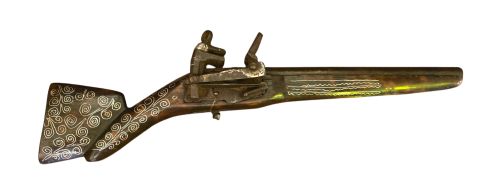
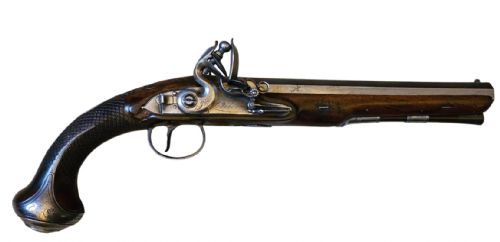
Vintage steel flintlock items comprise antique firearms, militaria, and pistols spanning the eighteenth and nineteenth centuries. Collectors searching this phrase encounter pocket pistols, duelling pieces, musketoons, and long arms originating from British, American, French, and Ottoman makers.
Georgian, Regency, and Victorian styles dominate the selection, alongside eighteenth-century colonial and Napoleonic French variations. Most examples combine steel mechanisms with wooden stocks, while select pieces incorporate brass or silver mounts.
The inventory ranges from domestic pocket and overcoat pistols intended for personal defence to military pieces such as cavalry musketoons and officers' sidearms. These functional works span transitional periods into early percussion systems.
How they were made
Makers formed the core mechanisms and barrels from steel and iron, pairing them with stocks shaped from walnut and other dense woods. Metal components often received hand-filed finishes and London proof marks.
Enrichment relied on contrasting materials, utilising silver wire inlay, silver mounts, and cast brass furniture. Stocks featured figured grain patterns shaped to fit the hand for duelling or military carry.
Vintage Steel Flintlock Retail Price Guide 2026
Typical asking prices for vintage steel flintlock among the pieces listed under this phrase on Sellingantiques today, from the lower quarter to the upper quarter. They describe what is for sale here now, not the wider market.
Listings feature steel, walnut, brass, silver, iron, and wood across eighteenth and nineteenth-century forms.
What varies in quality
Quality differentiates standard military issue pieces from bespoke civilian commissions by named makers such as Harrison of London or Timothy Hughes of Cork. Superior examples display refined silver mountings, engraved lockplates, and figured walnut stocks.
The crispness of the flintlock mechanism and the integrity of the steel components dictate the baseline standard. Execution of metalwork, from grooved frizzens to smooth-bore barrels, marks the distinction between workshop output.
Harrison of London·Timothy Hughes·Thomas Anelli·Meyer and Mortimer·Barber of Newark·Dutton London·A.W Spires
The Vintage Steel Flintlock Glossary
- Flintlock
- A firearm ignition mechanism that uses a flint struck against a steel frizzen to create sparks. This system dominated military and civilian arms from the seventeenth through the early nineteenth century.
- Frizzen
- The vertical steel plate struck by the flint to produce sparks and expose the priming powder. Grooved versions appear on specific regional patterns.
- Percussion pistol
- A later development using a percussion cap struck by a hammer rather than flint and steel. Several nineteenth-century examples reflect this transition.
- Musketoon
- A short-barreled muzzle-loading firearm used by cavalry and naval forces. These variants provide compact firepower for mobile units.
- Bore
- The interior diameter of the gun barrel, measured in standard sizing systems such as eighteen-bore or sixteen-bore. This measurement indicates the ammunition scale.
Vintage Steel Flintlock: Frequently Asked Questions
What periods do these flintlock pieces cover?
The pieces span the eighteenth and nineteenth centuries, encompassing Georgian, Regency, and Victorian eras of manufacture.
Designs reflect changing military and civilian requirements across British, European, American, and Ottoman workshops.
What materials appear on these firearms?
Primary construction relies on steel, iron, and wood, particularly figured walnut stocks.
Finer examples incorporate silver mounts, silver wire inlay, and brass furniture.
How do flintlock and percussion pistols differ?
Flintlock pistols use a piece of flint striking steel to ignite priming powder, whereas percussion pistols employ a self-contained percussion cap struck by a hammer.
Both ignition types appear across the listed nineteenth-century military and civilian pieces.
Where were these historical pistols made?
Origins include London makers, provincial English workshops in Newark, Irish makers in Cork, and American domestic gunsmiths.
Continental influences appear through French military musketoons and Ottoman Empire snaphaunce long pistols.
What types of firearms are included?
The selection includes pocket pistols, duelling arms, officers' sidearms, overcoat pistols, and cavalry musketoons.
Long arms such as muskets and sporting guns also feature in the historical record.