





Silver Flintlock Pistol
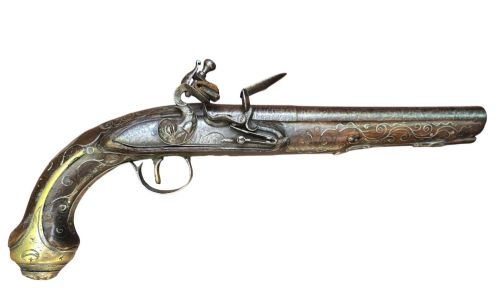
A silver flintlock pistol brings functional eighteenth and nineteenth-century design to a collection through decorative metalwork and walnut stocks.
Silver Flintlock Pistol
A silver flintlock pistol represents a firearm from the eighteenth and nineteenth centuries, featuring integral metal and wood construction. These items range from small pocket and muff pistols to larger holster and belt variants used for personal defence.
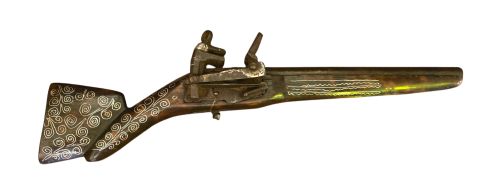
The pieces appearing most frequently on this page combine flintlock mechanisms with silver wire inlay, mounts, or cast butt caps. Regional variants span Scottish Highland, English Queen Anne, Irish, French, and Ottoman forms.
Makers such as John Campbell of Doune, James Barber, Timothy Hughes, R. Willoughby, and Meyer & Mortimer produced these works. Collectors encounter both single pieces and matched pairs across Georgian and Ottoman styles.
How they were made
Makers shaped stocks from figured walnut and other timbers, frequently incorporating carved details or scroll-butt designs. Metal components combined steel, iron, and brass barrels with precious silver mounts and wire inlay.
Decoration relied on silver parc, gilt inlay, and cast elements such as grotesque butt caps. Lock mechanisms utilised steel and flint components to generate sparks against the frizzen for ignition.
Silver Flintlock Pistol Retail Price Guide 2026
Typical asking prices for silver flintlock pistol among the pieces listed under this phrase on Sellingantiques today, from the lower quarter to the upper quarter. They describe what is for sale here now, not the wider market.
Some long belt pistols feature faux coral mounted alongside silver, proving historic owners enjoyed colourful embellishments just as much as we do.
What varies in quality
Quality differentiates through the complexity and execution of silver wire inlay and cast mountings. Finely detailed grotesque butt caps and engraved barrels show superior workshop output compared to plain variants.
The integration of figured walnut stocks with fully working lock mechanisms defines the upper tier. Attribution to recorded makers like John Campbell of Doune or James Barber elevates the standing of an individual piece.
John Campbell of Doune·James Barber·Timothy Hughes·R. Willoughby·Meyer & Mortimer·Sutherland of London
The Silver Flintlock Pistol Glossary
- Flintlock
- A firearm ignition mechanism that uses a piece of flint held in a cock to strike a steel frizzen, creating sparks to ignite the gunpowder. This system dominated personal firearms throughout the eighteenth century.
- Canon barrel
- A barrel shaped in profile like a cannon, tapering towards the muzzle with a reinforced breech. It appears frequently on Queen Anne style pocket pistols.
- Scroll-butt
- A distinctive grip form curved downward in a scroll shape, seen on Scottish Highland pieces. This shape aided retention in the hand.
- Frizzen
- The vertical steel plate struck by the flint during the ignition sequence. It pivots forward to expose the priming powder in the pan.
- Cartouche
- An ornamental panel or plaque incorporated into the stock, often left vacant for an owner's initials or crest. These plates are typically executed in silver.
Silver Flintlock Pistol: Frequently Asked Questions
What is a silver flintlock pistol?
A silver flintlock pistol is a muzzle-loading firearm from the eighteenth or nineteenth century incorporating silver mounts, wire inlay, or cast butt caps. These objects combine utility with decorative metalwork.
They span pocket, travelling, and holster forms created by regional makers across Britain and the Ottoman Empire.
How were these pistols used?
Owners carried them for personal protection during travel or kept them close at hand in domestic settings. Pocket and muff variants suited concealment in coats or carriages.
Larger holster pistols served military and cavalry officers on frontier and domestic duties.
How do I live with one?
Display requires a stable environment away from excess humidity to preserve the walnut wood and iron components. Secure cabinet placement keeps the piece safe while allowing clear visibility of the metalwork.
Handling should be minimal, supporting the stock and barrel rather than relying on the lock mechanism.
How do I tell periods apart?
Early eighteenth-century examples often feature cannon barrels and intricate silver-wire inlay associated with the Queen Anne style. Mid-century works introduce regional stocks like the Scottish scroll-butt.
Later nineteenth-century pieces from Ottoman regions or makers like Meyer & Mortimer show distinct styling and longer proportions.