


Vintage Steamer Luggage
Vintage steamer luggage brings the heavy build of nineteenth and early twentieth century travel right into modern rooms as practical storage.
Vintage Steamer Luggage
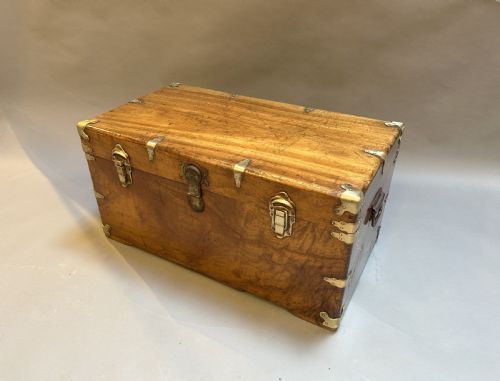
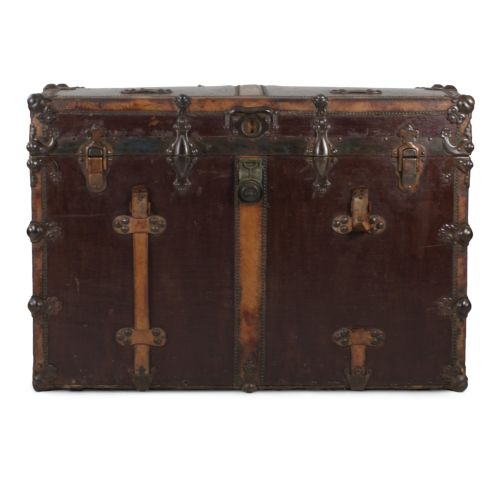
Vintage steamer luggage covers sturdy wooden and metal transport chests made from the Victorian era through the Art Deco period. These pieces served travellers crossing oceans and continents on ships and trains.
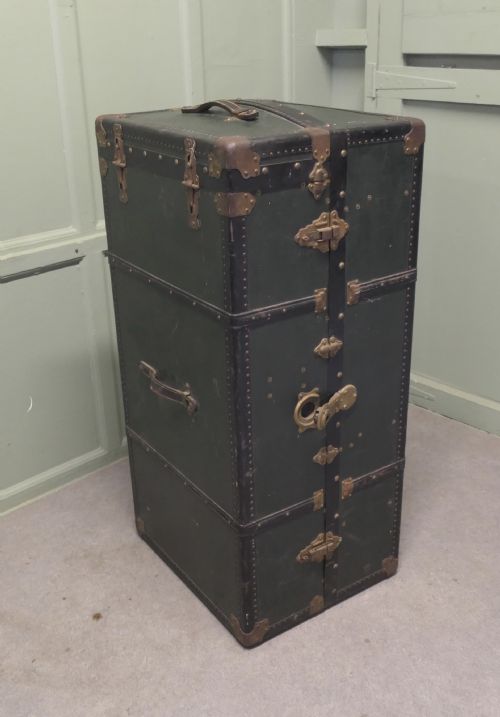
Buyers meet large wardrobe trunks, smaller cabin cases, hat boxes and canvas-bound storage chests. Origins range from British workshops to French and American trunk makers.
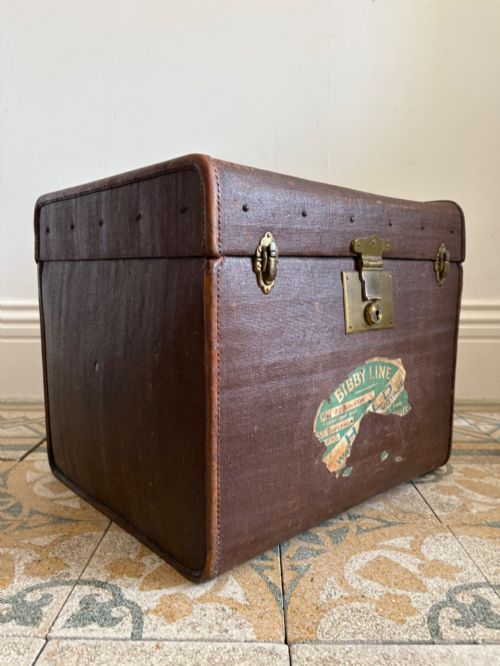
Many examples arrive with original travel labels, brass hardware and interior fittings like hangers and drawers intact from their journeys.
Materials and Construction
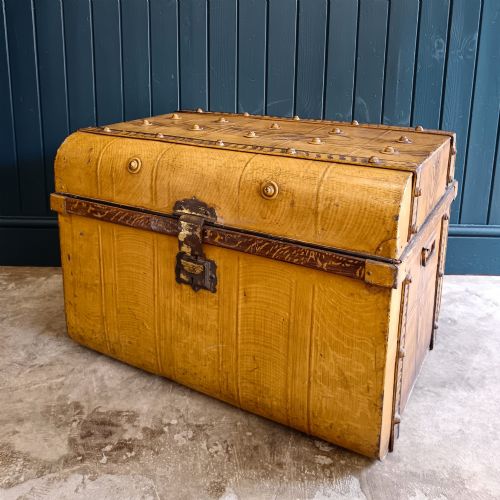
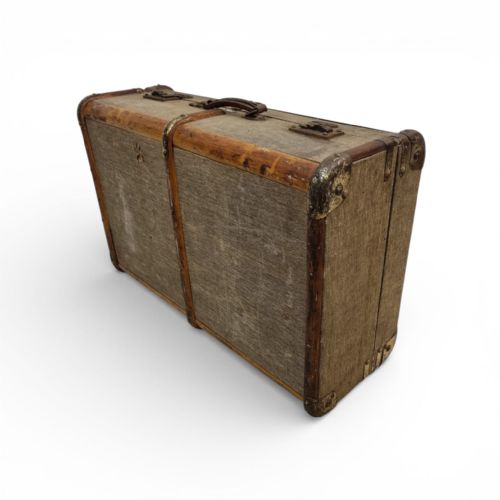
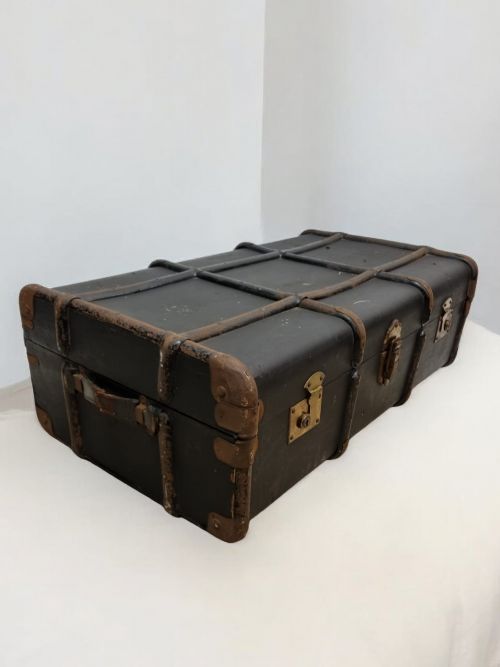
Construction relies on timber frames covered in canvas, leather, vulcanised fibre or sheet metal, reinforced with wooden slats and iron or brass corners. Makers secured these outer layers with thousands of individual studs and rivets.
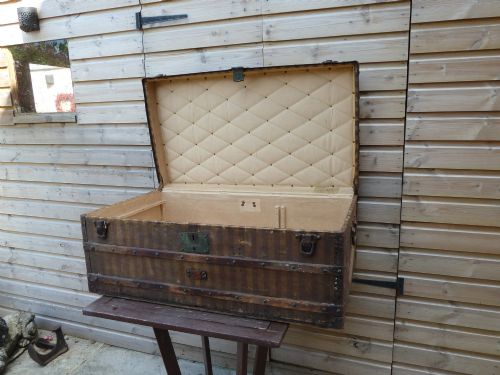
Interiors often feature lined compartments, wooden hangers, and canvas straps designed to keep garments secure during transit. Handles made from heavy leather or iron allowed porters and owners to haul the weight.
Materials span wood, leather, brass, canvas, iron, fabric, and vulcanised fibre across periods from the nineteenth century into the 1930s.
Build and Provenance
Quality rests on the integrity of the original frame, the grade of the exterior canvas or leather, and the completeness of internal compartments and brass locks. Specialist maker stamps elevate a piece significantly above unmarked utility boxes.
The degree of restoration matters, as original patinated surfaces and travel stickers often hold more character than heavily replaced materials.
Louis Vuitton·Goyard·Aux Etats Unis·Hartman Luggage Co·Seaward·Harrison and Co·Mr Selfridge·J.Burton London·W Insall·British Everwear·Army and Navy
The Vintage Steamer Luggage Glossary
- Steamer trunk
- A lower-profile travel chest designed to fit beneath a cabin berth on a steamship. These pieces feature flat or slightly rounded tops for stacking.
- Wardrobe trunk
- A tall upright luggage case that opens to reveal hanging space, drawers and shoe compartments on either side. It functions as a portable closet for extended journeys.
- Vulcanised fibre
- A laminated material made from cellulose, treated to create a tough, lightweight shell. Makers utilised it to protect luggage contents from moisture and heavy impacts.
- Portmanteau
- A large travelling case or suitcase that opens into two distinct compartments. The term derives from French roots describing a carrier for cloaks and coats.
- Campaign trunk
- A portable storage chest built for military officers or colonial travellers. These pieces often incorporate brass corner brackets and recessed carrying handles.
Vintage Steamer Luggage: Frequently Asked Questions
How do I clean the interior fabric?
Vacuum gently using a soft brush attachment to lift dust from the linen or cotton linings without damaging aged fibres. Avoid liquid cleaners that might warp the underlying wood and cardboard structure.
Leave the trunk open in a well-ventilated space for several days to air out stale odours from decades of closed storage.
Can I use these trunks as coffee tables?
Many sturdy vintage trunks possess flat tops that make them suitable surface tables in living rooms. Their internal depth provides convenient hidden storage for blankets and books.
Ensure the lid construction remains rigid enough to support weight before placing heavy objects on top.
How do I date an antique trunk?
Examine the materials, lock mechanisms, and construction styles such as early canvas bindings versus later vulcanised fibre shells. Patent dates stamped onto brass hardware offer a reliable production starting point.
Travel labels and maker stamps provide additional clues regarding the active years of the piece.
Are replacement keys available for old locks?
Many vintage locks feature standard barrel designs that specialist locksmiths can match or open with skeleton keys. Original locks often remain unlocked or open easily if the mechanism is clean.
Avoid forcing rusted keys into tight keyholes to prevent permanent internal damage.