




Vintage Stationery Desk Set
These vintage stationery desk set pieces bring order to correspondence through brass, wood, and glass crafted across the nineteenth and early twentieth centuries.
Vintage Stationery Desk Set
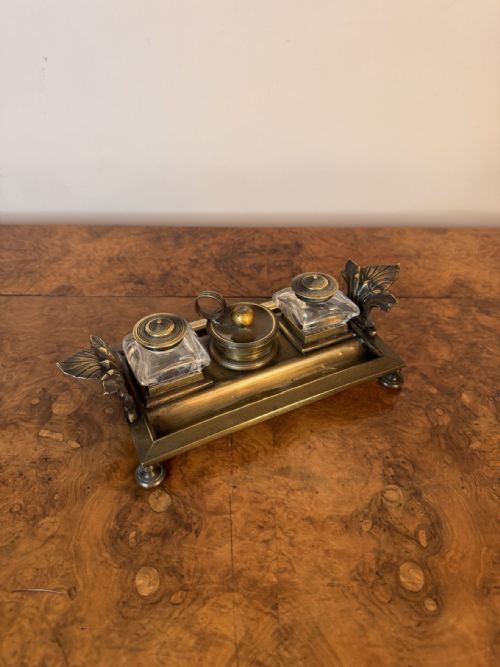
A vintage stationery desk set comprises matched or fitted accessories designed to organise correspondence and writing materials upon a writing table. The pieces found here span the nineteenth century through the Edwardian period, encompassing Georgian and Regency origins alongside later Victorian iterations.
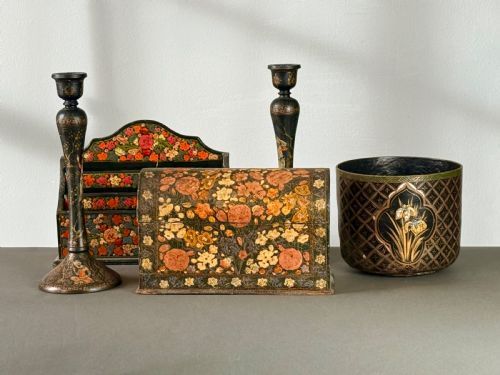
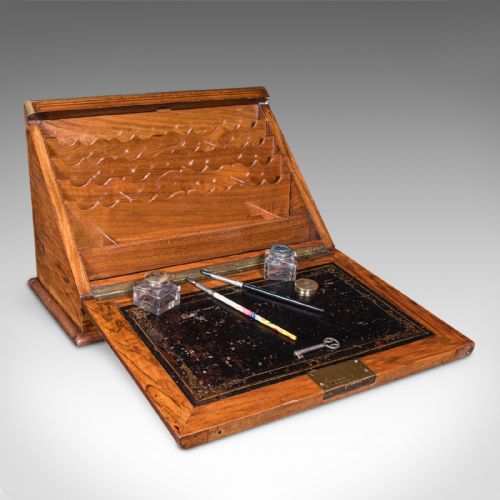
Buyers frequently encounter brass and wood configurations, alongside papier-mache, leather, lacquer, and occasional ceramic components. Forms range from simple inkwells and rocker blotters to comprehensive writing boxes, letter racks, and multi-piece desk stands.
The assortment includes English, French, and Indian examples, reflecting diverse aesthetic movements from Chinoiserie to Aesthetic Movement styles. Simpler single-material inkstands appear alongside elaborate multi-piece ensembles featuring intaglio glass seals.
Materials and construction
Construction relies heavily on traditional cabinet-making and metalworking techniques utilising walnut, rosewood, brass, and papier-mache. Wood pieces often feature fine inlays and fitted internal compartments designed specifically for paper, envelopes, and writing implements.
Metal elements employ cast brass, gilded bronze, and ormolu mountings, frequently paired with cut glass inkwells and ceramic inserts. Silk and leather linings appear within enclosed writing cases and stationery boxes to protect delicate contents.
Vintage Stationery Desk Set Retail Price Guide 2026
Typical asking prices for vintage stationery desk set among the pieces listed under this phrase on Sellingantiques today, from the lower quarter to the upper quarter. They describe what is for sale here now, not the wider market.
Some nineteenth-century desks gain lively character from gilded bronze cats and kittens keeping watch over the ink.
Distinctions in quality
Quality rests in the weight and finishing of the metalwork, the precision of wood joinery, and the completeness of fitted sets. Superior examples display crisp chasing on brass and bronze components, tight veneers, and intact original glass or ceramic liners.
The sophistication of decorative elements, such as Chinoiserie lacquer work, intricate inlay, or specialised accessories like coloured-glass intaglio seals, separates standard utilitarian pieces from exceptional decorative works.
The Vintage Stationery Desk Set Glossary
- Inkstand
- A portable stand or tray holding inkwells, pen holders, and sometimes sanders or wafer boxes for writing. These central desk pieces anchor the stationery ensemble.
- Rocker blotter
- A curved wooden or metal tool with a bottom surface of blotting paper used to absorb wet ink from handwritten letters. They typically feature a decorative top handle.
- Intaglio
- A design carved into the surface of a stone or glass seal so that an impression pressed in wax appears in relief. These were used to authenticate and close personal correspondence.
- Papier-mache
- A durable composite material made from paper pulp or layers of paper mixed with glue, moulded and lacquered. It serves as a light yet sturdy base for decorative Victorian desk accessories.
- Ormolu
- Finely ground high-carat gold applied in a mercury amalgamation to a bronze object. This rich surface treatment appears on French desk sets from the nineteenth century.
Vintage Stationery Desk Set: Frequently Asked Questions
What pieces belong in a complete desk set?
A complete grouping typically combines an inkwell or inkstand with matching letter racks, blotters, and sometimes cachepots or storage boxes. These assemblies were designed to hold everything needed for daily correspondence in a unified style.
Individual items varied according to the owner's writing habits and the fashion of the period, ranging from simple single-purpose inkstands to elaborate multi-piece writing stations.
How do I care for antique leather and wood?
Wood surfaces benefit from occasional application of quality wax to nourish the grain and protect old finishes from drying out. Leather components require gentle cleaning and careful handling to prevent cracking over time.
Keeping these items away from direct sunlight and extreme humidity helps preserve delicate veneers, inlays, and organic materials like silk linings.
How are different periods identified?
Stylistic clues such as Regency restraint, Victorian ornamentation, or Edwardian brasswork help date individual pieces. Materials also offer guidance, as papier-mache and specific wood veneers align closely with mid-nineteenth-century manufacturing trends.
Construction methods, including the type of screws, hinges, and glass manufacturing techniques, provide further context for determining the age of a set.
Were these items purely decorative?
While many pieces served as impressive status symbols on professional and domestic desks, they were fundamentally practical utilities. Every inkwell, blotter, and letter rack was made to be used daily before the advent of modern mass communication.
Their survival in varied states of preservation reflects both their original utility and the care taken by successive generations to maintain them.