


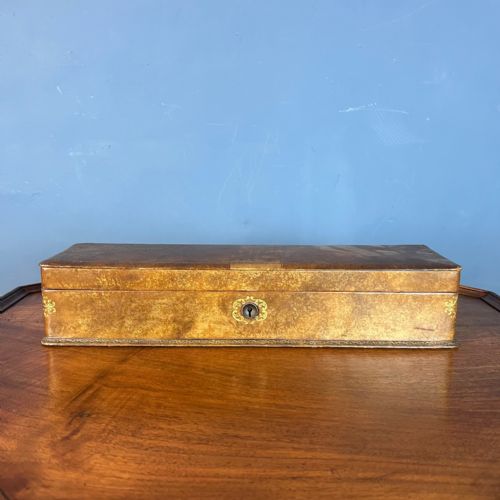


Vintage Stationery Box Desk
A vintage stationery box desk organises correspondence and paperwork with fitted compartments, holding the pens, paper and ink used for daily letter writing.
Vintage Stationery Box Desk
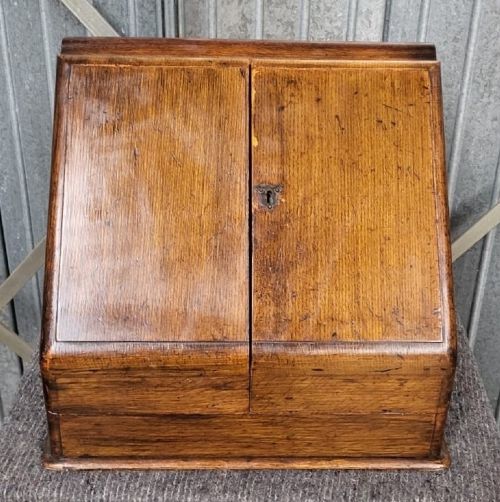
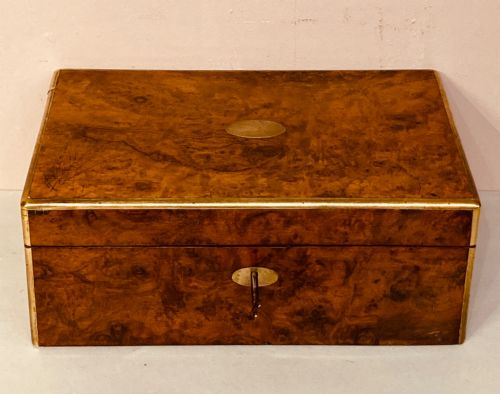
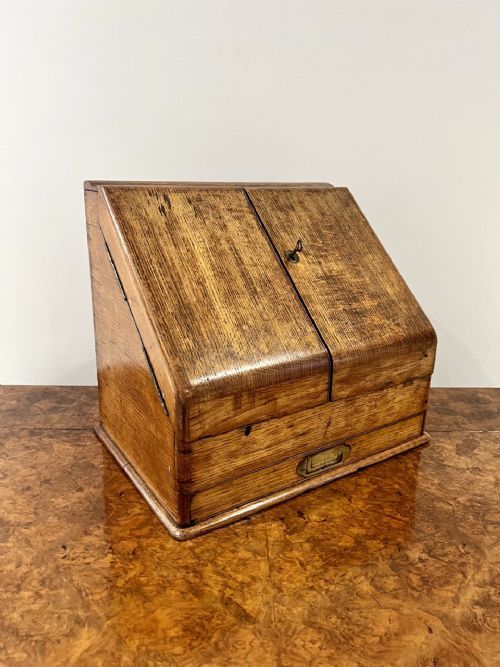
A vintage stationery box desk encompasses practical desktop containers, slope-front boxes and folding writing surfaces designed to hold paper, envelopes and writing implements. The selection spans Georgian, Victorian, Edwardian and Regency periods, alongside pieces from the 1900s and 1930s.
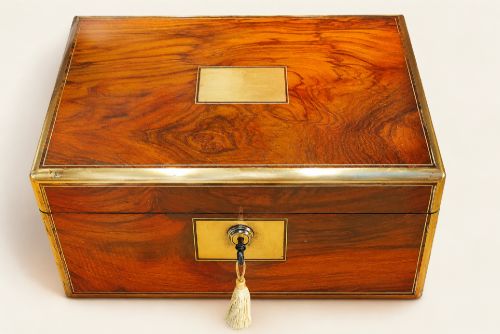
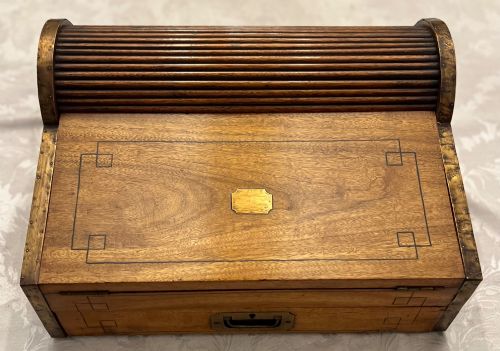
Writing slopes, campaign boxes, stationery cabinets and desk tidies form the primary objects encountered in this group. Many examples incorporate hinged lids, fall fronts or bi-fold writing surfaces that open to reveal fitted interiors.
Origins range from English workshops to Anglo-Indian and Chinese makers, reflecting diverse cabinet-making traditions across the nineteenth and early twentieth centuries.
Materials and construction
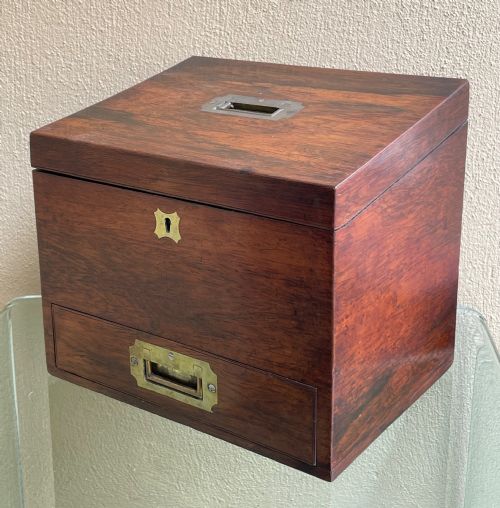
Cabinet makers utilised dense hardwoods such as mahogany, oak, walnut, rosewood, camphor and ebony to construct durable boxes and desks. Brass handles, bound corners and escutcheons frequently reinforce these wooden structures.
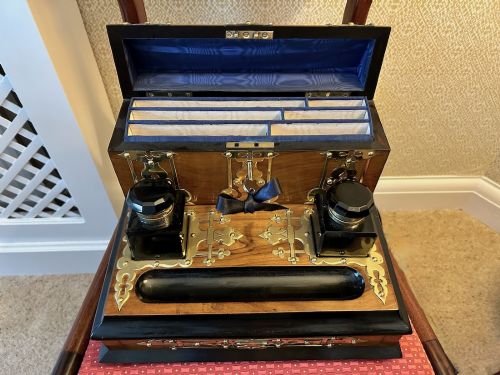
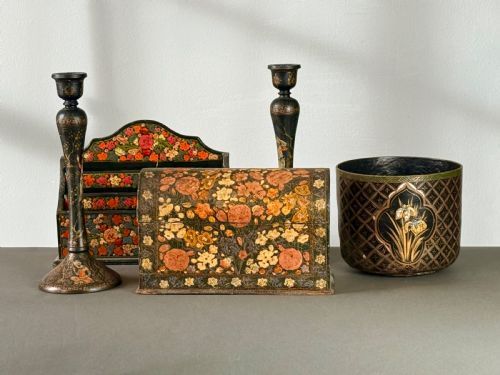
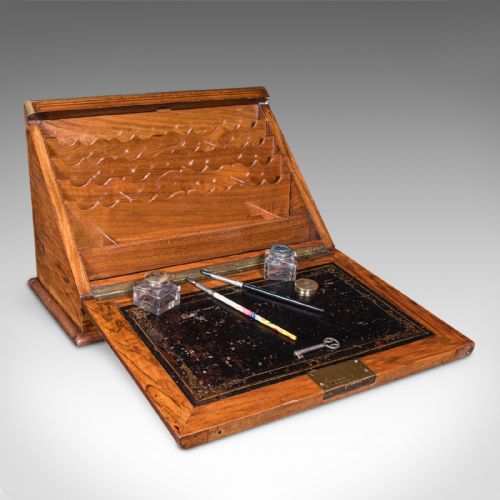
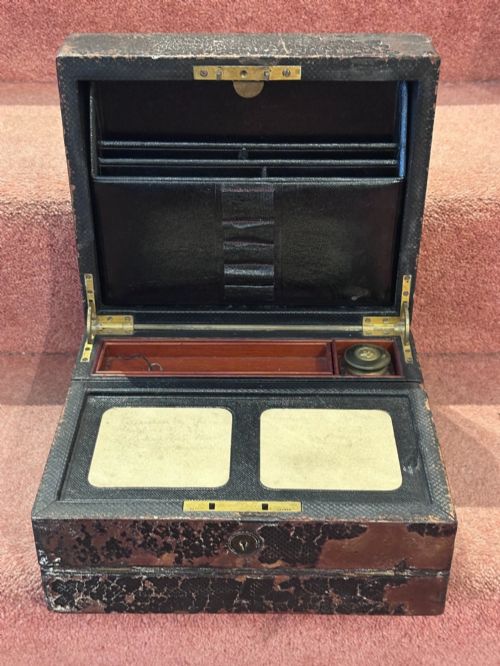
Decorative detailing includes inlaid patterns, tooled leather inserts, carved bone, lacquer work and silver or gold mounts. Interior fittings often comprise glass inkwells, secret drawers and partitioned letter slots.
Vintage Stationery Box Desk Retail Price Guide 2026
Typical asking prices for vintage stationery box desk among the pieces listed under this phrase on Sellingantiques today, from the lower quarter to the upper quarter. They describe what is for sale here now, not the wider market.
Listings feature woods such as mahogany, oak, walnut, rosewood, camphor and ebony alongside brass, glass and leather components.
Craftsmanship and materials
Superior examples demonstrate precise timber selection, such as figured mahogany, burr walnut or rosewood, combined with meticulous joinery and substantial brass hardware. Finer boxes feature integrated secret drawers and well-fitted interior stationery dividers.
The degree of hand-carved detail, the quality of leather tooling and the inclusion of precious metal mounts or specialised glass inkwells distinguish standard utility pieces from high-status items.
Cartier·Montblanc Meisterstück·Garrards
The Vintage Stationery Box Desk Glossary
- Writing slope
- A portable box with an angled lid that folds down to provide a slanted writing surface, often lined with leather. Inside, compartments store pens, ink and paper.
- Campaign box
- A sturdy wooden box fitted with brass corners and carrying handles, built for travel during military or colonial campaigns. These pieces prioritize robust construction and secure storage.
- Stationery cabinet
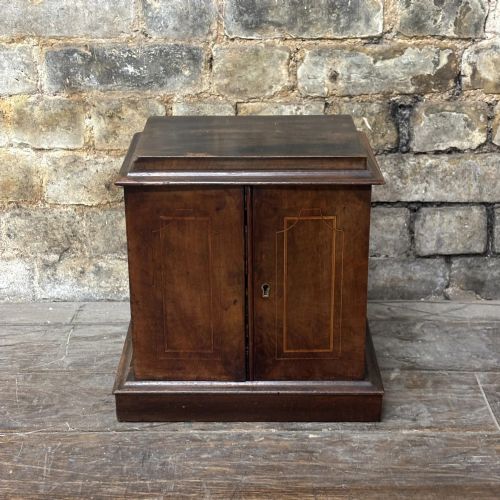
- An upright desk accessory featuring a fall front or hinged doors designed to hold letters and writing paper vertically. These cabinets often contain multiple interior slots and drawers.
- Desk tidy
- A compact tabletop organizer used to hold envelopes, stamps and writing accessories in fixed compartments. They frequently incorporate inlaid wood details or open letter racks.
- Secret drawer
- A concealed compartment built into a writing box or desk, accessed by removing a false panel or operating a hidden release mechanism.
Vintage Stationery Box Desk: Frequently Asked Questions
How do I identify a stationery cabinet?
A stationery cabinet stands upright on a desk, utilising a fall front or hinged doors to store letters, envelopes and notelets. They often feature tiered interior partitions rather than a sloping writing surface.
These pieces emerged strongly during the Victorian and Edwardian periods to manage increasing volumes of personal correspondence.
What are secret drawers used for?
Secret drawers provide a concealed space within a writing box or desk to store private letters, valuables or small keepsakes. They are typically integrated behind false panels or beneath removable stationery partitions.
Cabinet makers in the Georgian and Victorian eras added these hidden compartments as a standard feature of quality desks.
How do I clean a leather writing surface?
Leather writing surfaces benefit from gentle dusting with a dry cloth and occasional treatment with appropriate leather conditioner to prevent drying. Avoid using excessive water or harsh chemical cleaners on antique leather.
Preserving the original tooled leather maintains the historical integrity of nineteenth-century writing boxes and slopes.