



Vintage Standing Globe
These vintage standing globe examples combine geographical history with fine cabinetmaking, bringing traditional craftsmanship and aged cartography directly into your study or library.
Vintage Standing Globe
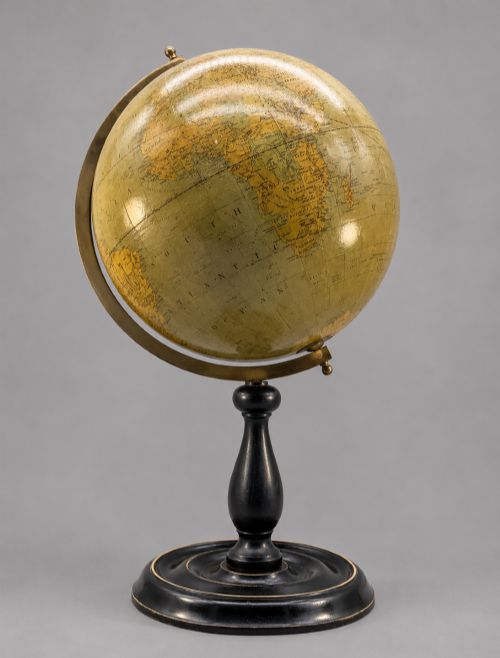
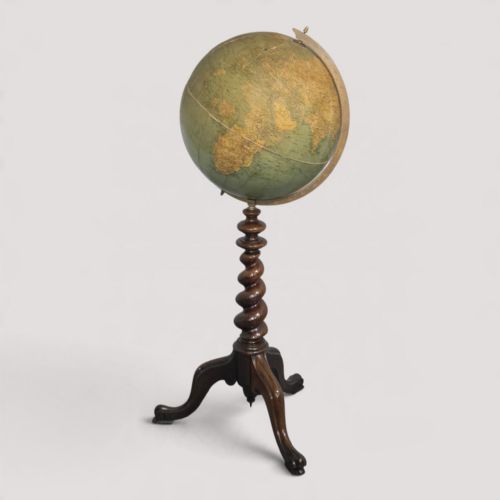
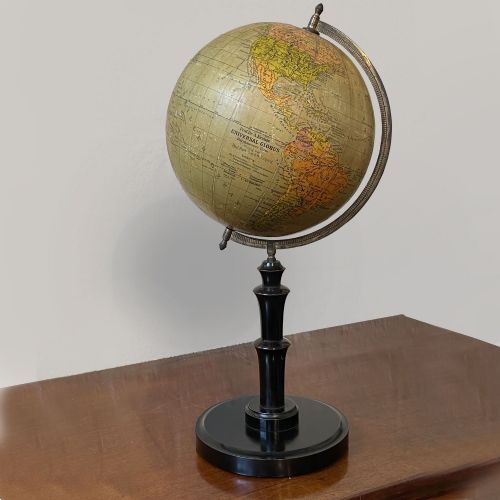
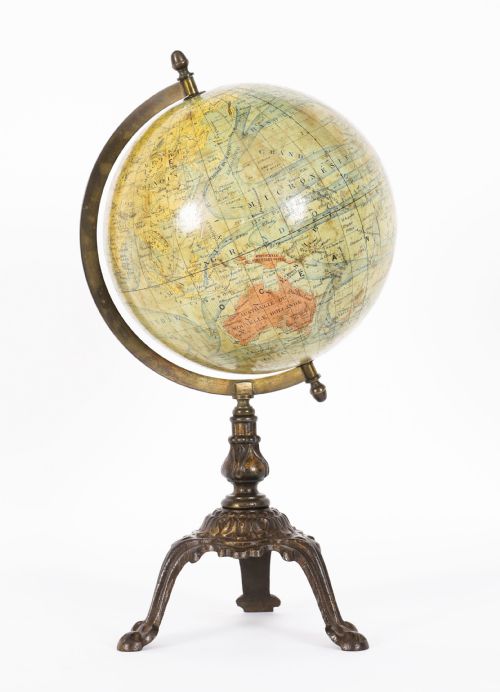
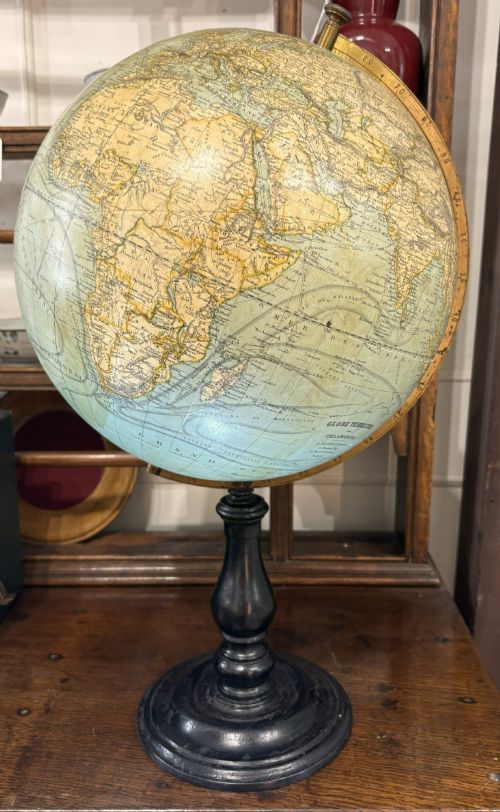
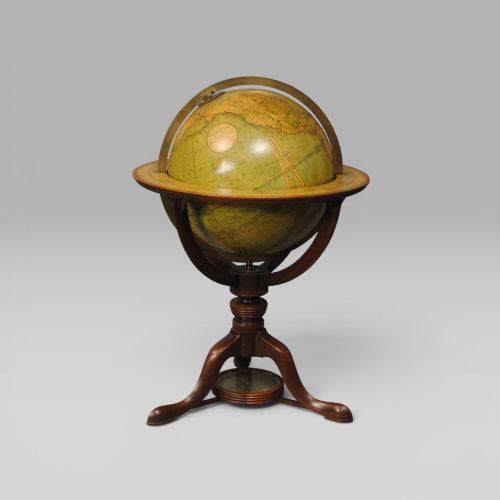
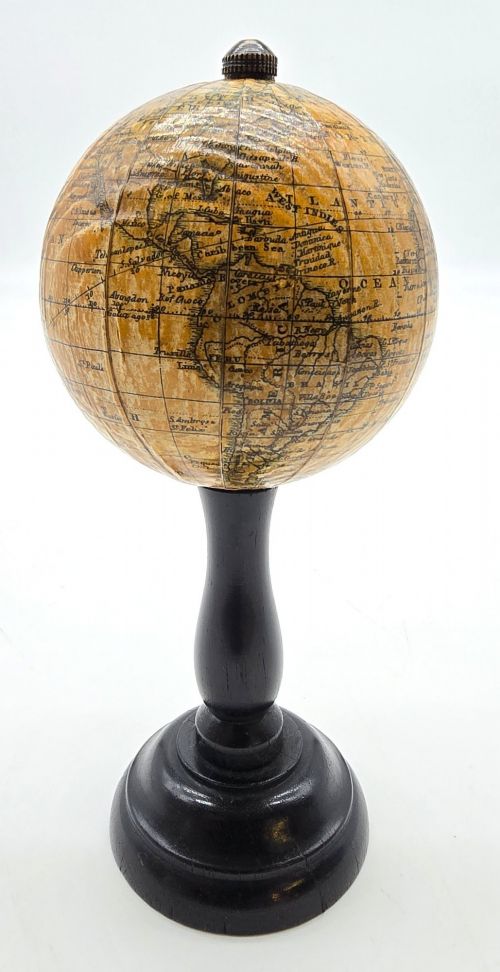
A vintage standing globe brings together terrestrial mapping and decorative support, typically presenting geographical information on a sphere held within a meridian ring and floor stand. When searching for a vintage standing globe, buyers encounter pieces originating from the nineteenth century through the interwar period, alongside Edwardian and Victorian iterations. These objects range from compact miniature terrestrial models to substantial twelve-inch and eighteen-inch floor-standing globes mounted on timber bases.
The materials and structural forms vary according to the period of manufacture, encompassing brass hardware, mahogany stands, ebonised wood, and paper gores applied over plaster or papier-mâché spheres. Many examples reflect specific European cartographic traditions, with makers from London, Paris, and Germany producing globes that document the changing political geography of their respective eras. Floor-standing examples often incorporate turned wooden legs or heavy brass mountings designed to support the weight of the globe and its graduated horizon ring.
How they were made
Maker workshops constructed the spherical bodies by applying printed paper gores over a lightweight core formed from plaster or papier-mâché, ensuring a smooth surface for detailed cartography. These printed gores required precise alignment by hand so that longitude and latitude lines matched seamlessly across the sphere.
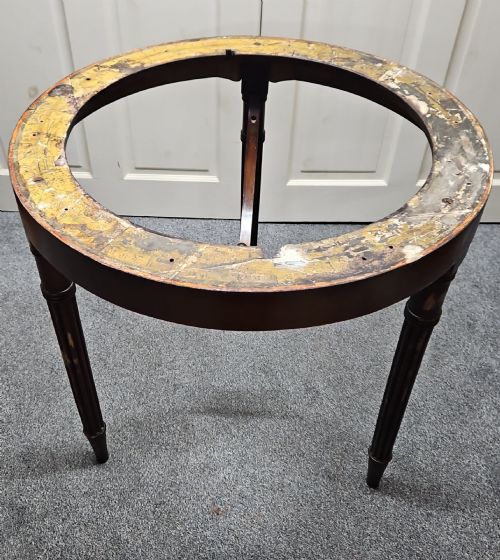
The supporting stands relied on traditional cabinetmaking techniques utilising timbers such as mahogany, golden oak, and ebonised wood, often paired with cast brass meridians and fittings. Turned wooden pillars and heavy bases provided the necessary stability for floor-standing examples, while smaller desk versions utilised weighted metal or polished wooden feet.
Vintage Standing Globe Retail Price Guide 2026
Typical asking prices for vintage standing globe among the pieces listed under this phrase on Sellingantiques today, from the lower quarter to the upper quarter. They describe what is for sale here now, not the wider market.
Listings feature brass, mahogany, ebonised wood, and paper-mâché materials across nineteenth-century and early twentieth-century periods.
What varies in quality
The distinction between standard and superior pieces rests upon the crispness of the cartographic printing, the accuracy of the gores, and the intricacy of the stand's woodwork. Finer examples retain their original varnished surfaces on the paper sphere, showing minimal fading or yellowing across the terrestrial details.
Quality also appears in the physical hardware, where solid brass meridian rings, well-turned wooden mountings, and original maker signatures elevate the piece. The presence of matching pairs or undamaged horizon rings further separates standard utilitarian items from exceptional cabinet pieces.
Cary·Lebegue and Cie·J Forest·Malby·Geographia·Raths Physikalischer
The Vintage Standing Globe Glossary
- Terrestrial globe
- A scale model of the Earth representing landmasses, oceans, and political boundaries. These spheres form the central visual component of any standing globe assembly.
- Gore
- A tapering strip of printed paper pasted onto a spherical core to form the map of the world. Precise alignment of these sections determines the legibility of the cartography.
- Horizon ring
- A wooden or metal ring encircling the globe base that represents the horizon and often bears calendar or zodiac details. It provides structural support to the standing frame.
- Papier-mâché
- A composite material made from paper pulp mixed with glue and pressed into a mould. Manufacturers used this substance to create lightweight yet durable spherical cores.
Vintage Standing Globe: Frequently Asked Questions
How do I date a vintage standing globe?
Dating relies heavily on the political boundaries printed upon the paper gores, as countries and colonies changed names across the nineteenth and early twentieth centuries. Examining the style of the wooden stand and any manufacturer signatures on the cartouche also helps narrow the period of production.
Secondary indicators include the typeface used for place names and the materials employed in the meridian ring. Comparing the geographic details against historical maps provides a reliable guide to the decade of manufacture.
Where should I place a floor-standing globe?
These pieces suit studies, libraries, and hallways where their height and architectural presence can anchor the room. Positioning them away from direct sunlight protects the delicate paper gores and varnished surfaces from fading.
Ensure the floor beneath the heavy wooden stand is level to prevent strain on the brass meridian ring and mounting joints. Adequate clearance allows viewers to walk around the sphere and inspect the cartography comfortably.
What is the difference between celestial and terrestrial globes?
Terrestrial globes map the surface of the Earth, detailing oceans, continents, and political territories. Celestial globes depict the night sky, mapping constellations and stars as viewed from Earth.
While terrestrial versions are more common in vintage standing formats, they occasionally appear as pairs alongside celestial counterparts in nineteenth-century collections.