
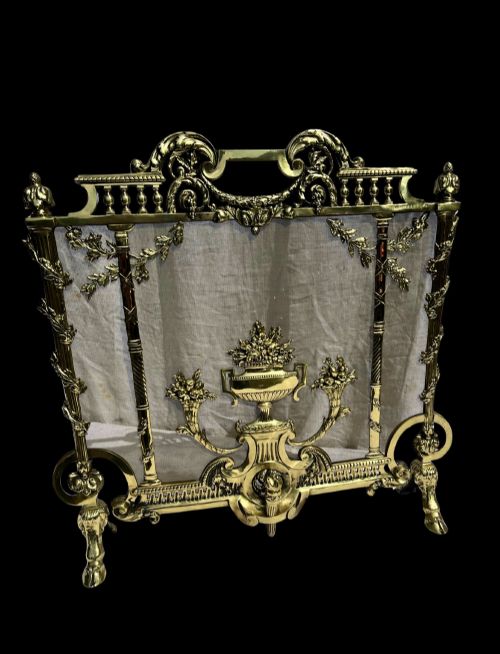


Vintage Standing Fire Screen
These vintage standing fire screen designs combine practical hearth protection with decorative needlework and metalwork, offering both warmth and period character to a room.
Vintage Standing Fire Screen
A vintage standing fire screen protects rooms from excessive hearth heat while serving as a decorative focal point during warmer months. Buyers searching for a vintage standing fire screen will encounter forms ranging from floor-standing pole screens to heavy metal spark guards and framed glass panels.
The selection includes pieces spanning the Georgian, Regency, and Victorian periods, alongside later nineteenth and twentieth-century examples. Common configurations feature adjustable needlepoint panels, hinged brass guards, and heavy iron stands suited to period interiors.
Materials and construction methods
Frames and stands utilise durable timbers such as mahogany, rosewood, oak, and walnut, alongside cast and wrought iron or polished brass. Wood elements often display carved bases and turned poles designed to support movable shields.
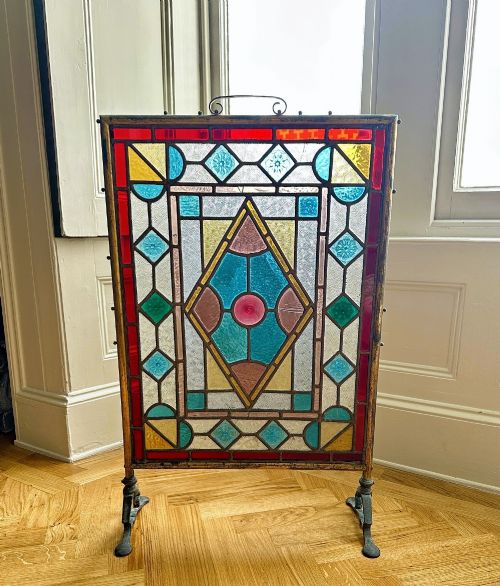
Infill panels incorporate detailed needlepoint, tapestry, hand-stitched sampler textiles, stained glass, and woven wire mesh. Metal spark guards rely on hinged mesh panels and demi-lune brass frames to contain embers securely.
Listings span multiple eras from Georgian and Regency pole screens to Victorian brass spark guards and Arts and Crafts copper designs.
Assessing quality in hearth screens
Quality rests upon the execution of the woodwork, the stability of the adjusting mechanisms on pole screens, and the intricacy of the needlework or stained glass panels. Finer examples display superior carving detail on timber bases and robust framing for delicate textiles.
The weight and gauge of the brass or ironwork distinguish robust utilitarian guards from decorative showpieces. Original fixings and intact textile panels significantly elevate the integrity of a piece.
The Vintage Standing Fire Screen Glossary
- Pole screen
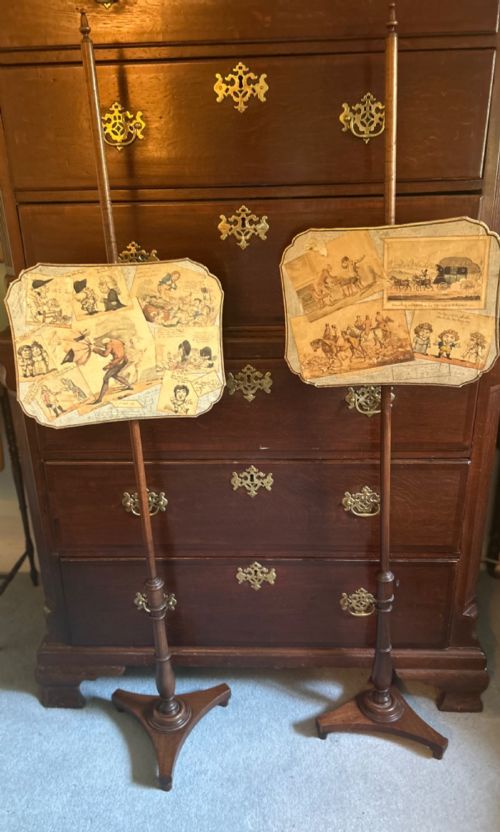
- A vertical standing screen featuring a movable shield mounted on a central wooden pole with a tripod or weighted base. It allowed occupants to adjust the panel height to block radiant heat from the fire.
- Needlepoint
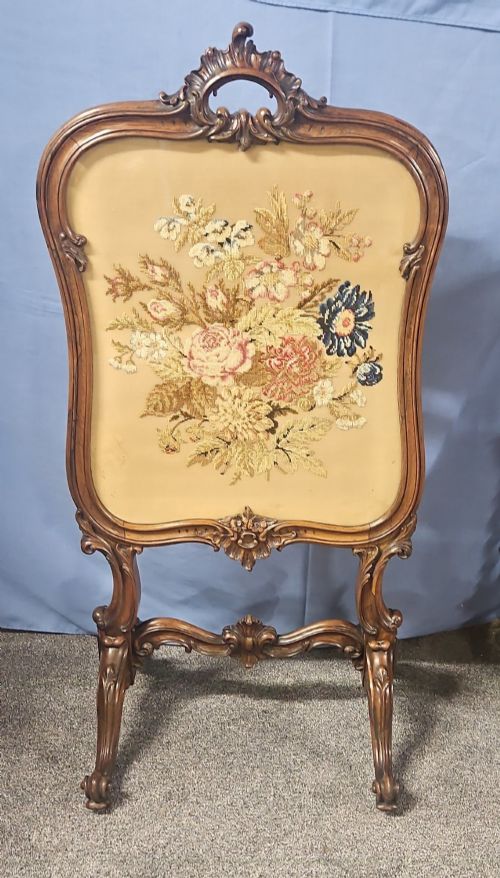
- Stitched textile work executed on canvas mesh, commonly utilised for the decorative panels of nineteenth-century screens. These panels often depict floral motifs, pastoral scenes, or needlework samplers.
- Spark guard
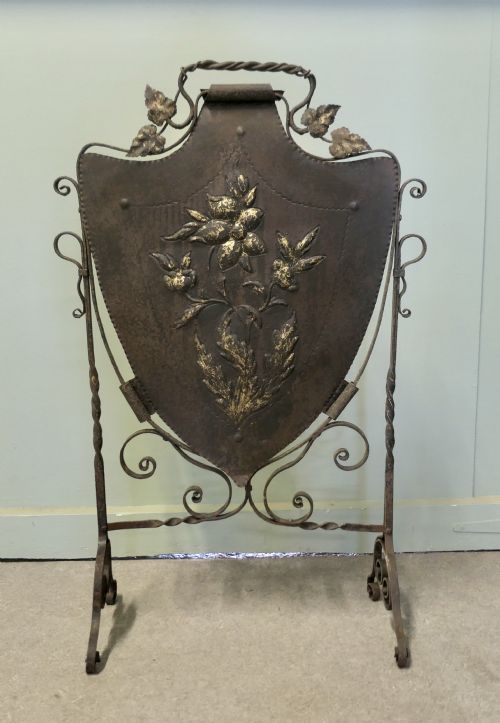
- A protective metal screen, frequently constructed from brass or wrought iron with wire mesh, designed to contain flying embers. Demi-lune versions curve around the hearth opening.
- Gothic Revival
- An architectural and decorative style drawing on medieval forms, visible in iron fire screens featuring pointed arch motifs and geometric tracery. This style gained popularity during the Victorian era.
- Rococo Revival
- A decorative style characterised by asymmetrical scrollwork, C-scrolls, and naturalistic shell motifs, frequently seen in ornate nineteenth-century brass frames.
Vintage Standing Fire Screen: Frequently Asked Questions
How do pole screens work?
Pole screens operate with a sliding mechanism that allows the vertical shield to move up and down along a turned wooden shaft. This adjustment enabled people to shield their faces from the direct heat of an open coal fire.
The weighted base keeps the entire assembly upright while the user alters the height of the needlework or glass panel to suit their seating position.
What is the difference between a pole screen and a spark guard?
A pole screen is primarily a decorative and personal heat-blocking accessory designed to sit near an armchair rather than directly against the fireplace opening. They usually feature framed needlework, glass, or prints mounted on a tall stand.
In contrast, a spark guard is constructed from heavy brass or iron wire mesh to fit closely around the hearth to contain stray embers. These guards focus on functional safety rather than displaying intricate textile art.
Where should I place a standing fire screen in a modern room?
These screens fit naturally beside a functioning fireplace, an empty hearth, or as a decorative room divider against an unutilised wall. Their framed textiles and polished metals add texture and period detail to contemporary interiors.
Placing them away from direct, intense heat sources preserves delicate needlework panels and antique wood finishes over time.