


Vintage Spoon Back Chair
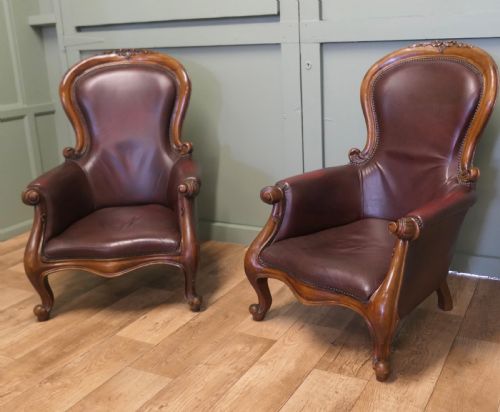
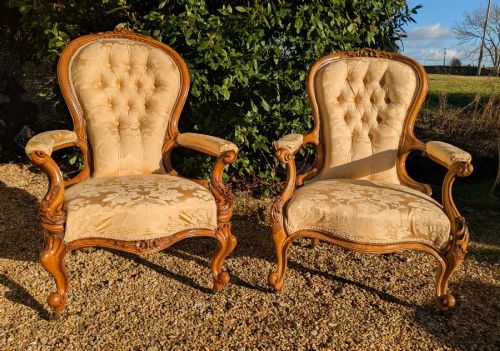
These vintage spoon back chair examples combine curvaceous timber frames with deeply padded upholstery, offering a comfortable seat shaped to support the spine.
Vintage Spoon Back Chair
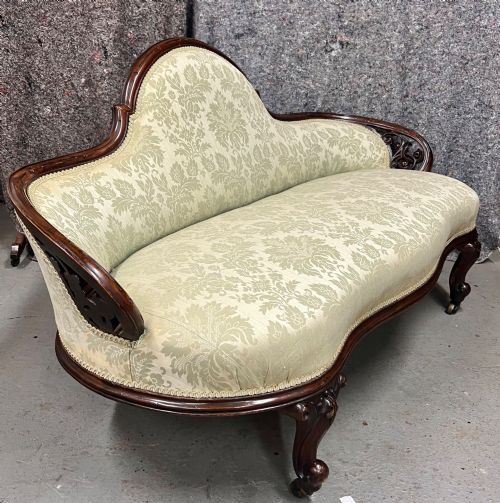
The selection ranges from fireside chairs and salon seating to pairs of easy chairs and nursing chairs featuring low seats. Certain items include sofa settees and sets of dining chairs matching the distinctive curved outline.
Origins stretch across the nineteenth century, including specific dates such as eighteen-fifty, eighteen-sixty, and eighteen-eighty, with older framework influences appearing in seventeenth-century revival designs.
How they were made
Frames are constructed predominantly from solid walnut and mahogany, often shaped into carved showwood surrounds that define the silhouette. Joinery techniques secure the curved backrests, while some examples incorporate turned supports like barley twists.
Upholstery methods rely on traditional fabric coverings, ranging from velvet and damask to button-backed textile arrangements and rexine. Brass components occasionally accent the structural elements or castors.
Certain Victorian ladies and gents fireside chairs were constructed as matching pairs, ensuring domestic harmony by the hearth.
What varies in quality
The degree of carving detail on the showwood frame separates standard production from finer work, particularly where floral motifs and moulded contours appear on walnut and mahogany. Crispness in the timber execution indicates the hand of a skilled cabinetmaker.
Proportion and scale dictate the visual success of the piece, from low nursing chairs to grander fireside armchairs. The integrity of the original wood grain and the harmony of the upholstery textile further distinguish the better examples.
C. Hindley & Sons
The Vintage Spoon Back Chair Glossary
- Spoon back
- A padded chair back shaped like the bowl of a spoon to fit the human form. This profile defines Victorian upholstered seating.
- Showwood
- Timber framework left visible around the upholstered portions of a chair. It highlights the polished grain of walnut or mahogany.
- Showood fireside chair
- A low seating form designed for warmth near a hearth, featuring exposed wooden framing. These pieces often sit lower to the floor than standard armchairs.
- Nursing chair
- A low-seated Victorian chair originally used for feeding infants. The reduced height allowed the sitter to hold a child comfortably.
- Barley twist
- A spiral turning carved into wooden furniture legs or supports. This decorative technique appears on nineteenth-century frames.
Vintage Spoon Back Chair: Frequently Asked Questions
How do I date a spoon back chair?
Dating relies on timber choice, carving style, and structural proportions. Most examples originate from the nineteenth century.
Victorian pieces often display Rococo Revival curves, whilst later nineteenth-century variations introduce turned elements like barley twists.
Where do I place a salon chair?
Salon chairs suit bedrooms, hallways, or sitting rooms as accent seating. Their compact proportions make them versatile additions to smaller spaces.
They pair well with low tables or function independently as decorative statement seating.
What fabrics are used on these chairs?
Upholstery materials include velvet, damask, textile fabrics, and rexine. Button-backed upholstery is a common finishing detail.
Original textiles often give way to later reupholstery that matches the period aesthetic of the timber frame.