



Walnut Spoonback Chairs
Walnut spoonback chairs are Victorian parlour and salon armchairs shaped for comfort and elegance, prized for their curved wooden frames and rich timber grain.
Walnut Spoonback Chairs
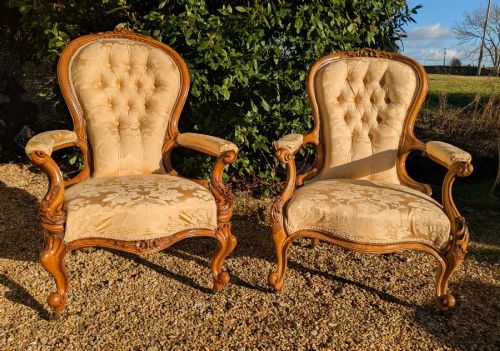
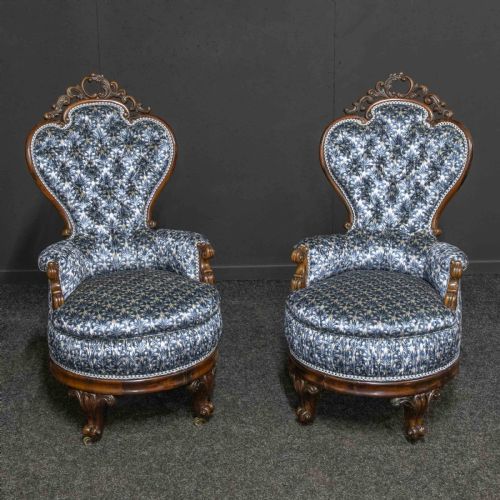
Walnut spoonback chairs are nineteenth-century seating pieces defined by their distinct concave, oval-shaped backrest that resembles the bowl of a spoon. These Victorian parlour and salon armchairs appear in forms such as open armchairs, ladies chairs, and liner chairs.
The pieces on this page stem entirely from the Victorian era, specifically spanning the mid to late nineteenth century around the eighteen-fifties, sixties, and seventies. They frequently showcase Victorian Rococo Revival styling with ornate carved wooden details and cabriole legs.
Buyers encountering these walnut spoonback chairs examine pieces designed primarily for formal reception rooms and drawing rooms. The frames utilise walnut timber paired with show wood finishes and button upholstery.
How they were made
Cabinet makers utilised solid walnut to construct the distinctive curved back frames, taking advantage of the timber's grain and strength for intricate hand carving. Skilled artisans shaped the show wood frames to create the characteristic spoon profile typical of Victorian seating.
Upholstery techniques involved padding the seat and back using traditional materials before covering them in textiles such as velvet, fabric, or specialised upholstery fabric. Metal components like brass and porcelain castors occasionally supported the cabriole legs on these armchairs.
Materials recorded across these listings include walnut, velvet, porcelain, brass, and ceramic.
What varies in quality
The refinement of the carved wooden ornamentation distinguishes standard parlour seating from superior examples of walnut spoonback chairs. Crisp, deep relief carving along the show wood frame indicates superior craftsmanship during the Victorian period.
Proportion and structural grace differentiate the pieces, with attribution to notable cabinet makers such as Holland and Sons elevating the status of certain armchairs. The choice of timber grain and the execution of the cabriole leg influence the overall aesthetic standing.
Holland and Sons
The Walnut Spoonback Chairs Glossary
- Spoonback
- A chair back shaped in a concave, oval contour resembling the bowl of a spoon. This nineteenth-century design provides ergonomic support while maintaining a delicate silhouette.
- Show wood
- The exposed, polished wooden portions of a chair frame left uncovered by upholstery. This timber display highlights the quality of the walnut and the carver's skill.
- Cabriole leg
- A furniture leg that curves outward and then tapers inward with a pad or scroll foot. This curved form defines much of the Victorian Rococo Revival seating seen on this page.
- Button back
- An upholstery technique where buttons are pulled deep into the padding in a diamond pattern. This method secures the stuffing and adds texture to the chair back.
Walnut Spoonback Chairs: Frequently Asked Questions
How were they used originally?
Victorian households placed these armchairs in drawing rooms, parlours, and reception rooms for receiving guests and polite conversation. Their comfortable upholstered seats suited the social rituals of the period.
Ladies chairs and parlour chairs were typically arranged around the perimeter of a room or near a fireplace for easy repositioning.
How do I date a walnut spoonback chair?
Dating relies on stylistic markers such as Victorian Rococo Revival carved details, cabriole leg shapes, and frame construction methods. Pieces on this page originate from the mid to late nineteenth century.
Specific dates within the eighteen-fifties to eighteen-seventies appear alongside certain listings based on design characteristics and maker attributions.
How do I live with one today?
These Victorian armchairs function well as accent seating in living rooms, bedrooms, or studies where their carved walnut frames add warmth and historical character. They pair easily with both antique and modern interiors.
Placing them away from direct sunlight protects the walnut timber finish and the textile upholstery fabrics from fading over time.