


Vintage Spirit Labels
These vintage spirit labels identify your decanters with silver, enamel, and glass, adding period character to your barware.
Vintage Spirit Labels
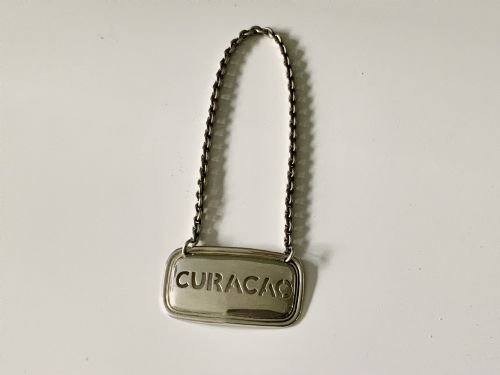
Vintage spirit labels hang from decanters and bottles to name the contents, ranging from Georgian silver rectangles to mid-century enamel pieces. When you search for vintage spirit labels, you encounter small tags made to dangle from chains around the necks of whisky, gin, sherry, and brandy containers.
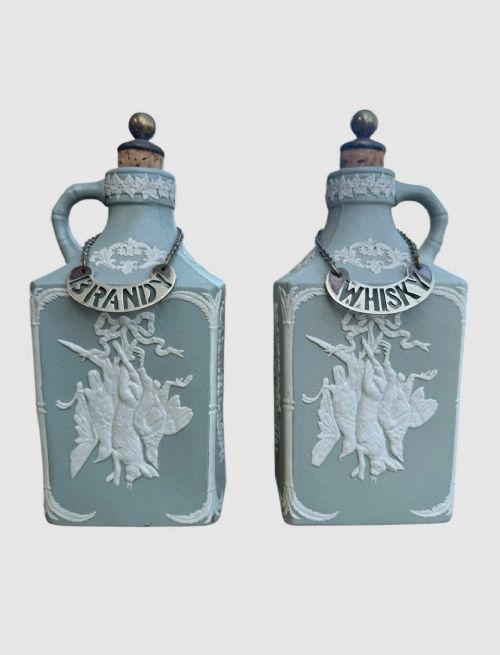
Beyond the single tags, the evidence includes complete decanter sets, whisky noggins, and flagons equipped with their matching labels. These small accessories turn plain glassware into named service pieces for the dining table or sideboard.
Materials and construction
Silversmiths stamped, pierced, and engraved sheet metal to form the curving borders and pierced titles of Georgian and Victorian tags. Makers utilised sterling silver and silver plate, attaching suspension chains through cast loops.
Enamelwork appears on mid-century designs, fusing coloured glass powder onto metal bases to create legible text. Cut glass and stoneware bodies form the vessels that carry these metal labels, while jasperware provides contrasting matte reliefs.
Hallmarks stamped into the silver provide official marks of purity and origin, often locating production in London or Birmingham workshops.
An unusual title on a Victorian silver label hints at a long-forgotten family recipe or a private decanting joke.
Judging quality and craftsmanship
The weight of the metal and the crispness of the piercing distinguish finer examples from standard production. Heavy gauge sterling silver maintains rigid edges, whereas thinner plates bend easily under handling.
Engraved lettering and chased decoration show the hand of the maker, with sharp, deep cuts lasting better than shallow surface scratches. Complete sets matching original chains hold higher cohesion than assembled groups.
William Sharp·Mappin And Webb·Tiffany
The Vintage Spirit Labels Glossary
- Decanter label
- A small metal tag hung by a chain around the neck of a bottle to identify the liquor inside. These items are also historically known as bottle tickets.
- Whisky noggin
- A small vessel or jug designed for individual portions of spirits, frequently paired with a dedicated label. They often combine glass bodies with silver mounts.
- Jasperware
- A fine-grained stoneware developed with a matte surface, typically featuring white raised reliefs against a coloured background. Pieces appear in the evidence alongside metal labels.
- Hallmark
- A series of official marks stamped onto precious metals to indicate the maker, standard of purity, and year of assay. These stamps help date silver labels accurately.
- Tantalus
- A wooden frame holding decanters under a locking bar to prevent unauthorized access to the spirits. The evidence records oak examples from the twentieth century.
Vintage Spirit Labels: Frequently Asked Questions
How do I hang a label?
Most vintage spirit labels come equipped with a fine silver chain that slips easily over the neck of a decanter. Ensure the chain rests comfortably below the stopper flange without sliding down the bulb of the bottle.
If a chain is missing, traditional silver-compatible replacement chains can be sourced to match the gauge and patina of the label.
Can I mix different label styles?
Mixing different styles depends on the uniformity of your decanter set. Matching sets of three or more silver labels look best on matching decanters, while individual tags suit a varied collection of antique glassware.
Pay attention to the metal type and period aesthetics when combining mismatched pieces on the same sideboard tray.
What spirits were labelled originally?
Commonly labelled spirits in the historical record include whisky, gin, sherry, brandy, and Madeira. These drinks formed the standard contents of Georgian and Victorian dining room decanters.
Unusual titles also occur, naming less common contents or specific regional beverages.
How do I clean silver labels?
Silver labels benefit from gentle cleaning with a soft cloth to remove tarnish while preserving the darker recessed details of the engraving. Avoid harsh chemical dips that strip away the natural antique patina.
Store them dry and away from direct moisture to prevent accelerated oxidation of the metal surface.