



Vintage Spelter Desk Lamp
A vintage spelter desk lamp brings sculptural form and period character to a workspace, offering a distinctive metal alloy body styled in the aesthetic of the early twentieth century.
Vintage Spelter Desk Lamp
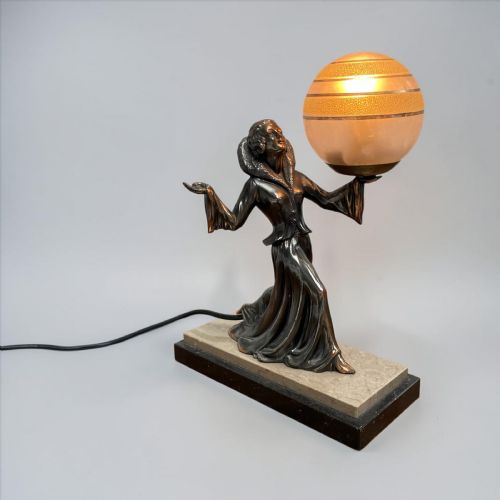
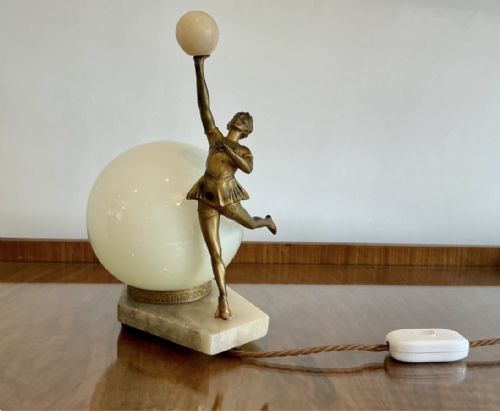
A vintage spelter desk lamp is a table lamp primarily constructed from spelter, a zinc-based alloy that gained popularity for ornamental figures and decorative metalware during the late nineteenth and early twentieth centuries. These pieces frequently appear in forms shaped by the Art Deco and Art Nouveau movements, often taking the shape of figural table lamps, mood lights, or night lights.
Buyers browsing this selection encounter pieces spanning from the Victorian era up through the 1930s, with French designs appearing alongside American and general European work. The most common manifestations on this page are figural table lamps and desk lamps that pair the metal alloy with marble bases and glass shades.
Materials and construction
Makers cast spelter into detailed moulds to produce figures, animals, and decorative bases, applying patinated metal finishes, paint, or gilding to simulate more expensive bronzes. These metal components are frequently mounted onto heavy marble plinths to provide stability for the lamp body.
Lighting elements integrate glass, frosted glass, or fabric shades, sometimes paired with torchere designs or figural motifs such as ladies, musketeers, pierrots, and seagulls. The combination of cast zinc alloy and stone creates a solid desk accessory designed for functional illumination.
Object forms focus exclusively on table lamps and desk lighting, incorporating figural subjects like pierrots, musketeers, and seagulls.
Evaluating quality and craftsmanship
The sophistication of the design dictates the upper tier of the range, with named makers and French studio pieces showing superior artistry compared to mass-produced alternatives. The integrity of the original surface patination and the harmony of the associated marble and glass elements further define the grade of the piece.
P.Sega·Moreau
The Vintage Spelter Desk Lamp Glossary
- Spelter
- A zinc-based alloy used as an economical alternative to bronze for casting decorative figures and lamp bases during the nineteenth and twentieth centuries. It accepts patination and paint readily to imitate heavier metals.
- Art Deco
- A design style dominant in the 1920s and 1930s characterised by geometric symmetry, stylised figures, and streamlined forms. This aesthetic heavily influences many of the figural lamps from that period.
- Art Nouveau
- An artistic movement from around 1900 featuring organic lines, floral motifs, and sinuous plant-like curves. Lamps from this era incorporate fluid sculptural details.
- Patinated metal
- A surface treatment applied to metal to alter its colour and simulate age or bronze. It protects the underlying alloy while enhancing visual depth.
- Torchere shade
- An uplighter shade style directing light upward, often found on tall spelter lamps. It typically houses a bulb within a glass or decorative fixture.
Vintage Spelter Desk Lamp: Frequently Asked Questions
What is spelter?
Spelter is a zinc-based metal alloy commonly utilised for decorative castings, sculptures, and lamp bases from the Victorian period through the Art Deco era. It provided manufacturers with a cost-effective material that could be easily cast into intricate figural shapes.
Because the metal is relatively soft, objects made from it are typically mounted on sturdy heavy bases, such as marble, to ensure stability on a desk or table.
How do I date a spelter lamp?
Dating relies on the stylistic markers of the design, such as the geometric lines of Art Deco pieces from the 1920s and 1930s versus the organic curves of Art Nouveau pieces around 1900. Materials associated with the base and shade, including specific types of marble and glass, also point to particular decades.
Examining the casting technique, the style of the figure, and any workshop signatures stamped into the metal helps narrow down the period of manufacture.
Are these lamps suitable for daily use?
These lamps function well for ambient or desk lighting, provided the internal wiring meets modern safety standards. Many collectors have older wiring updated by a professional electrician before regular use.
Due to the delicate nature of the metal alloy and original painted or patinated finishes, placement should avoid areas prone to heavy impacts or moisture.
Why are marble bases common?
Spelter is a relatively lightweight and soft metal, so heavy marble bases were utilised to anchor the lamp and prevent it from tipping over. The stone also added a contrasting visual texture and a sense of luxury to the piece.
French makers in particular favoured combining veined marble plinths with patinated metal figural sculptures during the Art Deco period.