


Vintage Electric Table Lamp
These vintage electric table lamp options span the nineteenth century to the art deco period, offering period illumination for domestic spaces.
Vintage Electric Table Lamp
A vintage electric table lamp bridges past lighting methods and modern utility by repurposing older forms for electrical use. Buyers searching for a vintage electric table lamp encounter varied objects, from converted oil lamps and candelabra to dedicated nineteenth-century brass bases.
Many examples originate from French workshops or English makers, showcasing styles such as art nouveau, neoclassical, and Napoleon III. These lighting fixtures serve as functional table lamps while carrying historical decorative details.
How they were made
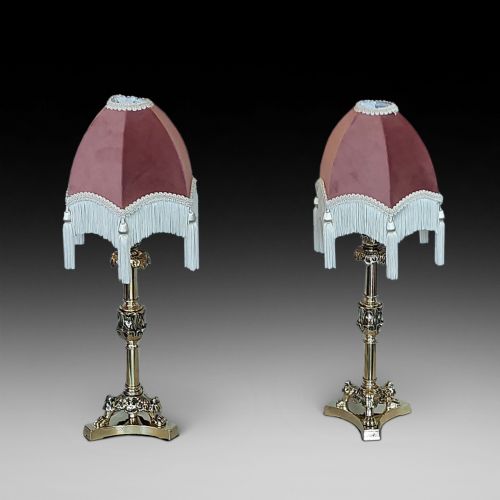
Makers utilised cast and stamped metals such as brass, bronze, ormolu, and silver plate for the primary structures and columns. These metal elements were frequently combined with materials like crystal drops, opaline glass, and carved hardwood.
Conversion work involved adapting older oil lamps, candlesticks, and candelabra by running internal wiring through former fuel founts or central columns. Shades of fabric, parchment leather, and enamelled glass were paired with these bases to diffuse the light.
A cast metal cherub orchestra once busy blowing horns now quietly holds the wiring for your evening reading.
What varies in quality
The refinement of the casting and chasing on the metal components dictates the visual depth of the base. Finer examples display crisp detail in classical column capitals, floral motifs, or figural mounts.
Material selection and proportion differentiate standard utility pieces from grander salon lamps. The integration of heavy crystal, quality silver plating, or hand-enamelled glass elevates the presence of the fixture.
WAS Benson·Walter Latham & Son
The Vintage Electric Table Lamp Glossary
- Corinthian column
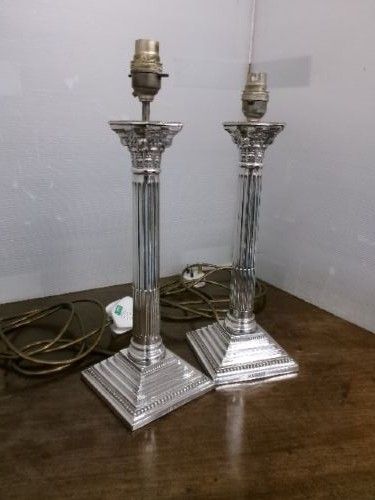
- A classical architectural column form featuring acanthus leaf ornamentation around the capital, frequently utilised for tall metal lamp bases.
- Ormolu
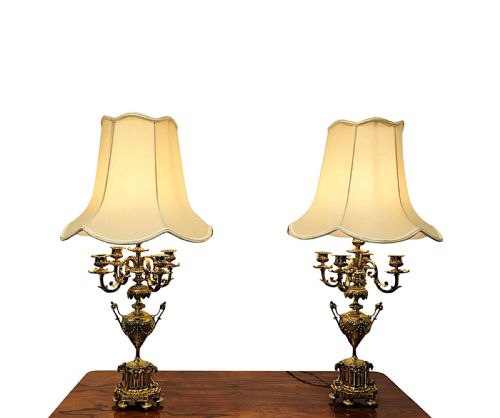
- Gilded bronze achieved through a mercury-gilding process that imparts a bright, durable golden finish to decorative metalwork.
- Candelabra
- A branched lighting fixture designed to hold multiple candles, which is often converted to electricity for use as a table lamp.
- Spelter
- A zinc alloy used as a less expensive alternative to bronze for cast figures and decorative bases, often patinated to resemble darker metals.
- Opaline glass
- An opaque or translucent pale glass developed during the nineteenth century, commonly employed for decorative lamp bodies and shades.
Vintage Electric Table Lamp: Frequently Asked Questions
What is a converted oil lamp?
A converted oil lamp is a former nineteenth-century domestic lighting fixture that has been rewired to take an electric bulb and flex. The original reservoir and burner mechanisms are typically preserved as decorative elements of the base.
Such pieces allow historical lighting forms to function safely in modern rooms while retaining their distinct period proportions and materials.
How do I identify an art deco lamp?
Art deco lamps date from the interwar period and display geometric lines, stylised motifs, and modern industrial materials like wrought iron or polished white metal. They often incorporate enamelled glass or parchment leather.
Unlike ornate Victorian designs, these pieces favour streamlined silhouettes and symmetrical patterns influenced by twentieth-century modernism.
Are these lamps safe to use?
Most antique and vintage lamps require inspection or rewiring by a qualified electrician to meet current safety standards before regular domestic use. Older metal or wooden bodies are generally sound, but the internal electrical components should be modern.
Fittings and plugs can be updated while preserving the external historical appearance of the lamp base.
What materials are most common?
Brass and silver-plated metal dominate the selection, particularly in formal Corinthian column designs. Other frequent materials include bronze, crystal, glass, and occasional wood or ceramic elements.
These durable substances supported the heavy oil reservoirs and candelabra structures typical of nineteenth-century lighting.