

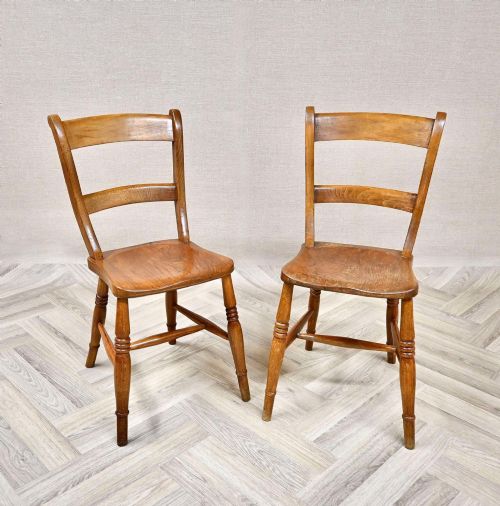
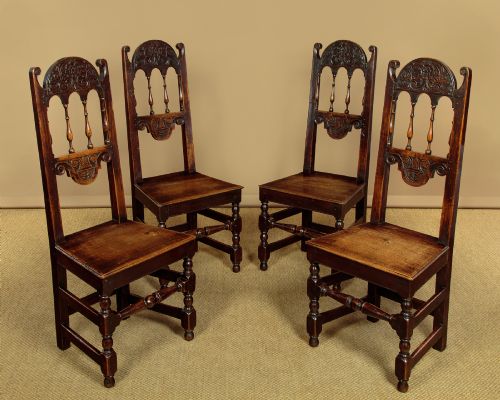
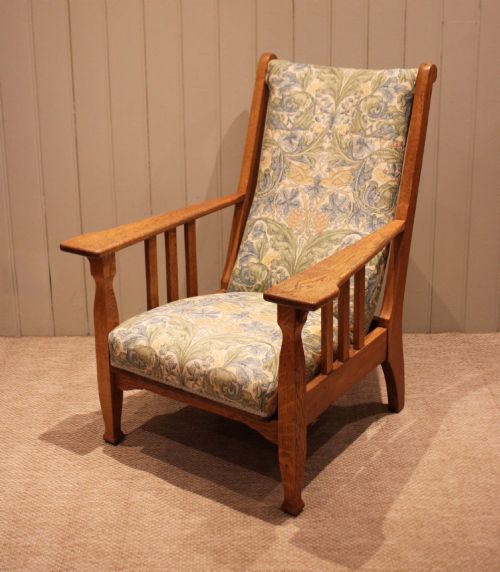
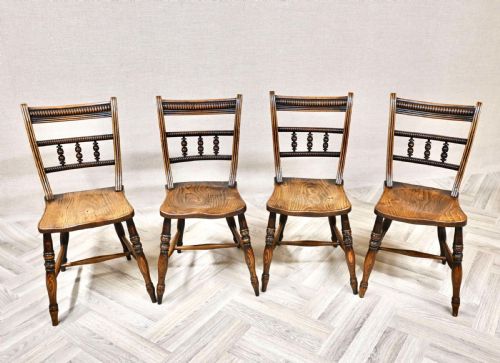

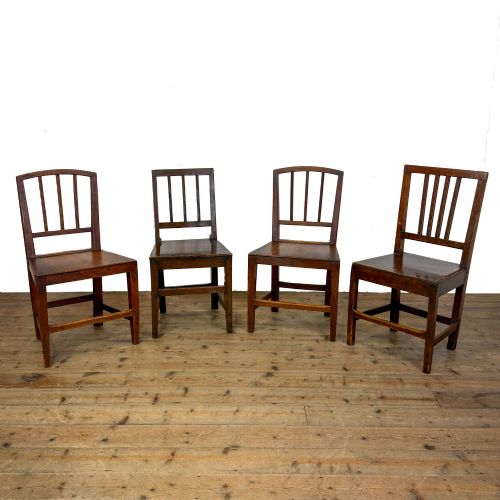
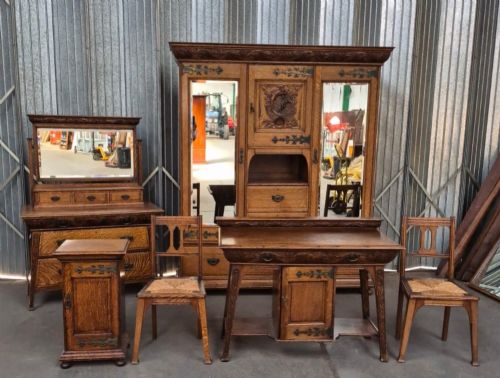

Vintage Solid Oak Chair
A vintage solid oak chair brings enduring strength and honest grain to a room, offering a seat built to last generations.
Vintage Solid Oak Chair
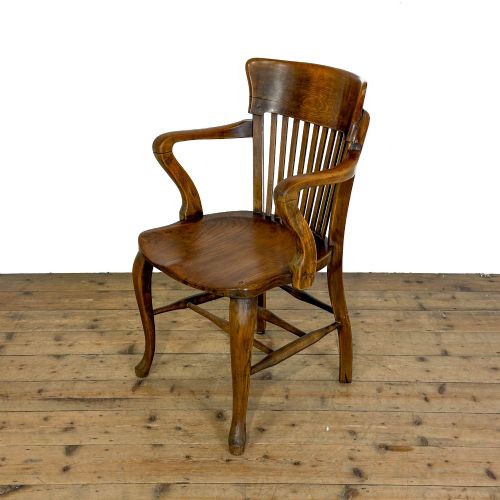
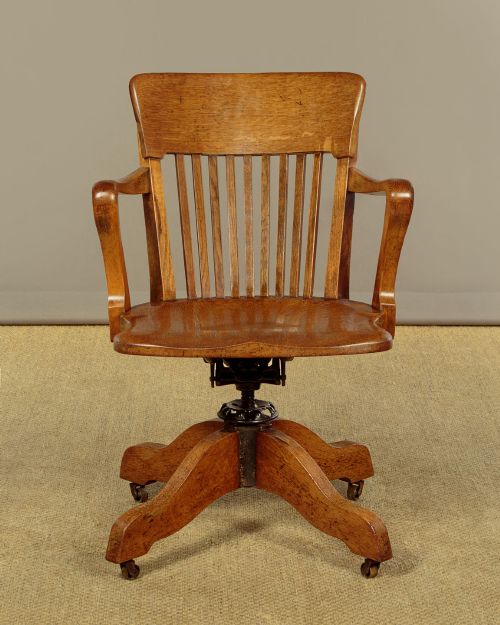
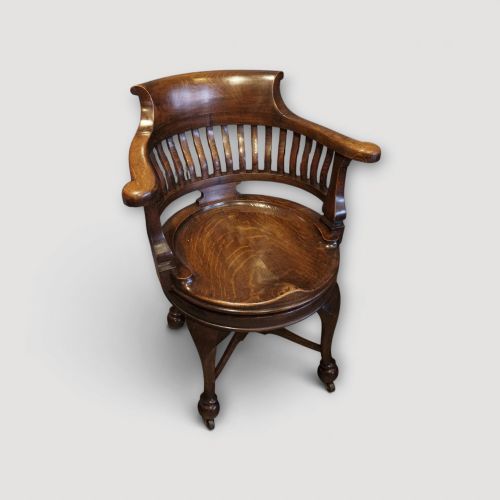
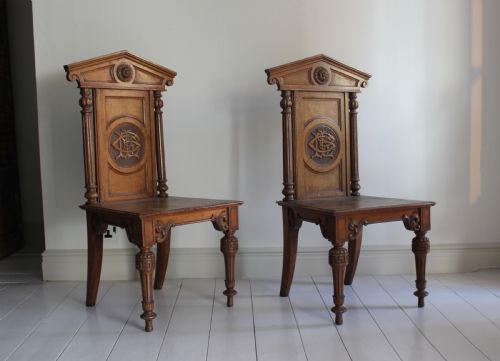
When you search for a vintage solid oak chair, you encounter a wide variety of forms spanning dining seats, office armchairs, and country kitchen seating. The material itself dictated sturdy construction, whether shaped for a library desk, an Edwardian revolving mechanism, or a tall Gothic revival hall. These pieces emerge from periods ranging through the Victorian era, the Arts and Crafts movement, and into the early decades of the twentieth century.
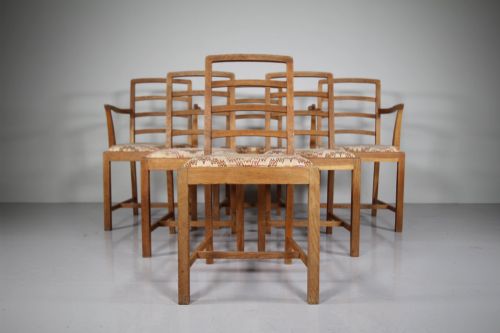
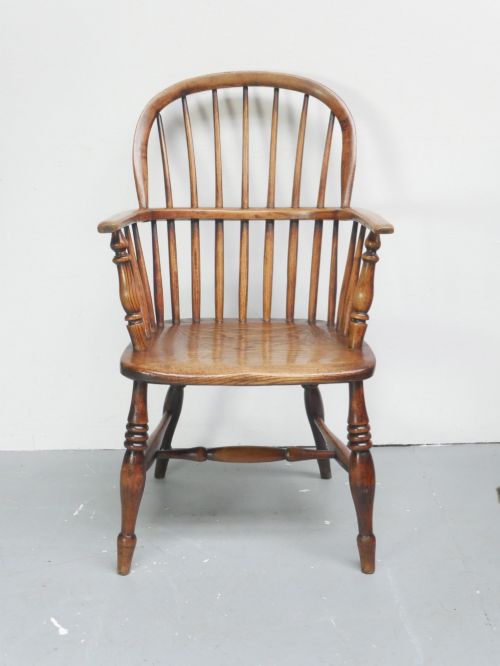
Dining sets appear frequently alongside individual desk chairs and swivel models fitted for office work. You will also find country house smokers bows, Windsor designs, and monastic benches alongside metamorphic library steps. The selection balances functional utility with distinct period styles, from plain English country pieces to detailed Jacobean and Gothic revivals.
The domestic forms dominate the listings, particularly dining sets and sturdy library or office seating designed for heavy daily use. Regional variations appear in Windsor and country kitchen models, alongside workshop pieces bearing the stamp of makers such as Heals of London. Each form carries the weight and character inherent in solid timber framing.
Materials and construction methods
Makers relied primarily on solid oak, frequently selected for its pronounced medullary rays and durable grain, often complemented by secondary timbers like elm, beech, and occasional iron hardware. Seats incorporate carved solid wood, tight upholstery in leather or fabric, and woven tapestries. The heavy frames depend on traditional joinery methods, secured with tenons and dowels rather than modern adhesives.
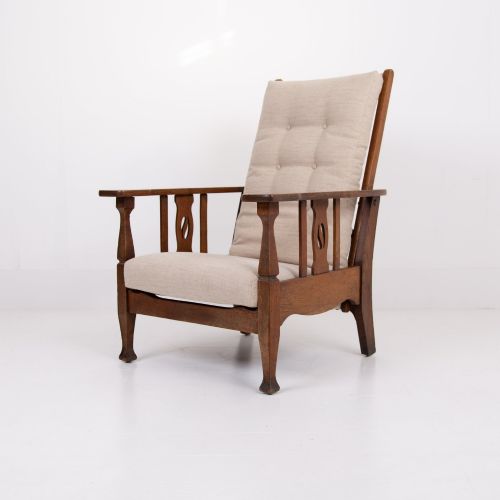
Revolving desk chairs and office armchairs integrate early metal swivel mechanisms and iron height-adjustment screws within their wooden frames. Arts and Crafts examples display exposed construction details, celebrating honest peg joints and hand-planed surfaces. Country chairs often combine bentwood elements for steam-bent bows with solid turned spindles and saddles carved directly into the seat.
Vintage Solid Oak Chair Retail Price Guide 2026
Typical asking prices for vintage solid oak chair among the pieces listed under this phrase on Sellingantiques today, from the lower quarter to the upper quarter. They describe what is for sale here now, not the wider market.
The listings span the nineteenth and early twentieth centuries, encompassing Victorian, Edwardian, and Arts and Crafts movements in solid oak and elm.
Assessing quality in construction and finish
The distinction between ordinary utility seating and superior examples rests in the selection of timber and the precision of the joinery. Premium pieces display quartersawn oak with striking figuring, while lesser items utilise plain flat-sawn boards. The crispness of hand-carved details and the retention of original finish without excessive sanding mark the higher tiers of craftsmanship.
Structural integrity dictates the longevity of these seats, visible in the tightness of the joints and the absence of excessive movement in the frame. Swivel mechanisms on desk chairs should operate smoothly without undue wobble in the central iron spindle. Original leather upholstery with period patination commands greater regard than replaced fabric, provided the underlying frame remains undisturbed.
Heals of London
The Vintage Solid Oak Chair Glossary
- Smoker's bow
- A low-backed wooden armchair with a rounded continuous rail and turned spindles, commonly found in country houses and offices. This form provides sturdy elbow support for relaxed seating.
- Quartersawn
- A method of cutting oak logs perpendicular to the growth rings to produce stable boards with prominent medullary rays. This cut yields the characteristic silver grain pattern valued by cabinetmakers.
- Harlequin set
- A collection of dining chairs that share a general style, period, or material but differ slightly in individual details. Such sets were often assembled over time rather than purchased as a single batch.
- Metamorphic
- Describing furniture designed to transform from one object into another, such as a chair that unfolds into library steps. These clever pieces served dual purposes in compact Victorian and Edwardian spaces.
Vintage Solid Oak Chair: Frequently Asked Questions
How do I date a solid oak chair?
Dating relies on examining the construction marks, timber preparation methods, and stylistic cues present in the frame. Machine-sawn components and certain iron mechanisms point firmly toward the Victorian and Edwardian eras.
Earlier pieces often reveal hand- adzed surfaces, pegged mortise and tenon joints, and distinct patination acquired through decades of use. Comparing the turning style and overall proportions to dated examples helps narrow the period of origin.
Are revolving desk chairs sturdy enough for daily use?
Most vintage swivel chairs were engineered for heavy commercial and domestic office environments, utilising robust cast iron and solid timber framing. Their robust construction handles everyday sitting and movement without difficulty.
Maintenance involves checking the central screw or swivel mechanism and tightening any loose base joints. Treating the moving metal parts with appropriate lubricant ensures smooth rotation over years of regular use.
What is an Arts and Crafts oak chair?
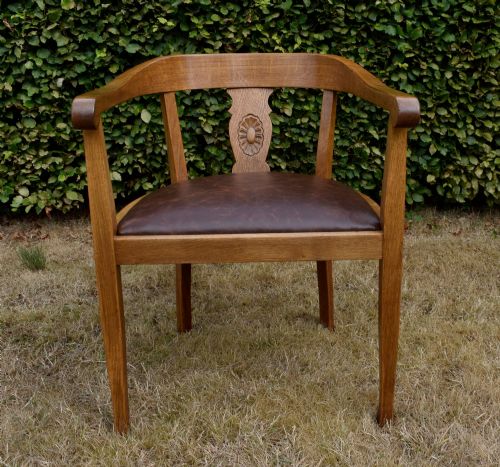
An Arts and Crafts oak chair embodies a philosophy of honest construction, simple geometric lines, and a celebration of hand-craftsmanship over industrial mass production. These pieces avoid excessive ornamentation in favour of visible pegged joints and unvarnished timber.
Originating in the late nineteenth century, this style valued utility and the natural beauty of solid oak. They fit naturally into interiors that favour functional design and straightforward materials.
How should I care for a vintage oak frame?
Preserving the timber requires maintaining stable humidity levels in the room to prevent the solid oak from drying out or splitting. Direct sunlight and proximity to heat sources should be avoided.
Applying a traditional beeswax polish periodically helps nourish the wood and maintain its natural lustre without building up heavy chemical layers. Cleaning should involve only a soft, dry cloth to protect the historic surface finish.