
Vintage Slant Front Bureau
A vintage slant front bureau combines a neat sloping writing flap with practical drawers, offering a traditional workspace that suits modern homes.
Vintage Slant Front Bureau
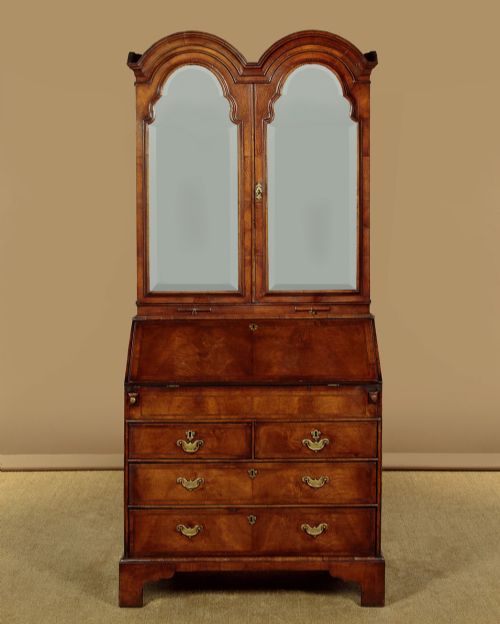
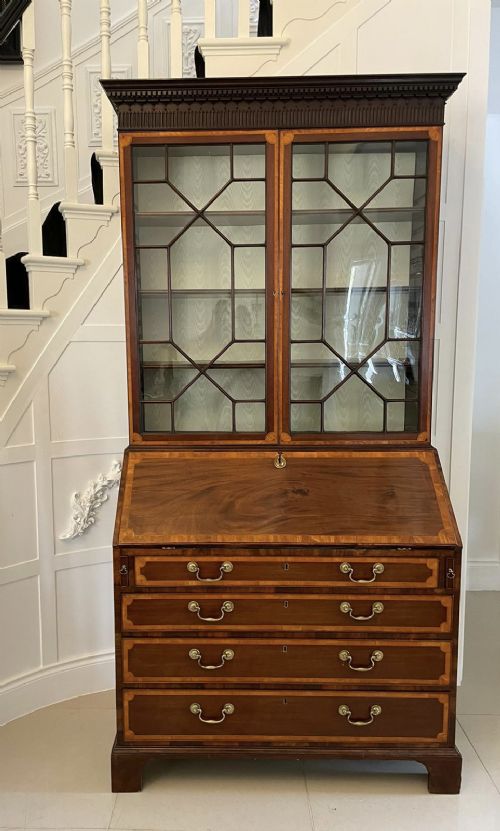
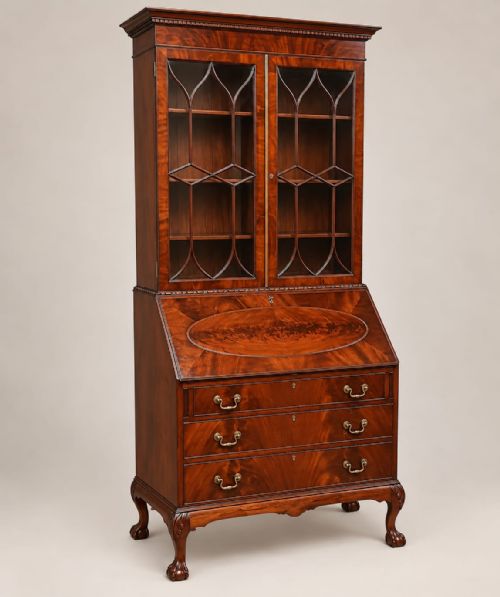
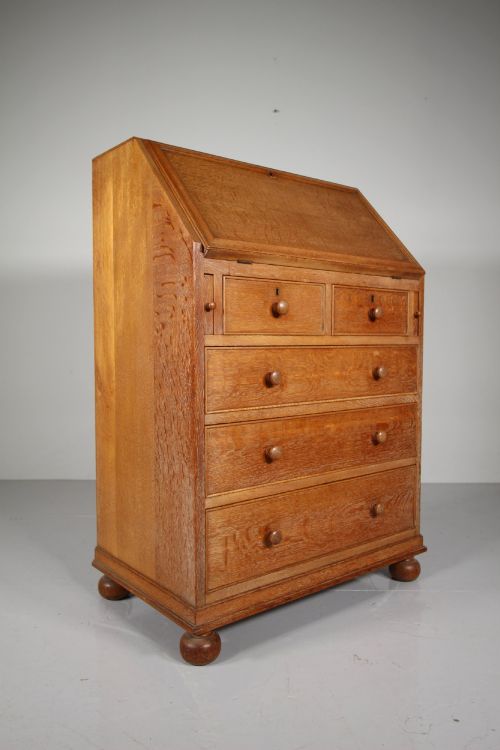
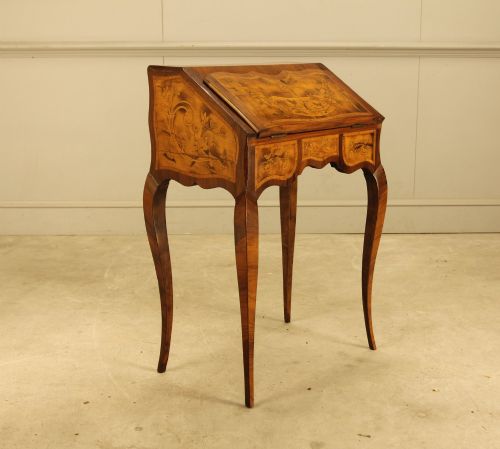
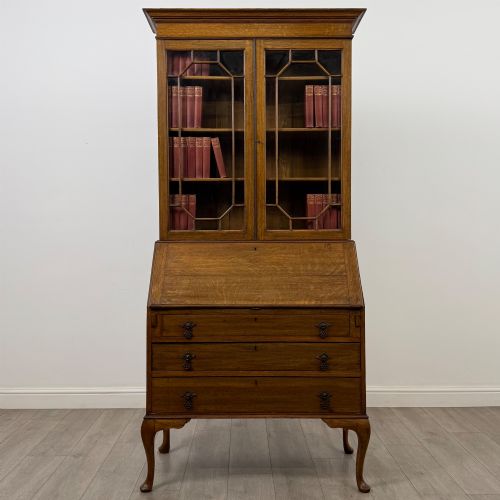
A vintage slant front bureau provides a dedicated writing surface that conceals internal compartments when closed, keeping paperwork out of sight. The selections span compact writing desks to large bureau bookcases fitted with glazed upper display sections.
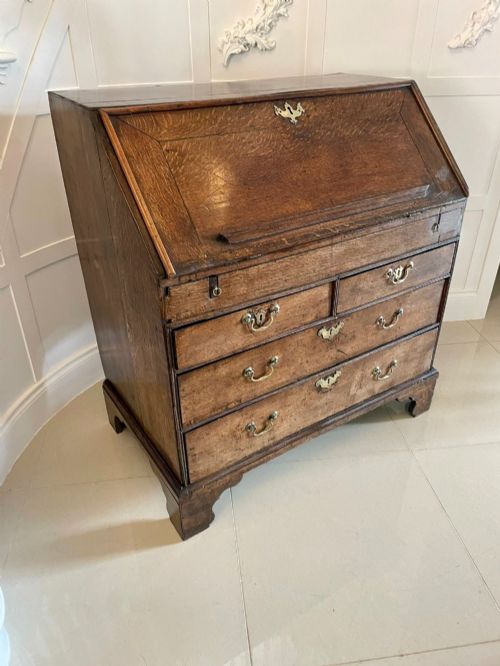
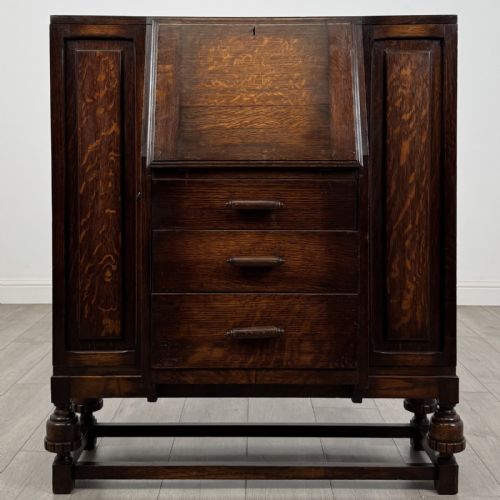
Edwardian oak models and early twentieth century walnut pieces dominate the available selection, alongside robust eighteenth century and Georgian examples. Buyers frequently encounter oak and mahogany variants featuring fitted pigeonholes and small drawers behind the fall front.
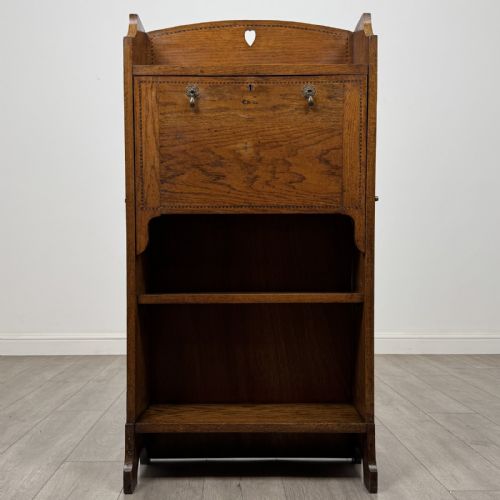
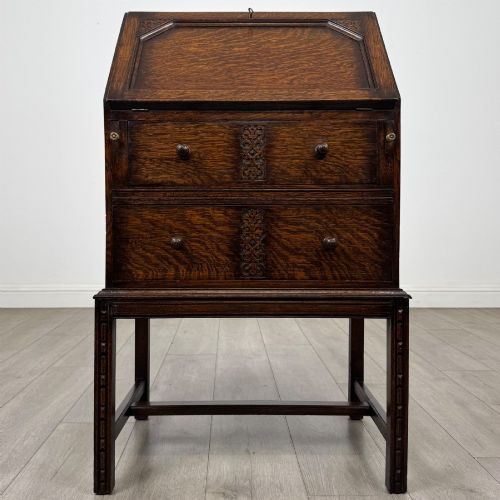
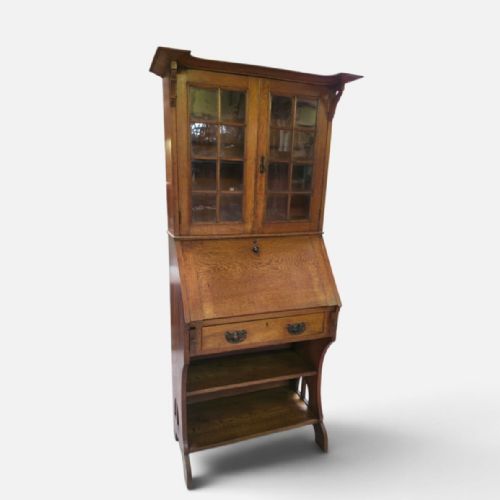
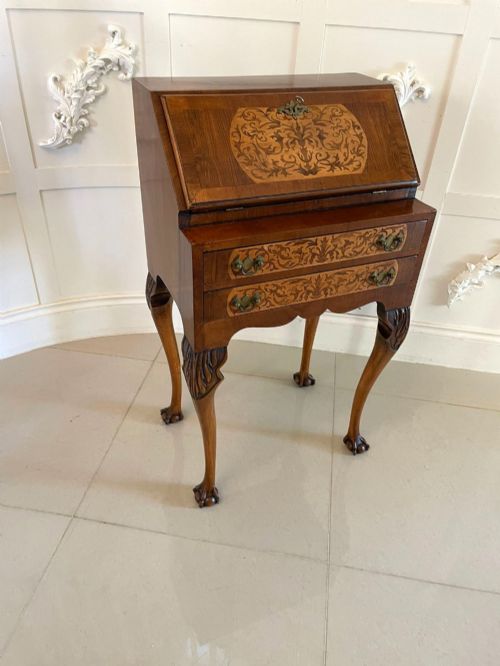
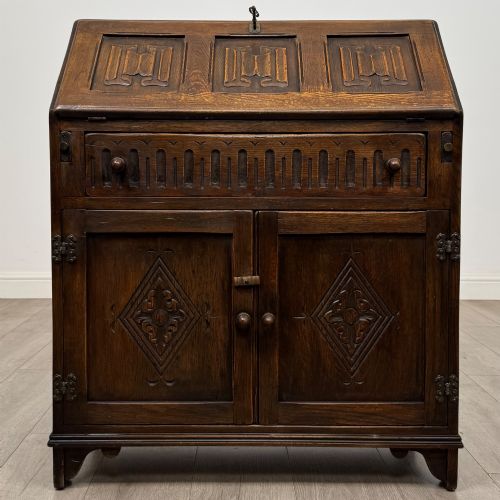
Formations range from simple table-top versions to substantial bureau bookcases on bracket feet, reflecting styles from Jacobean Revival to Queen Anne and Arts and Crafts.
Distinguishing quality in construction and finish
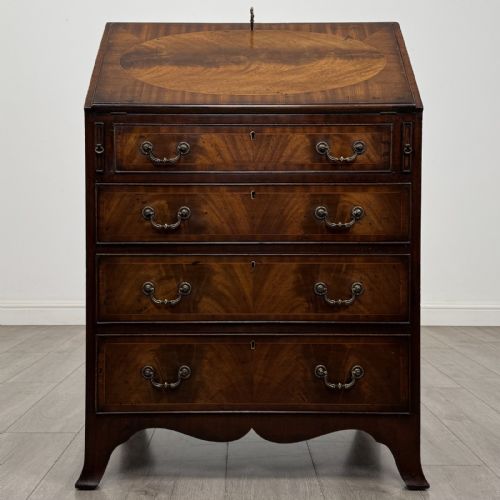
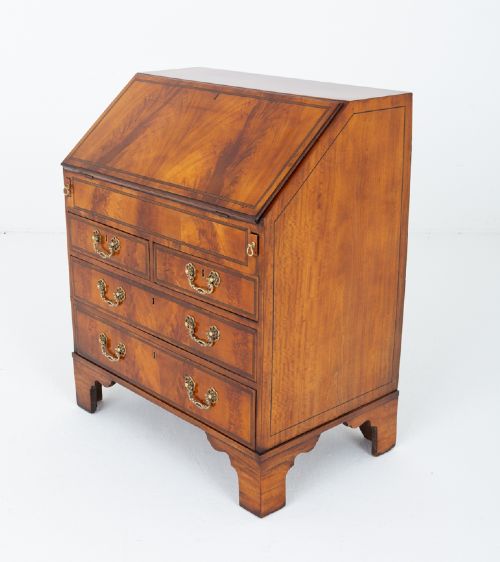
Superior examples display careful matching of wood grain across the fall front flap and drawer fronts, showing deliberate selection of burr walnut, mahogany, or oak figure. Lesser pieces rely on plain timber without the same attention to symmetry.
The sophistication of the internal stationery compartments defines the standard of the piece, with complex arrangements of secret drawers and pigeonholes indicating superior craftsmanship. Robust secondary timbers and clean internal drawer linings further distinguish finer workshops.
Periods represented span from the seventeenth century through Georgian, Victorian, Edwardian, and 1930s designs.
Heals of London·Arthur Basil Reynolds·Larkin
The Vintage Slant Front Bureau Glossary
- Fall front
- The hinged sloping panel that drops forward to form the writing surface of a bureau. It conceals the internal pigeonholes and small drawers.
- Bureau bookcase
- A dual-purpose piece combining a lower writing bureau with an upper shelving or cabinet section enclosed by glass doors.
- Linenfold
- A carved wooden panel motif resembling folded cloth, frequently seen on oak Edwardian furniture.
- Pigeonhole
- A small open compartment within the interior desk space designed for sorting letters and stationery.
Vintage Slant Front Bureau: Frequently Asked Questions
What is a slant front bureau?
A slant front bureau is a compact writing desk featuring a hinged sloping lid that opens to reveal internal compartments and drawers.
When closed, the angled flap hides paperwork and presents a neat wooden cabinet face.
How do I use a bureau desk?
The sloping lid drops down to rest on pull-out supports, creating a stable platform for writing or laptop use.
Internal compartments organise stationery, while the lower drawers provide general storage space.
Are these desks suitable for small rooms?
Their vertical orientation and modest footprint make these bureaus practical for studies, bedrooms, and living rooms.
The enclosed storage keeps surfaces tidy when writing tasks are finished.
How can I tell the period of a bureau?
Construction details, timber choices, and decorative styles help determine the era of manufacture.
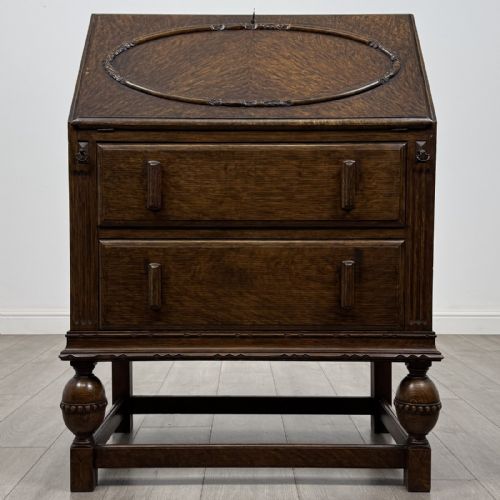
Edwardian pieces often feature oak with linenfold carving, while Georgian and eighteenth century examples showcase mahogany or walnut with traditional bracket feet.