



Vintage Silver Tea Pot
A vintage silver tea pot brings daily ritual to the table, and this selection ranges from solid sterling silver to silver plate across multiple eras.
Vintage Silver Tea Pot
When you search for a vintage silver tea pot, you encounter pieces spanning from the Georgian period through the Victorian and Edwardian eras up to the mid twentieth century. These vessels take forms ranging from single teapots to complete tea and coffee services, alongside related items like tea caddies and coffee pots.
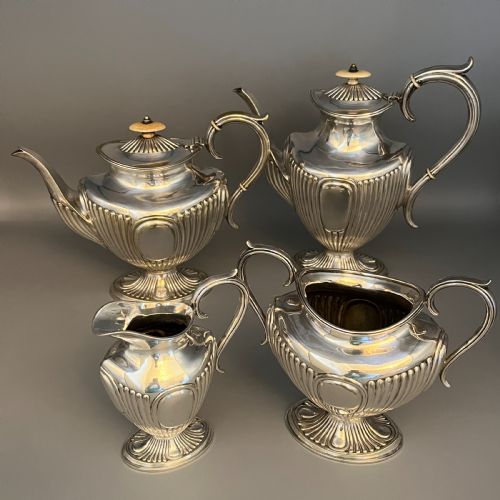
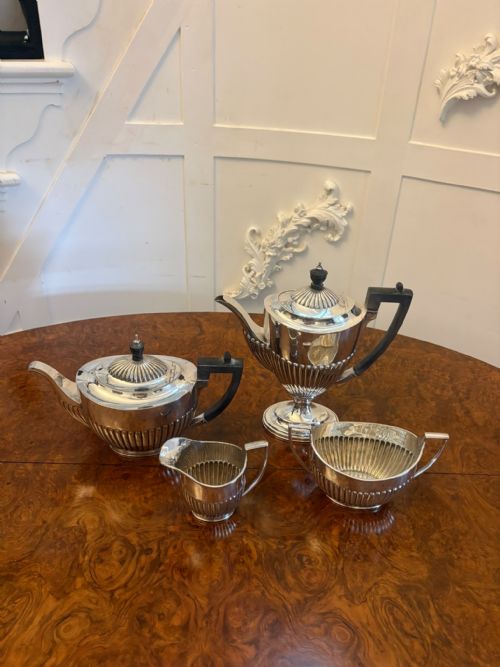
The version you are most likely to meet on this page is an Edwardian silver plated teapot or multi piece tea set, often accompanied by matching coffee pots, cream jugs, and sugar basins. Alongside these plated domestic sets, the selection includes sterling silver examples from Victorian and later reigns, together with notable variations featuring ceramic bodies or specialised shapes like the cube design.
Originating predominantly from English makers and workshops, these pieces reflect a rich heritage of domestic hospitality and metalwork design. They bridge the gap between functional tableware and decorative objects, serving as tangible links to past dining customs.
What varies in quality
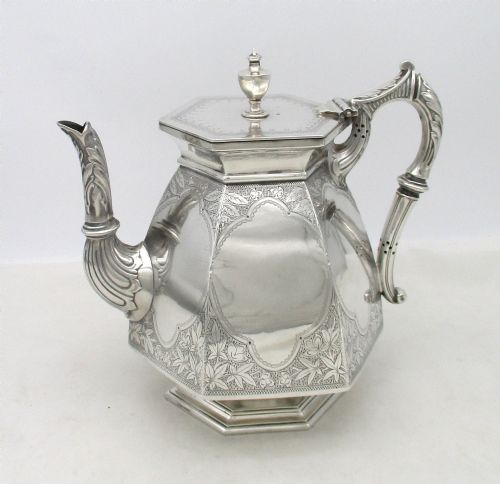
The distinction between tiers rests upon the weight of the metal, the crispness of chased or embossed ornamentation, and the integrity of the underlying construction. Pieces originating from recognised workshops demonstrate superior balance in the handle and spout, ensuring the vessel pours cleanly without dripping.
Subtleties in finishing, such as the snug fit of hinged lids and the quality of insulating spacers on handles, separate standard domestic output from the finest workshop productions. The preservation of original plating or clear hallmarks further distinguishes the superior examples within any given period.
Vintage Silver Tea Pot Retail Price Guide 2026
Typical asking prices for vintage silver tea pot among the pieces listed under this phrase on Sellingantiques today, from the lower quarter to the upper quarter. They describe what is for sale here now, not the wider market.
Materials recorded on this page include sterling silver, silver plate, electroplated nickel silver, ceramic, and wood.
Walker and Hall·Robert Hennell II
The Vintage Silver Tea Pot Glossary
- Silver plate
- A thin layer of silver applied to a base metal core, commonly utilised for domestic tea services to provide the appearance of solid silver at a lower cost.
- Sterling silver
- An alloy containing a high proportion of pure silver combined with other metals to ensure durability, denoted by official assay office hallmarks.
- Electroplated nickel silver
- A base metal alloy of copper, nickel, and zinc coated with an electrolytic layer of silver, introduced during the nineteenth century.
- Old Sheffield plate
- An early composite material made by fusing a sheet of silver to a copper ingot before rolling them together into sheets for fabrication.
- Ebonised wood
- Timber treated to resemble ebony, frequently turned to form the insulating handles and finials found on metal teapots.
Vintage Silver Tea Pot: Frequently Asked Questions
Are silver tea pots safe for daily use?
Most silver tea pots remain entirely functional for serving hot water or tea, provided the interior is clean and free from heavy tarnish. Solid sterling silver and stable silver plate handle daily use well when maintained properly.
Check the condition of any insulating handle rings before use, as older organic materials can become brittle over decades of temperature changes.
How can I tell the period of a silver pot?
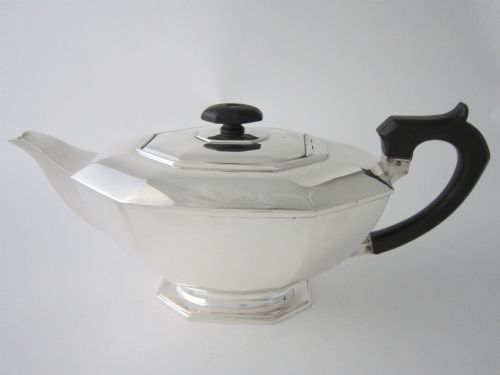
Examine the overall style, such as the ornate curves of Edwardian rococo revival or the clean geometric lines typical of Art Deco designs. Form, weight, and decorative motifs offer strong clues to the decade of manufacture.
Sterling silver pieces often carry hallmarks that include date letters and maker marks, allowing precise dating, whereas plated items rely stylistic indicators and maker stamps.
What is the difference between silver plate and sterling?
Sterling silver consists of a solid precious metal alloy throughout the entire thickness of the piece, marked by official assay stamps. Silver plate involves a thin coating of silver bonded over a different base metal such as copper or nickel brass.
Solid pieces carry intrinsic metal value and can be polished indefinitely, while plated items offer the same visual brightness with lighter overall weight and different care requirements.