


Vintage Silver Stamp Case
These vintage silver stamp cases are pocket and desk accessories designed to hold postage stamps safely, offering a glimpse into Edwardian and Victorian correspondence habits.
Vintage Silver Stamp Case
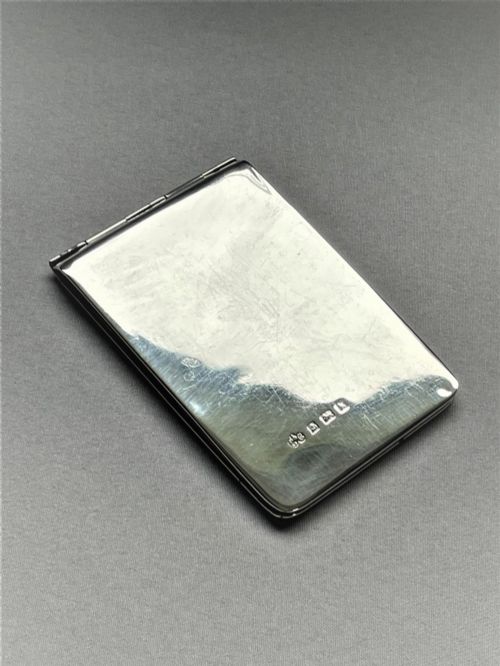
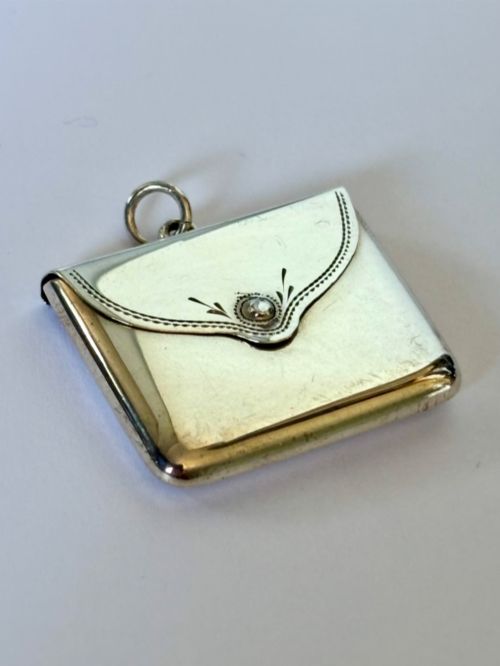
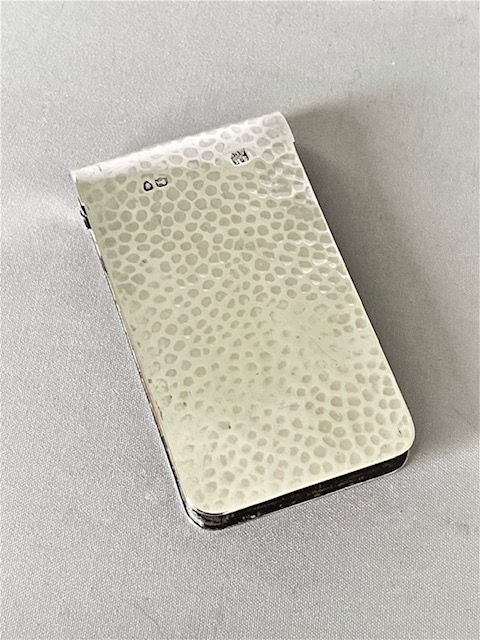
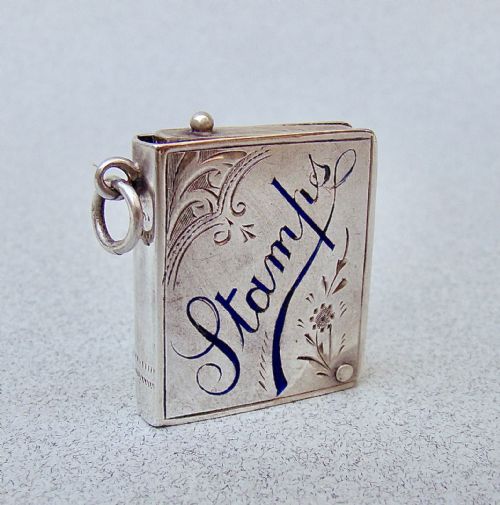
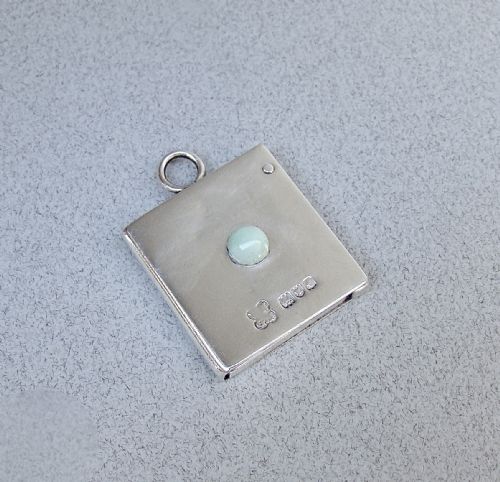
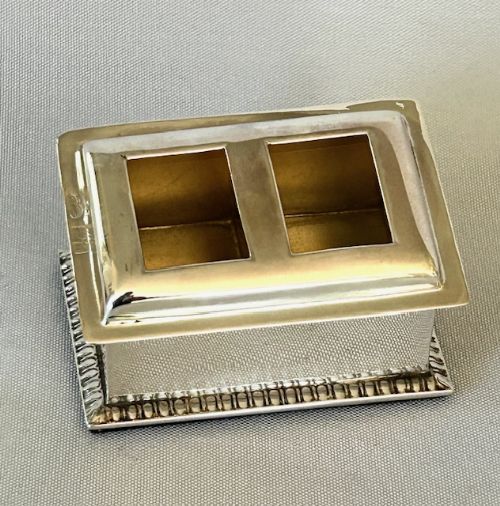
A vintage silver stamp case is a compact metal receptacle created during the Victorian, Edwardian, and George V periods to store adhesive postage stamps. Buyers searching for a vintage silver stamp case will encounter diverse forms, ranging from flat wallets and book shapes to miniature envelopes and novelty garden wheelbarrows.
The most common examples on this page date from the Edwardian era and the 1910s, reflecting an age when letter-writing required dedicated desk accessories. These pieces often double as card cases, combining stamp storage with compartments for calling cards in a single pocket-sized item.
Makers produced these containers in sterling silver, silver plate, and brass, occasionally incorporating glass, enamel, or stone elements. Functional desk variants sit alongside portable pocket designs, demonstrating the variety of forms available to collectors of small silver.
How they were made
Silversmiths utilised sterling silver and silver plate, shaping metal through pressing, folding, and soldering to form miniature envelopes, books, and wallets. Engraving tools provided surface decoration, creating linear patterns and imitation envelope flaps on the exterior.
Specialised workshops incorporated glass panels and enamel details into the metal frames to add colour and visibility to the contents. Hinges and swivel mechanisms allowed miniature boxes and cases to open smoothly for stamp retrieval.
Listings feature sterling silver, silver plate, brass, and glass materials across Victorian, Edwardian, and George V periods.
What varies in quality
Quality rests upon the crispness of the maker marks, the precision of the engraving, and the structural integrity of hinges and clasps. Pieces bearing clear hallmarks from notable silversmiths demonstrate superior workshop origins compared to unmarked items.
Novelty forms, such as wheelbarrows or book shapes, require intricate detailing to succeed as miniature sculptures. The presence of undamaged glass, enamel, or stone insets elevates the standard of a piece above plain metal versions.
Willian Aitken·Crisford And Norris·Sampson Morden·W And G Neal·Albert Ernest Jenkins
The Vintage Silver Stamp Case Glossary
- Hallmark
- Official stamps struck into precious metal indicating the standard of purity, the assay office, and the year of manufacture. These marks provide definitive evidence of age and origin.
- Sterling silver
- An alloy containing 92.5 percent silver and 7.5 percent other metals, usually copper. This standard dominates the construction of quality stamp cases.
- Silver plate
- A base metal, such as brass or copper, coated with a thin layer of silver. This technique offered a more affordable alternative to solid silver.
- Desk accessory
- A portable or stationary item used to facilitate writing and correspondence. Stamp boxes and card cases form part of this wider category.
- Novelty
- An object made in a whimsical or amusing shape unrelated to its primary function, such as a wheelbarrow. These pieces appealed to Edwardian taste for playful design.
Vintage Silver Stamp Case: Frequently Asked Questions
How were stamp cases used?
People used them to keep adhesive postage stamps flat and clean before envelopes were manufactured with self-adhesive gum.
They allowed individuals to carry stamps in purses or pockets without the paper sticking together from moisture.
How do I date a silver stamp case?
Dating relies on the hallmarks stamped into the metal, which indicate the assay office and the specific year of production.
Stylistic clues, such as Edwardian scrollwork or Arts and Crafts simplicity, also help narrow down the period of manufacture.
Are all stamp cases made of solid silver?
Not all examples are solid silver, as workshops also produced pieces in silver plate, brass, and mixed metals.
Some incorporate glass, enamel, or stone to add decorative contrast to the metal structure.