





Vintage Silver Paper Knife
A vintage silver paper knife cuts through correspondence with desk-bound elegance, pairing functional heft with the crisp snap of opening mail.
Vintage Silver Paper Knife
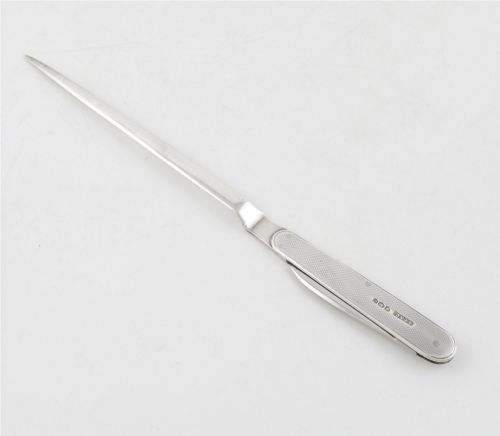
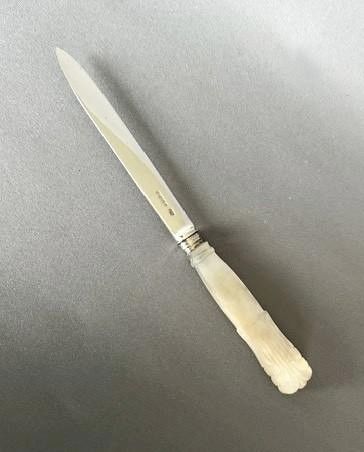
A vintage silver paper knife, often catalogued as a letter opener or page turner, brings refined utility to the desk through periods ranging from the Georgian era to the mid-twentieth century. These items span simple sterling silver blades to complex desk accessories that integrate organic materials or sculptural animal handles.
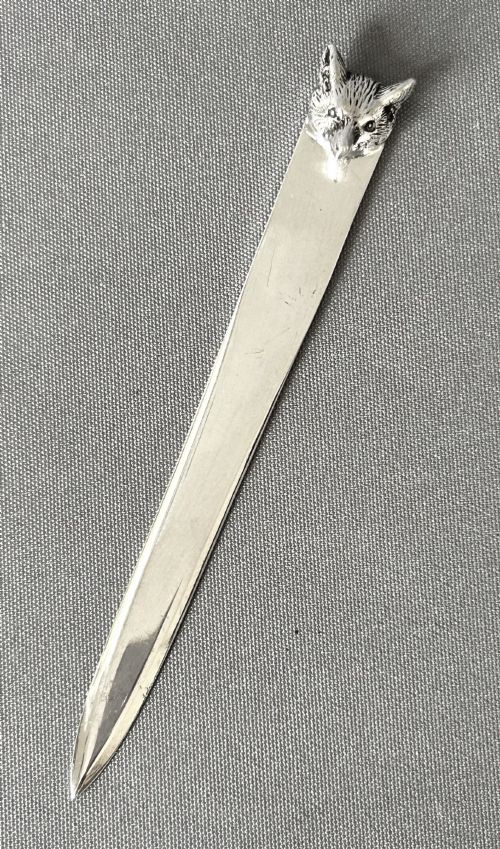
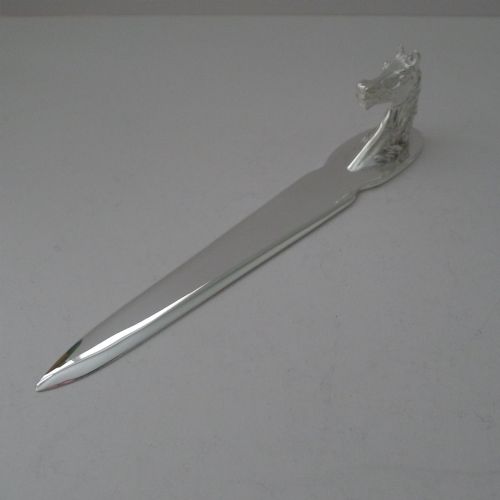
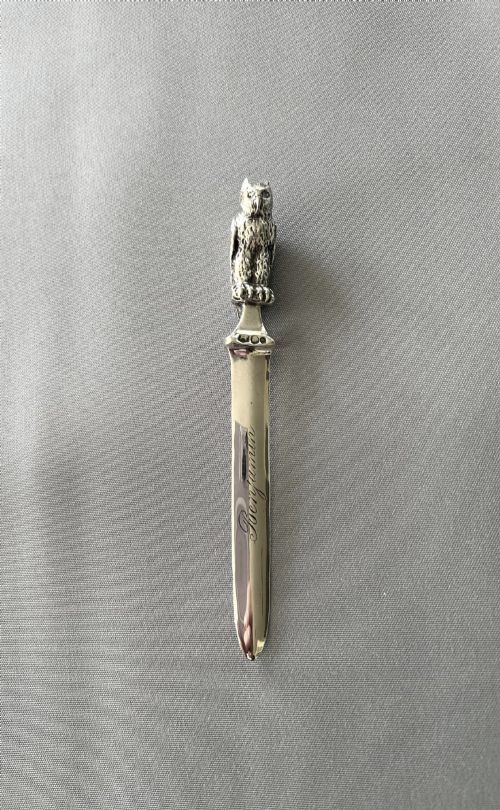
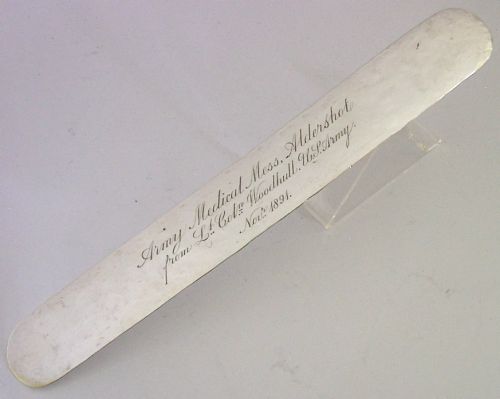
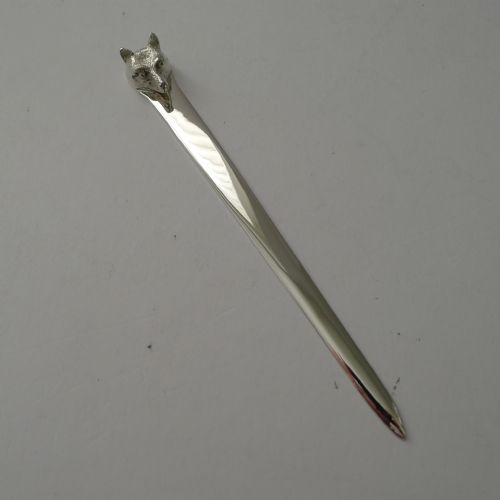
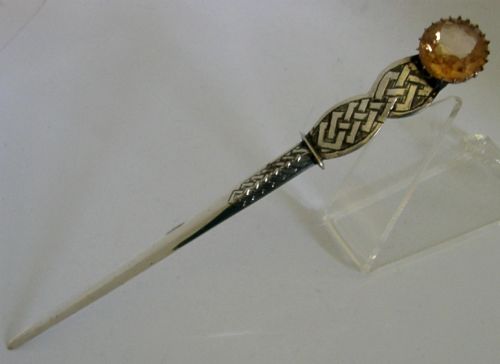
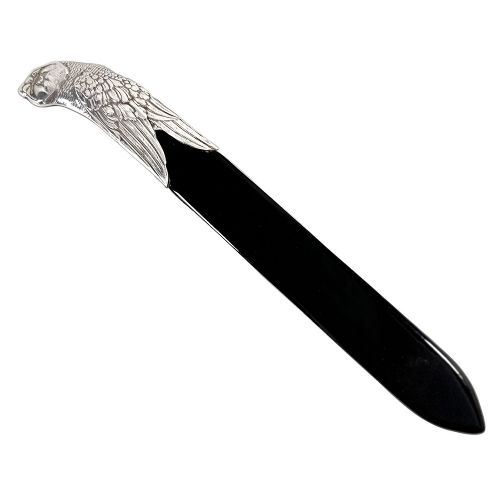
The pieces appearing on this page highlight both compact letter openers for daily correspondence and longer page turners designed for uncupped books. Forms stretch from plain blades to novelty shapes like foxes, pheasants, ducks and owls, alongside regional Scottish provincial variants.
Origins stretch from English assay offices in Birmingham, Chester and London up to Scottish workshops and continental or Egyptian silversmiths. Buyers encounter Victorian and Edwardian examples alongside Art Deco geometry and mid-century commemoratives.
How they were made
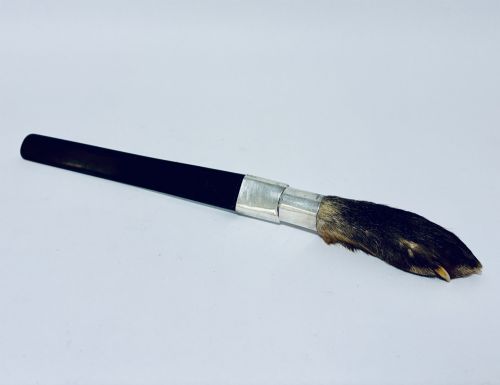
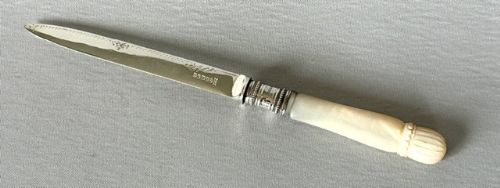
Silversmiths forged sterling silver and standard silver for blades and mounts, often combining metalwork with organic inserts such as tortoiseshell, mother-of-pearl, horn, bone, agate, citrine and Connemara marble. Ebonised wood and celluloid also appear alongside silver-plated components.
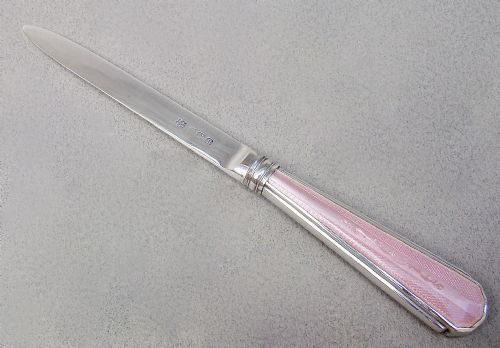
Techniques relied on hand-forging, casting for novelty animal handles, and precise joining where metal met natural shell or horn. Guilloche enamel adds colour to metallic surfaces, while engraved details render heraldic motifs, deities like Horus, or commemorative dates.
Vintage Silver Paper Knife Retail Price Guide 2026
Typical asking prices for vintage silver paper knife among the pieces listed under this phrase on Sellingantiques today, from the lower quarter to the upper quarter. They describe what is for sale here now, not the wider market.
Makers and motifs range from Asprey novelty animals to Egyptian Revival designs depicting the god Horus.
What varies in quality
The distinction between standard desk stationery and superior pieces rests on the weight of the silver, the crispness of the maker's mark, and the integration of mixed materials. Solid sterling silver blades with robust handles demonstrate durability, whereas plated versions rely on a base metal core.
Artistry in novelty casting or decorative elements such as guilloche enamel and inset gemstones elevates individual items. The quality of tortoiseshell, mother-of-pearl or carved horn inserts, combined with undamaged mounts, defines the upper tier of the range.
The Barker Brothers·Asprey·Sampson Mordan and Co
The Vintage Silver Paper Knife Glossary
- Page turner
- A long, flat implement traditionally used for cutting and turning the folded pages of uncut books. They often pair a silver handle with a wide blade of tortoiseshell, horn or mother-of-pearl.
- Guilloche enamel
- A decorative technique where intricate geometric patterns are machined into metal beneath a translucent enamel coating. It frequently appears on Art Deco desk accessories.
- Assay mark
- A stamped symbol indicating the purity of the silver and the office where it was tested. British pieces commonly show town marks, date letters and the lion passant.
- Provincial silver
- Items made and marked outside the main assay towns of London, Birmingham or Sheffield. Scottish provincial pieces from towns like Inverness carry distinct regional stamps.
- Novelty piece
- An item shaped to represent an animal, figure or object rather than conforming to a standard geometric tool. Examples include openers formed as foxes, ducks or owls.
Vintage Silver Paper Knife: Frequently Asked Questions
What is the difference between a paper knife and a letter opener?
A paper knife historically refers to a longer blade designed to slice open uncut book signatures, functioning similarly to a page turner. A letter opener is typically shorter and proportioned specifically for slicing open envelopes.
Both terms are frequently used interchangeably in descriptions, though physical scale and blade width usually indicate whether an object belonged on a library table or a writing desk.
How do I care for silver and tortoiseshell stationery?
Sterling silver benefits from occasional gentle polishing with a dedicated cloth to maintain its finish, avoiding abrasive pastes that wear down hallmarks or engraved details. Organic materials like tortoiseshell and horn require protection from direct heat and moisture to prevent warping.
Storing these items flat in a dry environment preserves the structural bond where the metal mount meets the natural material.
How do I identify the date of a silver paper knife?
British pieces carry hallmarks that include a specific letter code denoting the year the item was assayed. Comparing this letter against regional assay office charts reveals the exact year of manufacture.
Stylistic cues such as Edwardian elegance or Art Deco geometric symmetry further narrow down the period when hallmarks are rubbed or absent.
Are these items suitable for daily use?
Solid sterling silver and sturdy mixed-material designs remain robust enough for opening modern mail when handled with reasonable care. Items featuring fragile organic inserts like thin tortoiseshell or delicate enamel require a lighter touch to avoid accidental cracking.
Using them on flat surfaces prevents undue stress on the join between the handle and the blade.